Frequently Asked Questions
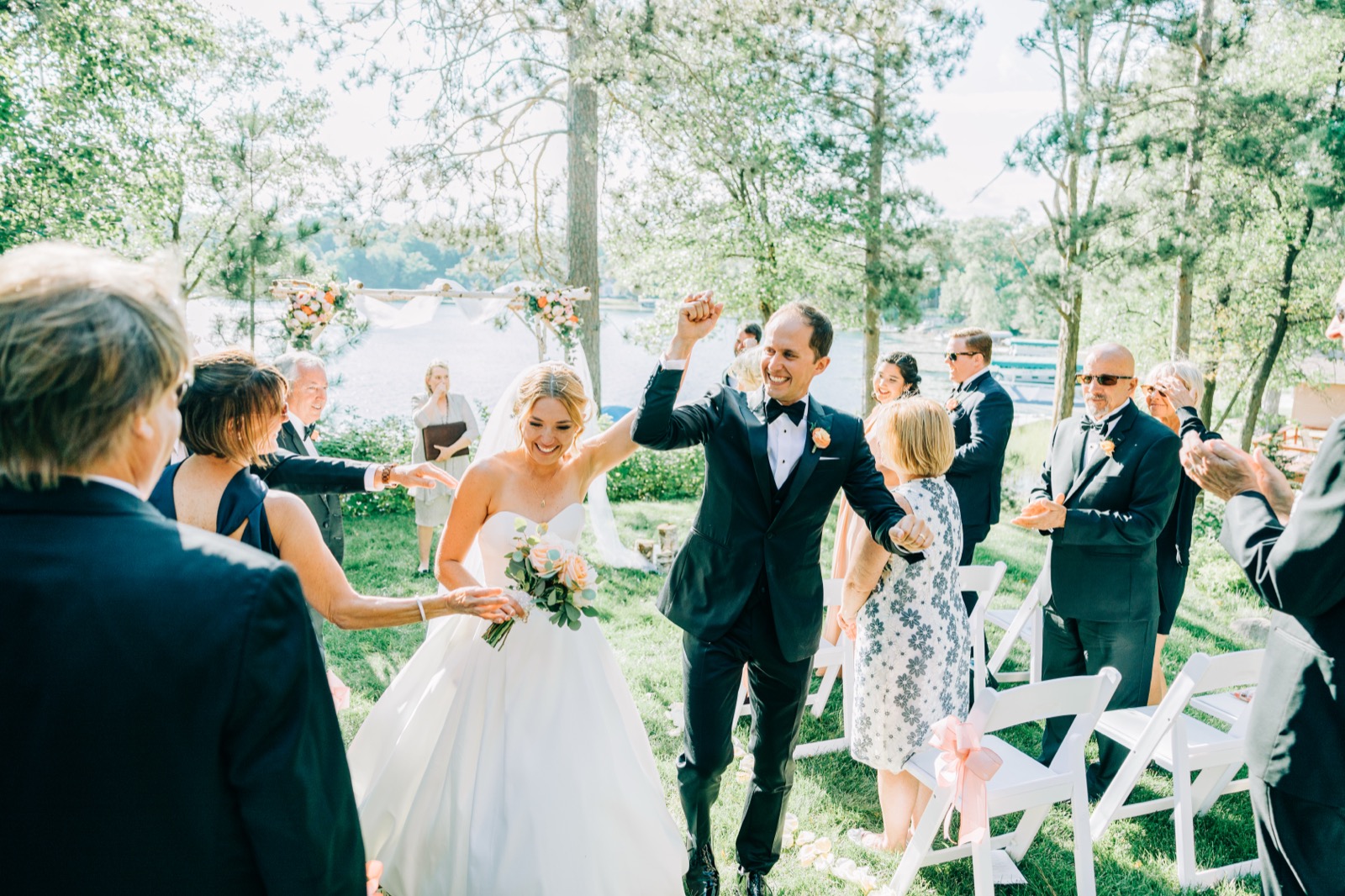
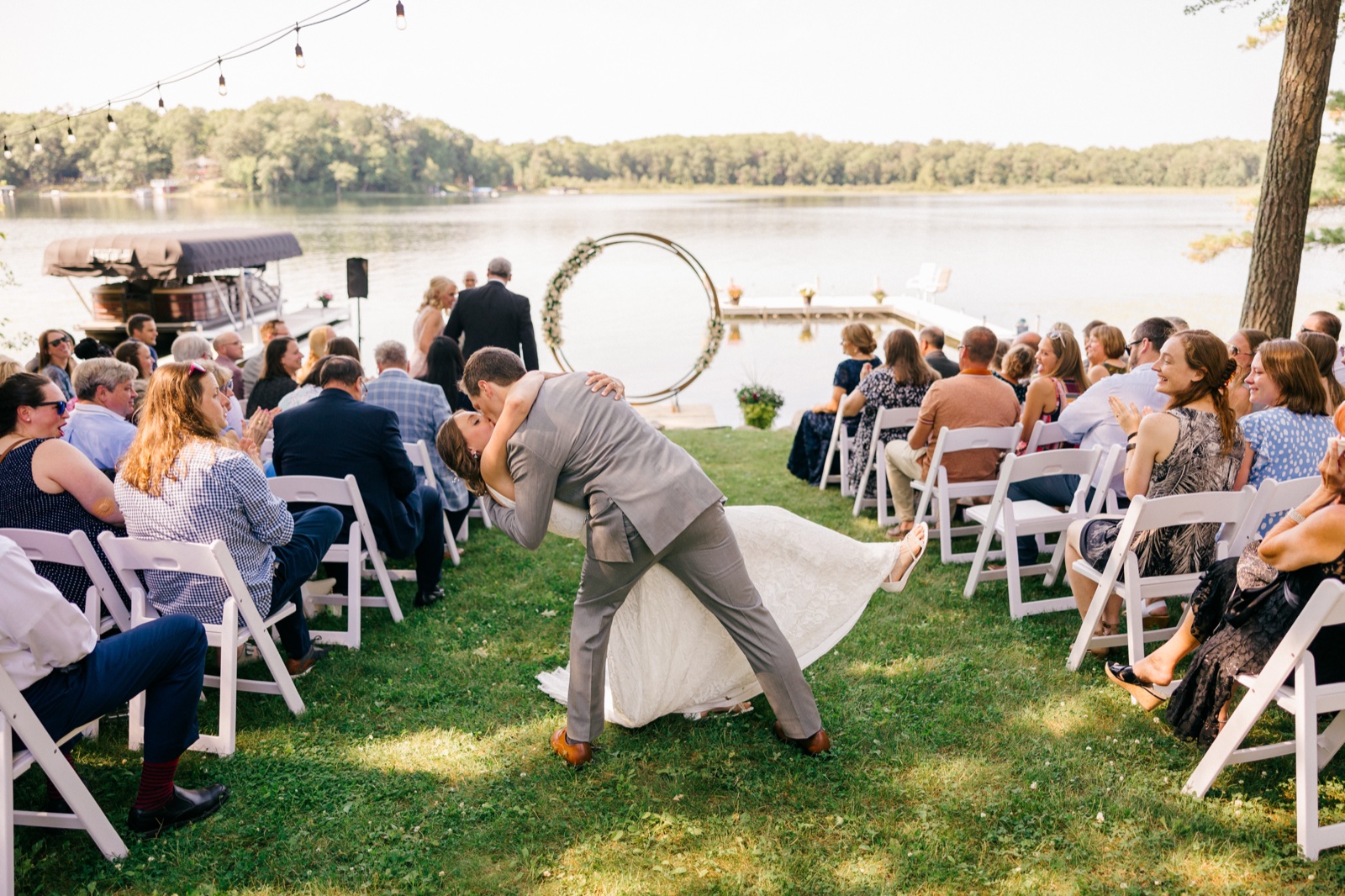
Yes — and on the right property it reads more cinematic than a resort. Monica and Erik married at her family's cabin on Bay Lake, near Deerwood and Crosby in the Brainerd Lakes, with a circular white-rose arch on a lake-edge platform, a sailcloth tent among the pines, and a sparkler tunnel on the grass at dusk. What makes it work: a flat enough lakeshore for the ceremony, enough lawn for a tent, parking the family can coordinate, and people willing to live with the setup-and-strike rhythm — Monica's family did their own setup and hosting, and her father built the bar. Add event insurance and, if you can, one hired coordinator so your relatives get to be guests.
A sand ceremony is a unity ritual where two colors of sand are poured together into one vessel, so the layers can't be separated again. Monica and Erik wove one into their vows — two corked vials of blue and tan sand on a wood slab, an acrylic plaque inscribed with Song of Solomon 3:4, and teal and cream sola flowers as accents. It photographs cleanly because it's small, slow, and intentional — the kind of physical moment a documentary photographer can stay close to without staging it. A private-property setting tends to absorb a unity element more naturally than a resort altar does.
A backyard or private-cabin wedding isn't automatically cheaper than a venue, because you're renting individually what a resort bundles into one price — the tent, dance floor, lighting, tables and chairs, restrooms, catering setup, and parking. Monica and Erik's day shows the line items: a sailcloth tent, a parquet dance floor, and peak-to-pole cafe lights all came in as separate rentals. What their family saved, they saved in labor rather than dollars — they did the setup, the hosting, and the bar themselves, and her father built the bar itself. I'm the photographer rather than the planner, so for those numbers a wedding planner or tent-rental company is the right source. For photography, my pricing guide lays out the collections — they run from the low thousands up — and you can start a conversation any time through my contact page.
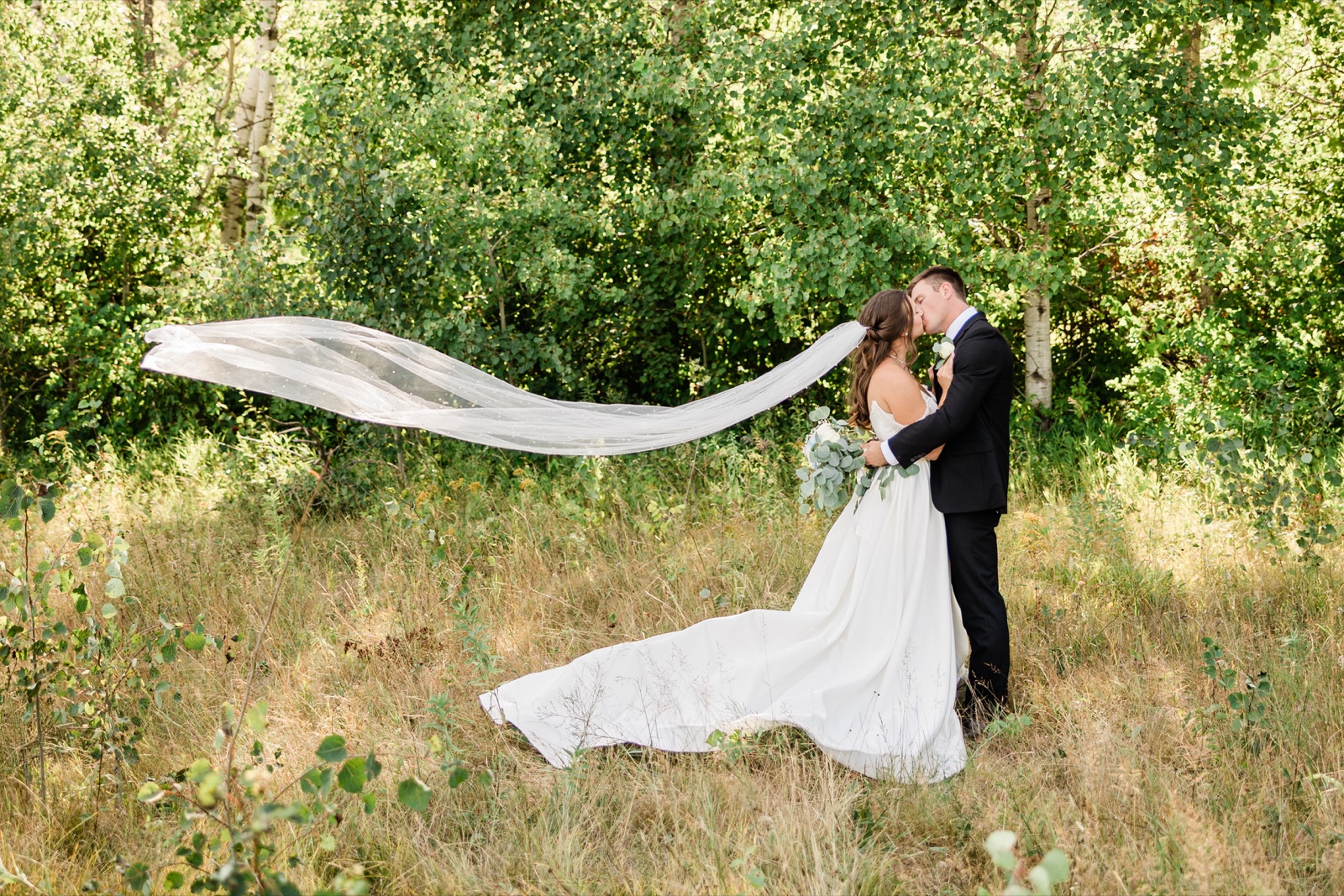
It's one good option rather than a rule, and on a private property a first look rarely feels staged — there's no audience and no logistics tail, just the two of you. Monica walked up behind Erik on a wooded lawn between the cabin and the tent, and the rest happened on its own, including a private vows reading from Erik's phone in a nearby clearing. The practical upside is that a first look settles couples who aren't used to being photographed, frees up the timeline, and lets the editorial portraits happen before the ceremony so you can go straight to your guests afterward. I shoot about 60% documentary and 40% editorial, so either way most of the day stays unposed.
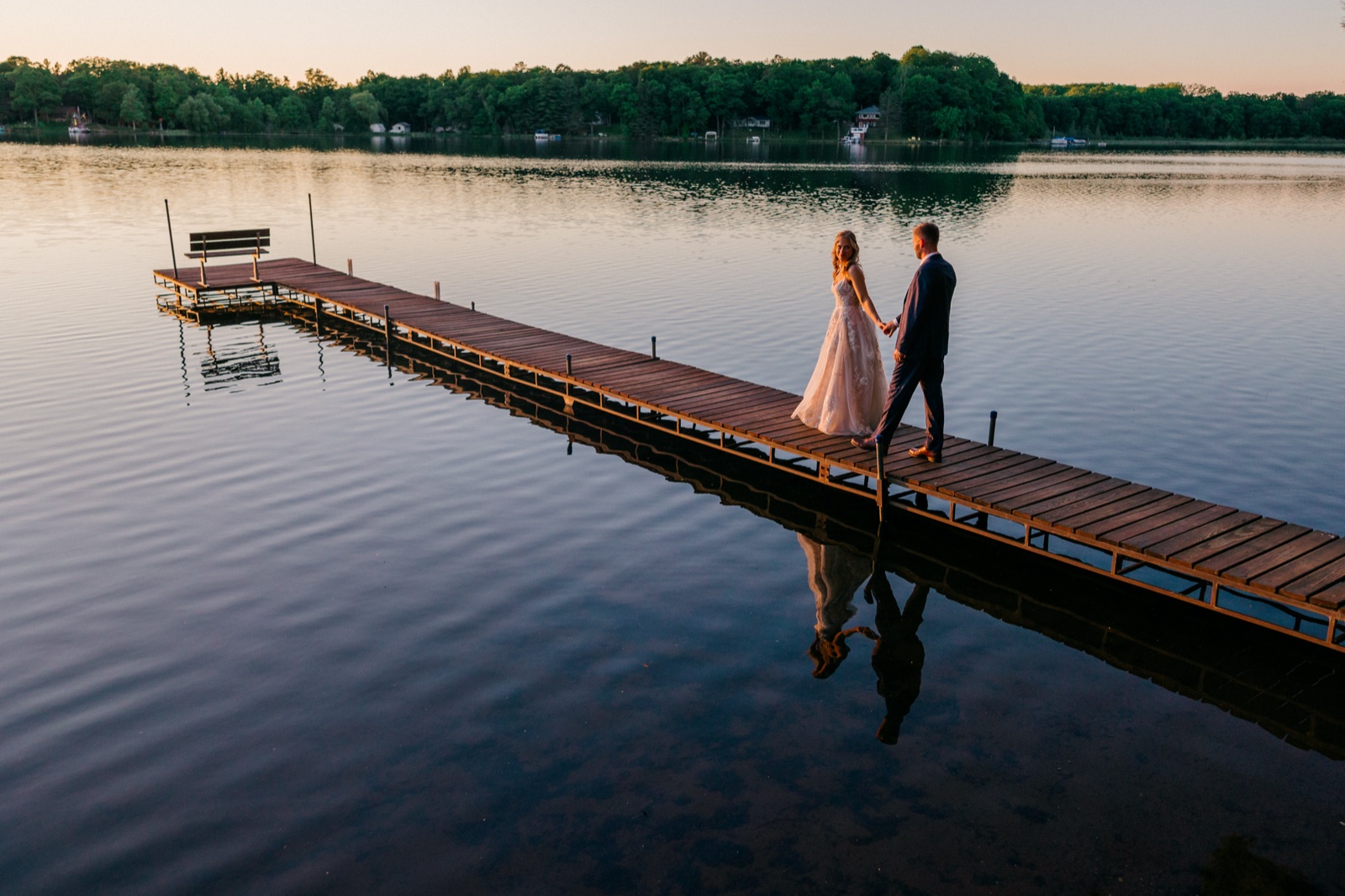
On a mid-summer lakeshore I like a late-afternoon ceremony, around 4:30, when the lake softens the overhead light and the tree line ringing the property blocks the harshest side-light. The light stays warm through cocktail hour and tent dinner, then the strongest portraits come right before sunset — for Monica and Erik that meant walking down to the dock for a twirl and a silhouette kiss against a dramatic cloudscape over the water. The sparkler send-off lands last, at full dark, with the string-lit cabin glowing behind it. Exact sunset times shift through the season, so I build each timeline around the light for that specific date.