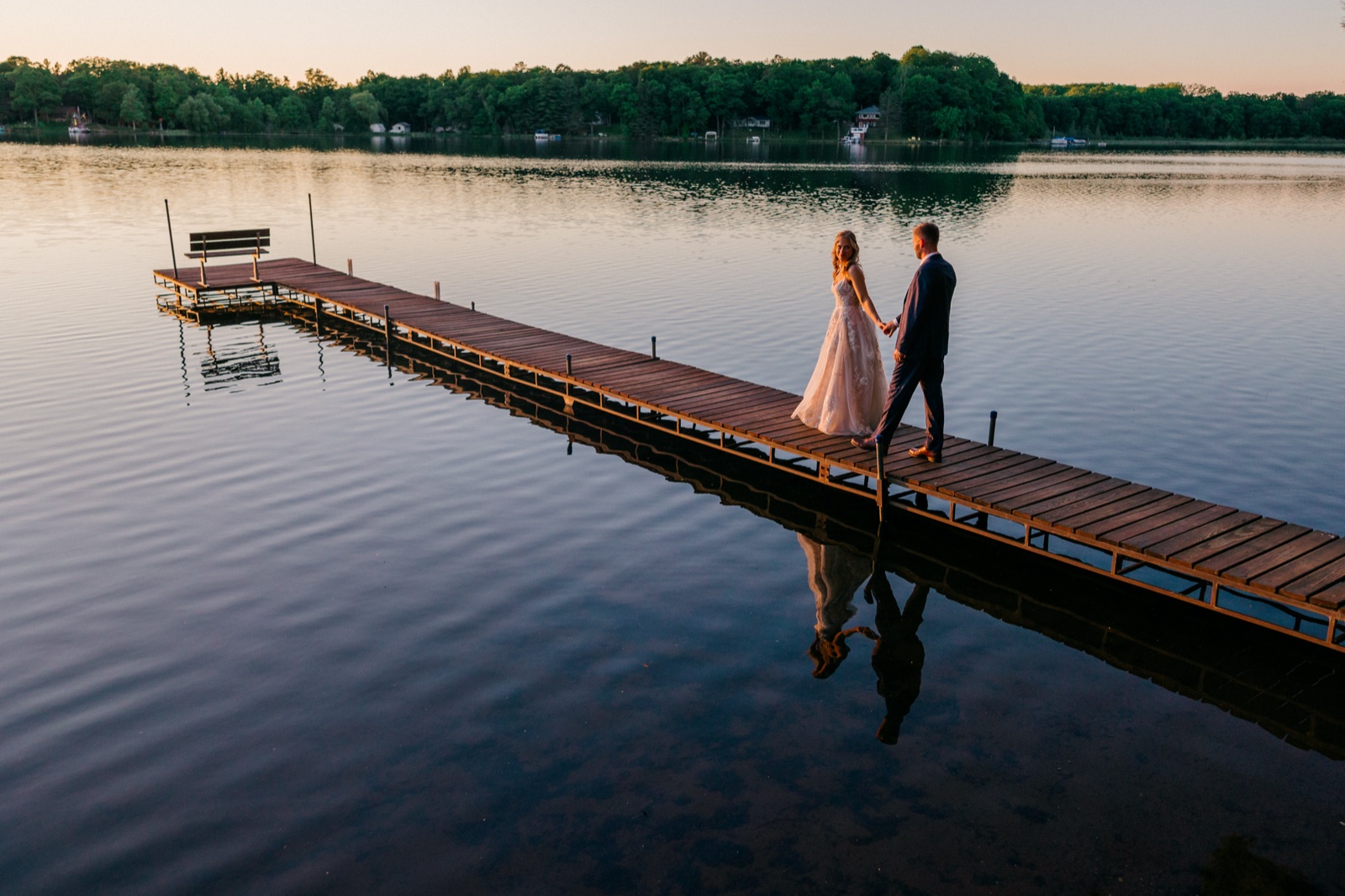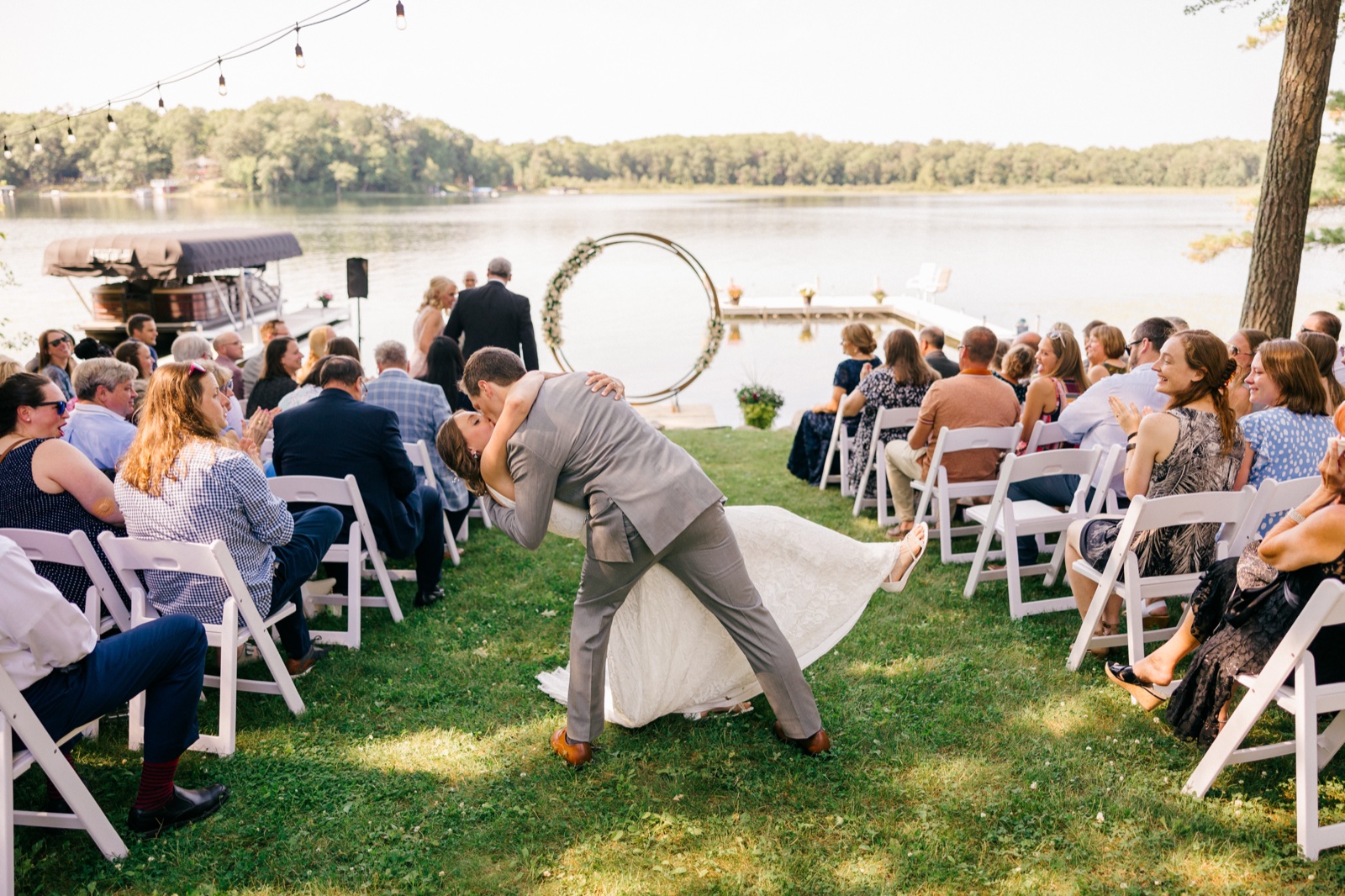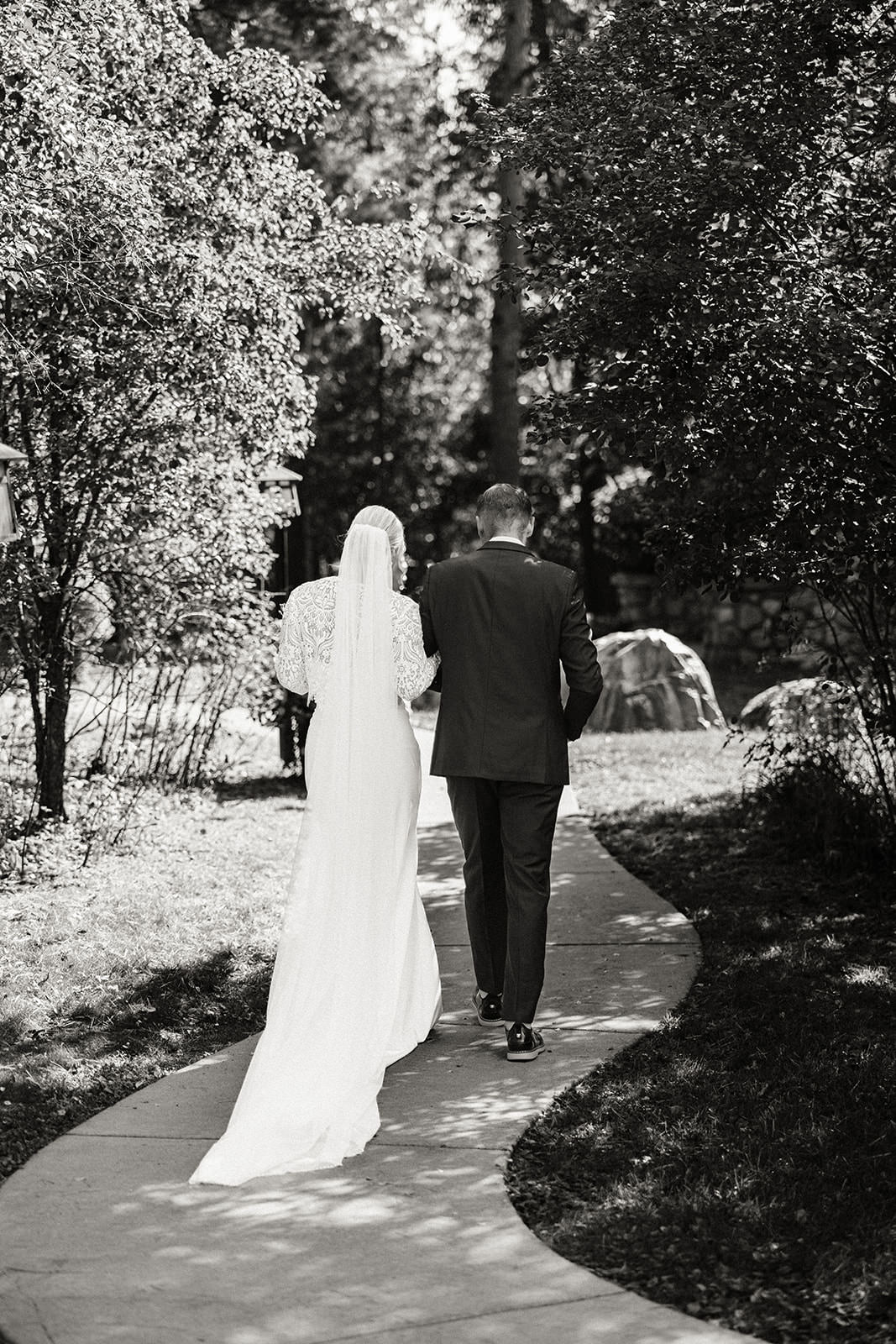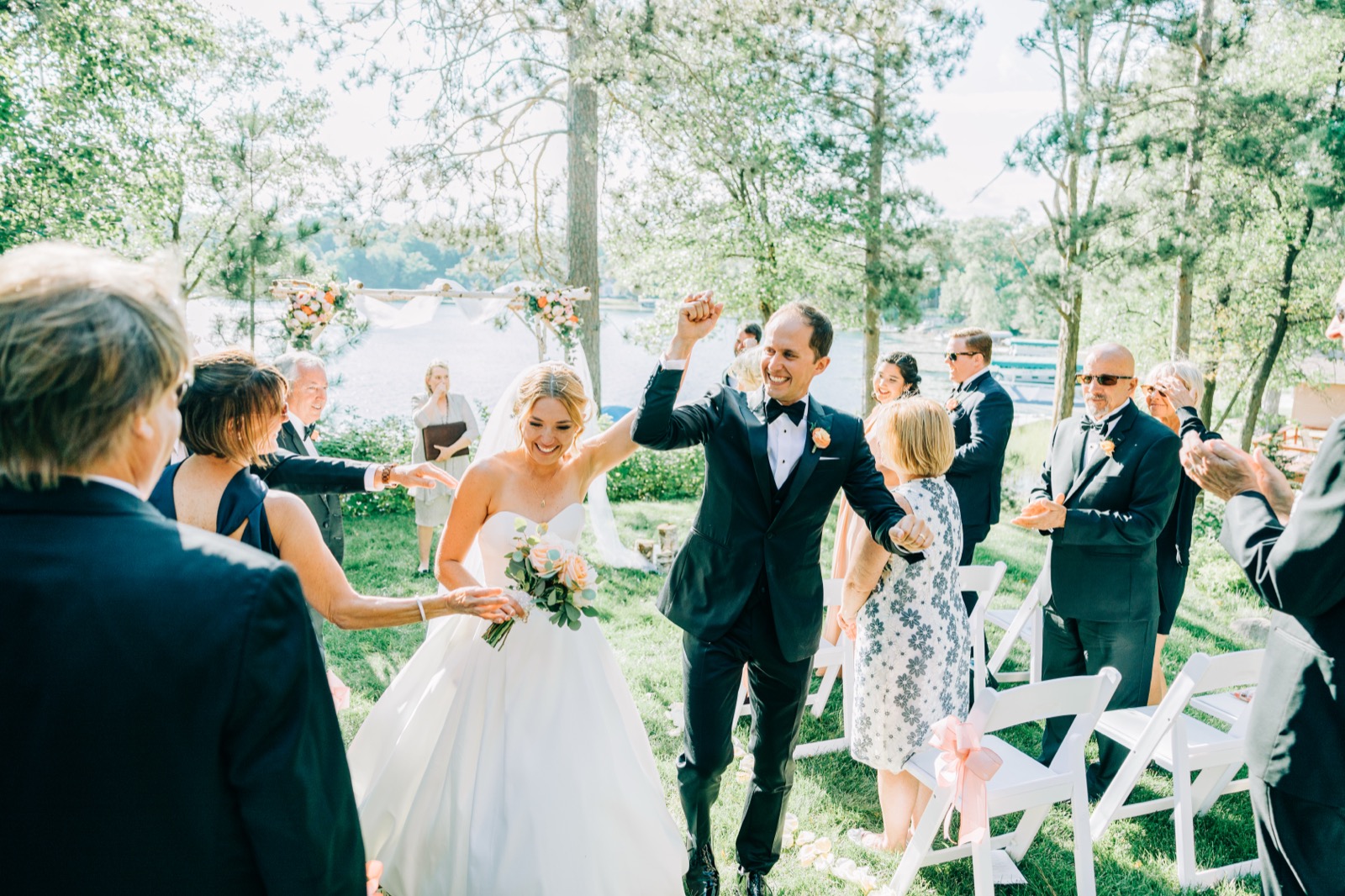
We're just doing it at my family's place on the lake — is that weird? It's the question I get on about a third of first calls. The short answer is no. The longer answer is that it's often the better version of the day — and the reasons aren't the ones couples usually expect.
I've photographed weddings at private cabins and family lake properties all over the Brainerd Lakes region — Gull Lake, Whitefish, Crosslake, a stretch of Pelican I'd never seen before. The coverage is the same as a resort wedding. The timeline runs the same way. What's different is everything the property itself brings into the frame — and how the day moves when it isn't being run by someone else's schedule.
- 01 The Dock where your grandparents fished
- 02 The Tree Line what your dad planted, forty years ago
- 03 The Kitchen where the real toasts get written
- 04 The Garage and the paddles leaning against its wall
- 05 The Firepit and the folding chairs around it
- 06 The Lawn and the game that always breaks out on it
None of these appear on a resort checklist. All of them end up in the gallery.
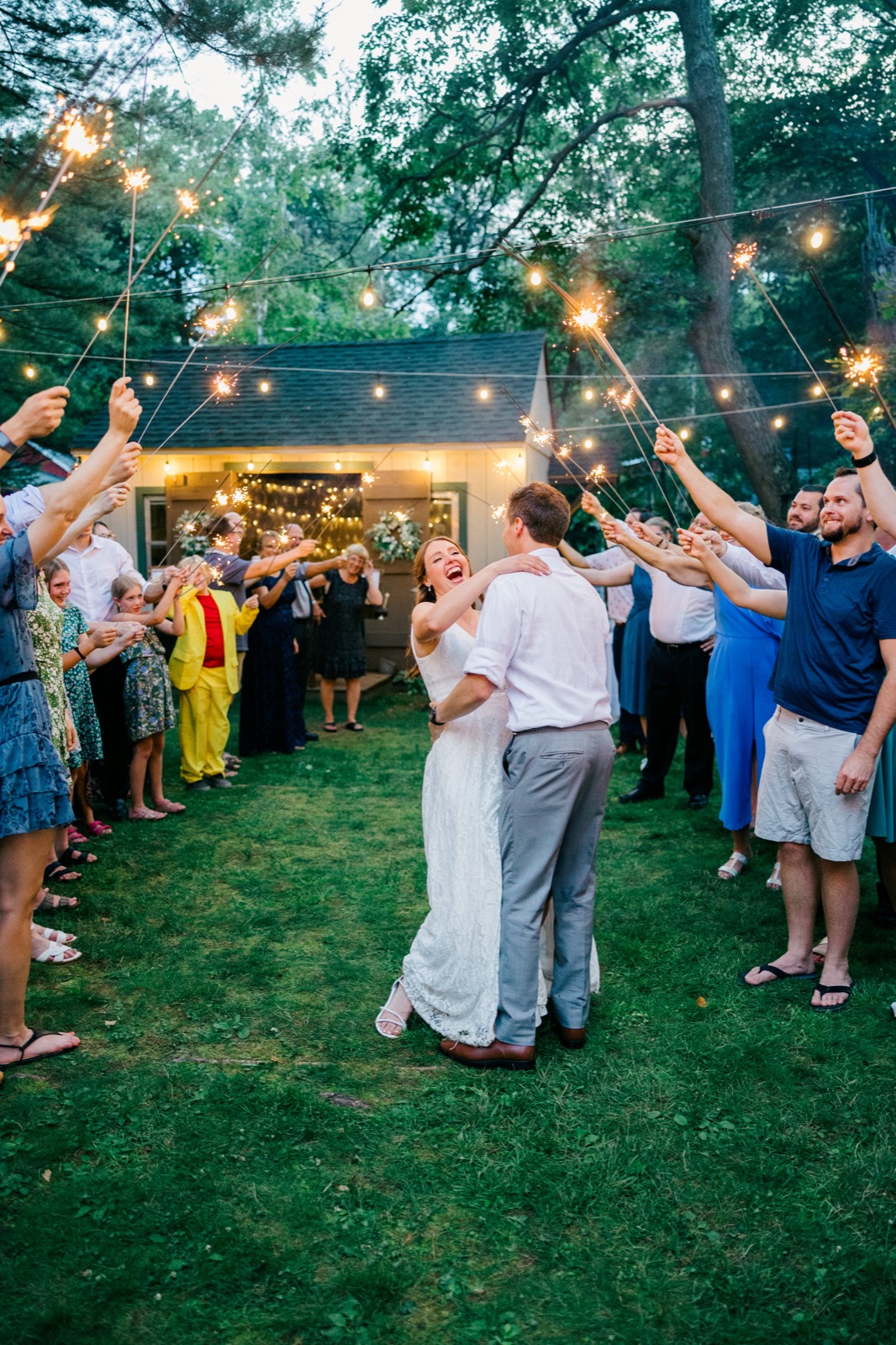
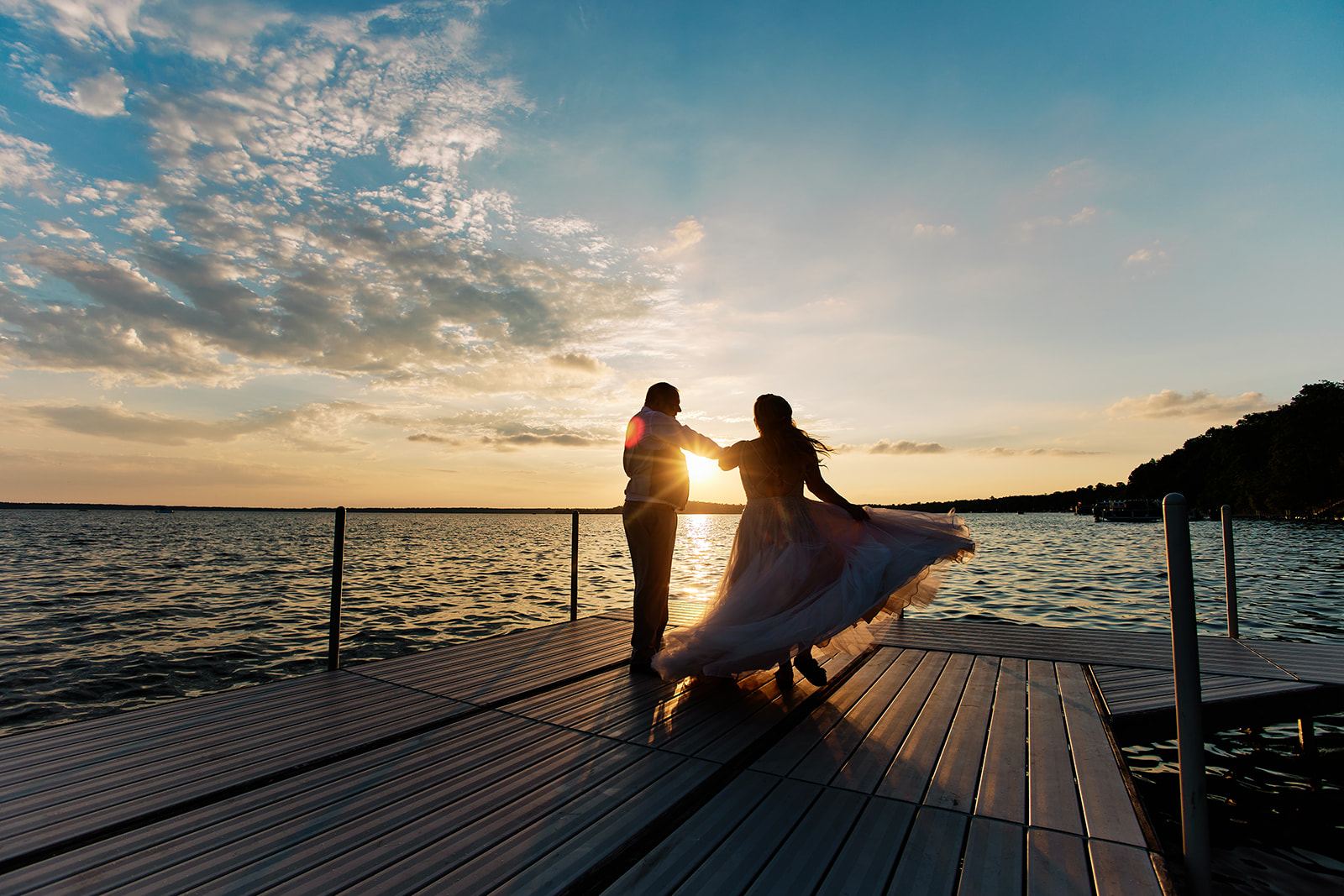
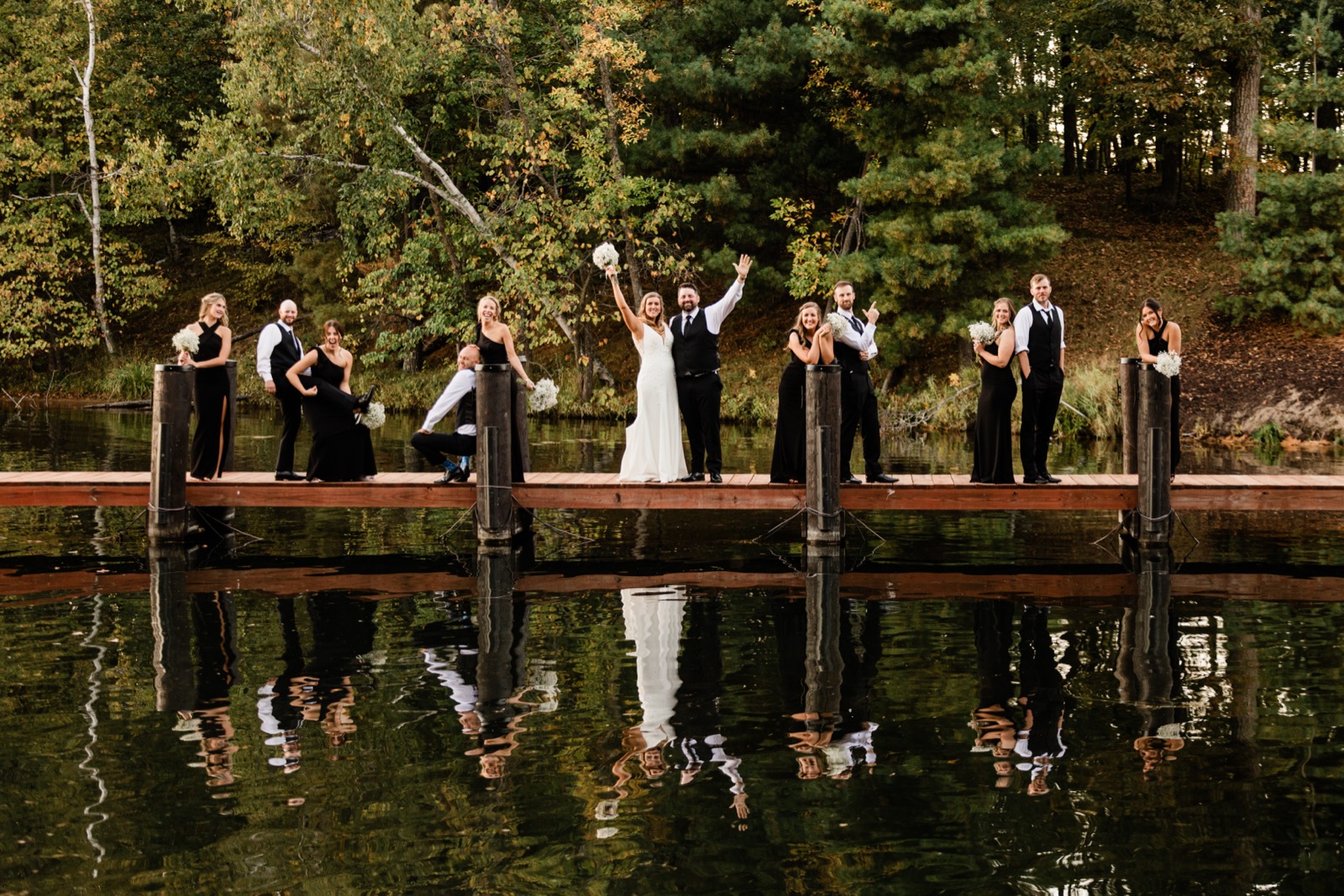
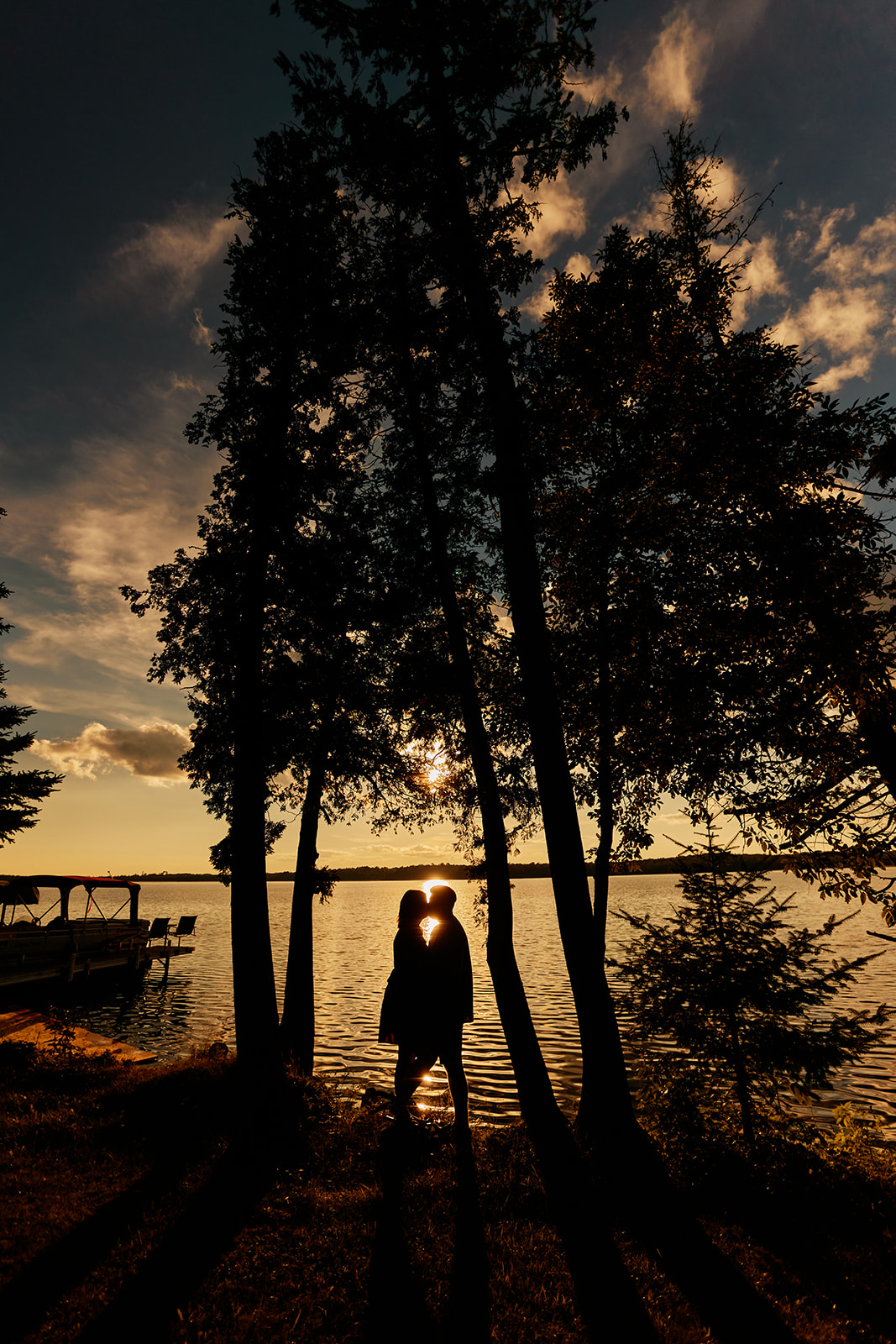
Eight frames from private family lake properties
Selected from weddings on private family lake properties across the Brainerd Lakes — Gull Lake, Whitefish Bay, Bay Lake, and a handful of unnamed coves. Each is doing one of the things the post is about to argue for: the dock, the marquee, the warm-bulb tent, the lakeside ceremony, the cabin great room.
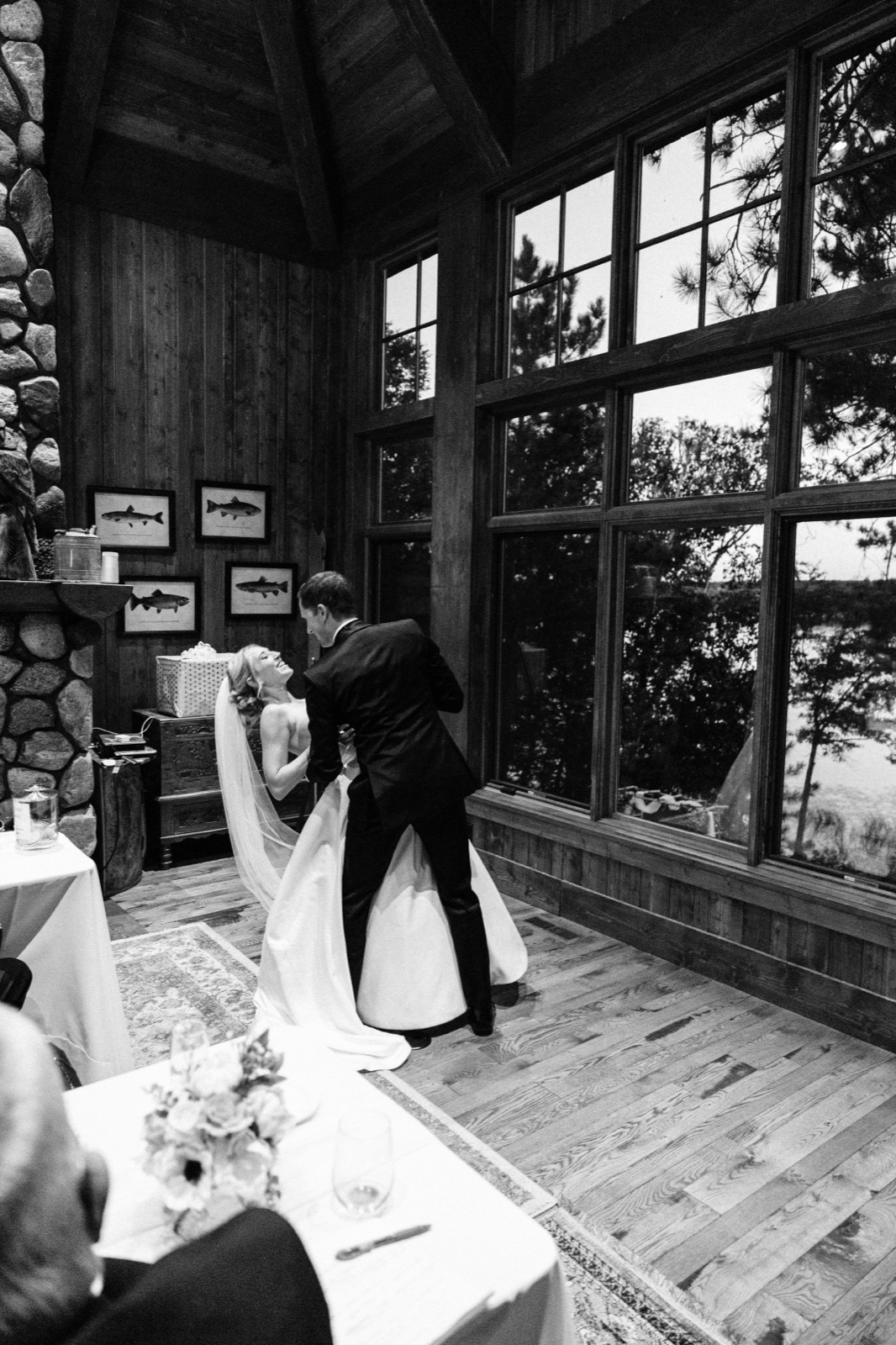
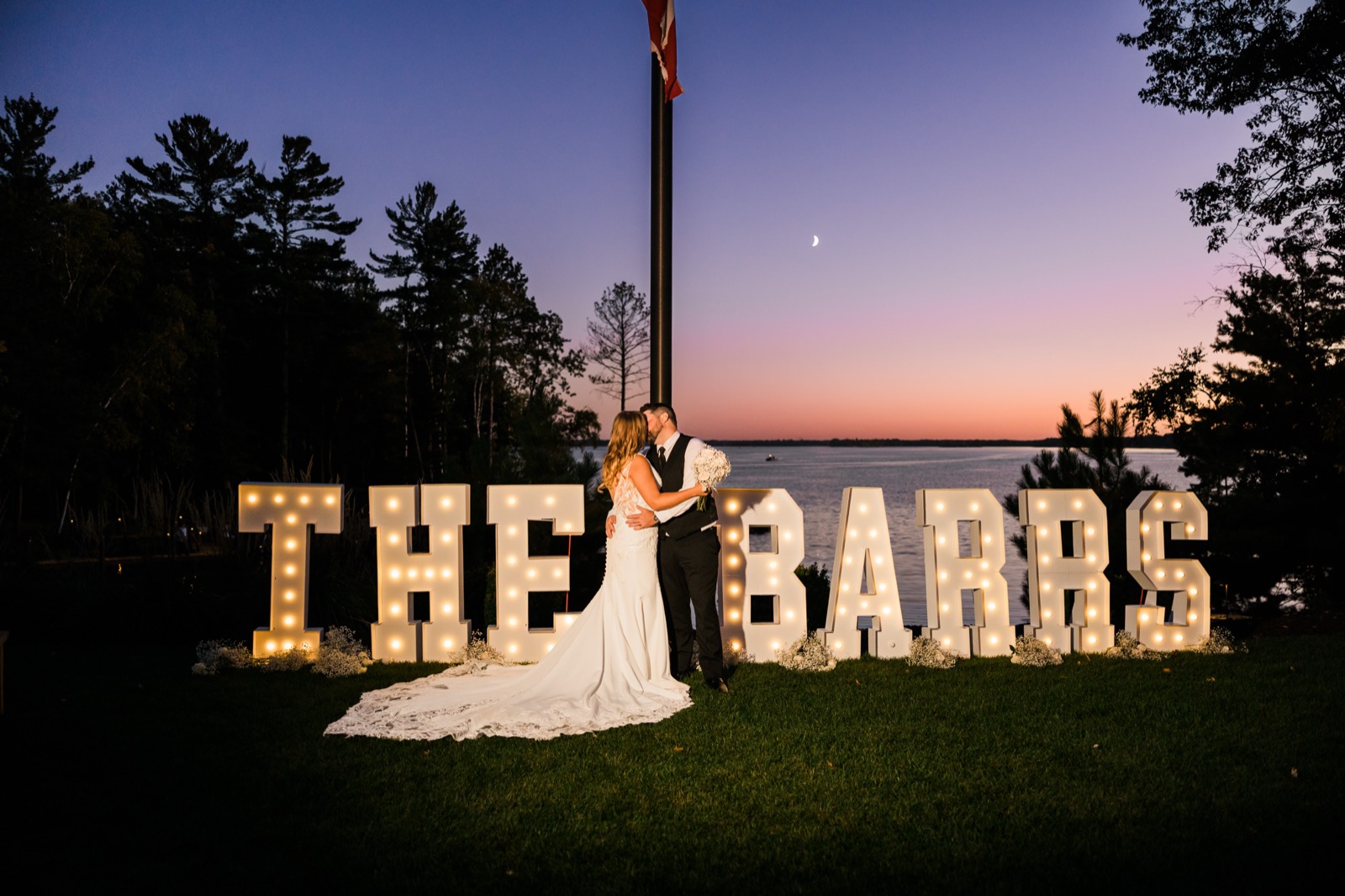
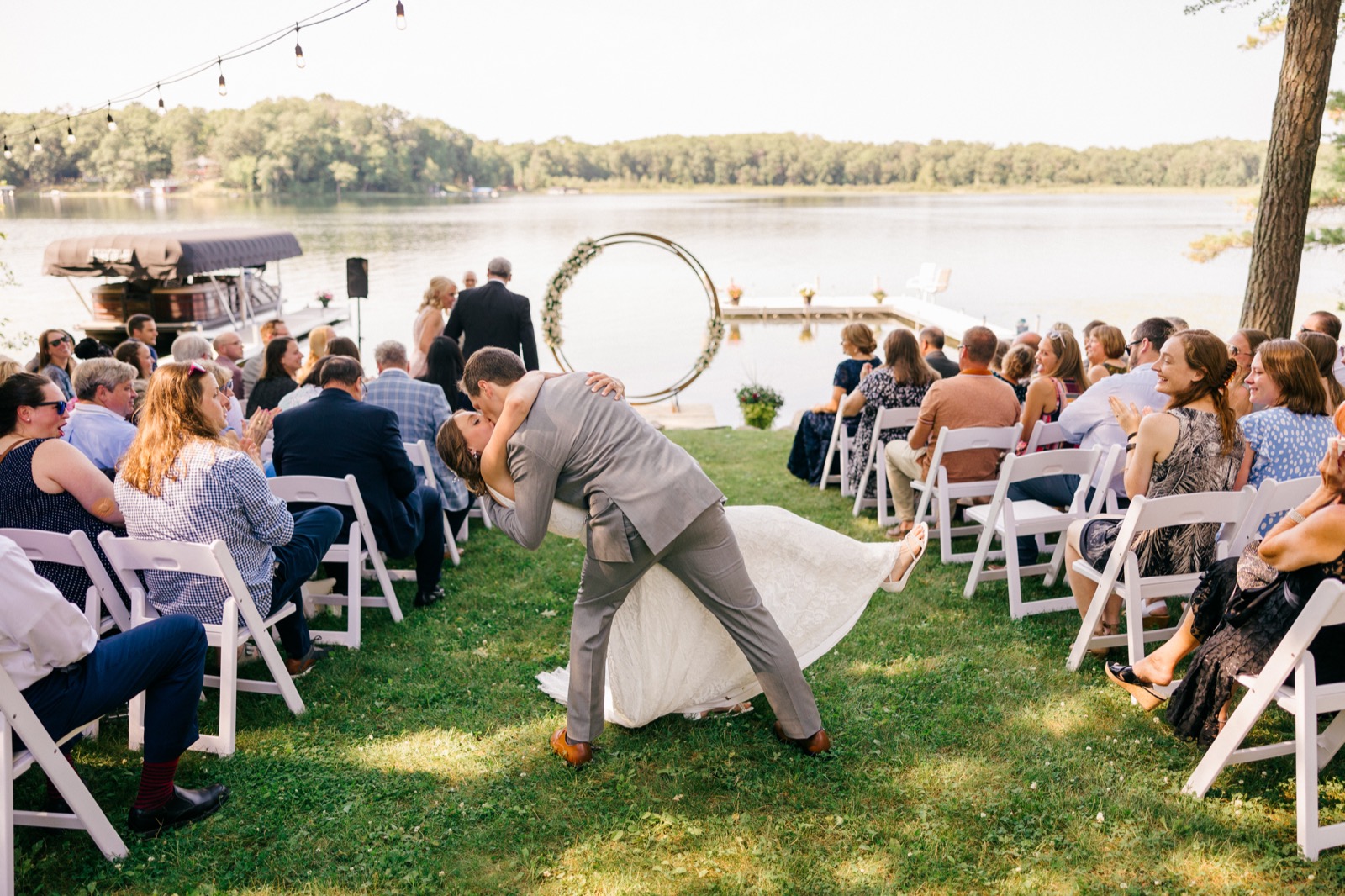
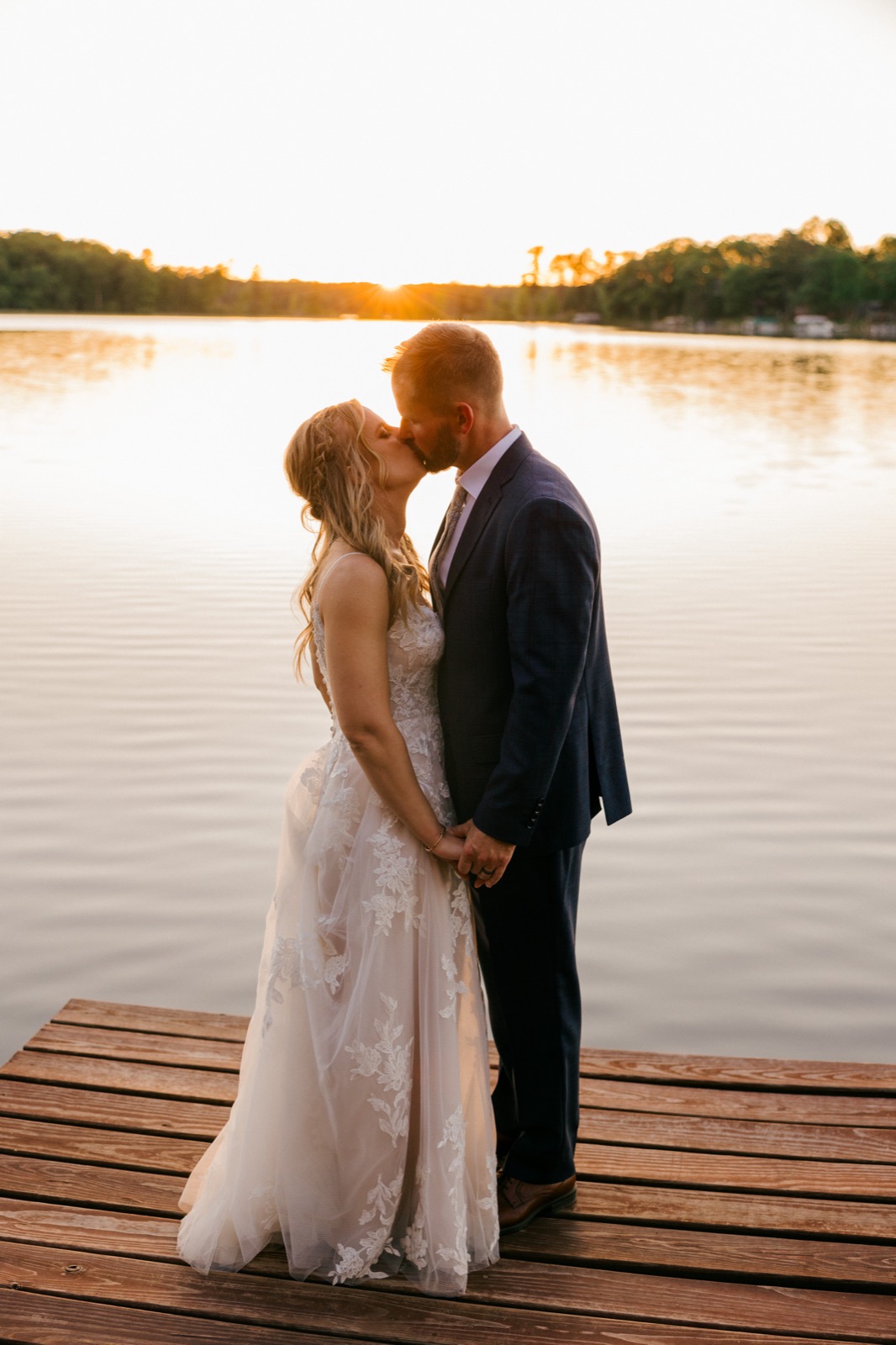
If you're weighing a family property against a resort, here are four things I'd tell you based on what I've actually seen.
The property is already half the story
A resort gives you a ceremony lawn, a reception room, and a dock. A family property gives you the dock your grandparents built, the tree line your dad planted, the kitchen where everyone hung out every July since you were seven. It comes with a gallery of details that no resort has because no one could have scripted them.
The frames I end up shooting at these weddings are almost always specific to the place — a pair of old paddles on a garage wall, your mom at the stove finishing the toasts you didn't know she was writing, a cousin teaching a kid to skip rocks while the ceremony chairs are being set up behind them. I'll never guess those details the way the family lives them. My job is mostly to notice.
Lake light works the same at any address
There's a quiet myth that the resorts have better light. They don't. Light on a Minnesota lake doesn't know whether the dock belongs to Cragun's or to your uncle. If the water is open to the west and the sky is clear, the hour before sunset will do the same thing regardless of whose name is on the property tax bill.
The one thing worth checking before the timeline gets finalized: which direction your dock points. West-facing docks get the full sunset window. North or south docks still get beautiful side-light but lose the classic silhouette. For the full math on when golden hour lands, the timeline builder will give you sunset for your specific date and work the rest of the schedule backward from there.
Under canvas, after dark, it photographs like a film set
Tents reward photography more than ballrooms do. Canvas walls warm up the light. String lights read cinematic instead of clinical. A firepit thirty feet from the dance floor adds a second light source the photos can use. By the time the dance floor is full, the whole scene is layered the way a film-set would be — practicals in the background, warm faces in the foreground, real dark in between.
The one ask I make of every family-property couple before their rental order goes in: warm bulbs, not cool white LED. Anything labeled 2700K–3000K reads like a table lamp. Anything labeled 5000K or "daylight" reads like a parking lot. It's a small line item and it's the single biggest call on how your reception photographs end up feeling.
Warm bulbs photograph like a film set. White LED photographs like a parking lot. There isn't a camera trick that turns the second one into the first.
A smaller, looser day shoots more like a film
Backyard weddings run looser than resort weddings. The cocktail hour stretches because nobody's pushing the DJ to start. Kids run around because there's a lawn for running around on. Toasts come out of nowhere because anyone can walk up to the mic. All of that is good for the photographs — unguarded and specific instead of on-schedule and generic.
The coverage doesn't change — I still walk into these days with a plan, and I still help you through the parts where people aren't sure where to stand. The day just breathes a little more than it would at a resort, and what comes out of it is usually closer to a family film than a wedding album.
Four reasons the family lake property often wins
Every wedding choice is a trade-off. A resort trades character for logistics — someone else handles the rentals, the parking, the back-of-house. A family property trades logistics for character — you'll work harder on the planning, and the photographs will carry more of who you actually are.
- 01
The place is already half the story
Family details read specific in a way resort details can't.
- 02
Lake light is lake light
Golden hour doesn't care whose dock it is — check which way yours points.
- 03
Warm bulbs, not white LED
The rental lighting call that separates cinematic from clinical.
- 04
Looseness helps the photos
A day that breathes reads like a film, not a schedule.
If you're planning a wedding at a family lake property and want a photographer who's worked these days before, get in touch. For a recent example of what a private-lake tent reception actually looks like, there's a Whitefish Lake gallery here.
Frequently Asked Questions
Yes — and a meaningful share of the weddings I shoot each year happen at private family properties on Gull Lake, Whitefish, Crosslake, and elsewhere in the Brainerd Lakes. The coverage, timeline, and gallery are the same as a resort wedding; the only thing that changes is the set of details I'm looking for. It's often the better version of the day — the place already means something to you.
Warm bulbs, not cool white LED. String lights at 2700K–3000K — the same color as a table lamp — photograph like a film set; 5000K 'daylight' LEDs read clinical and flatten everything out. It's the single biggest rental-order call that separates a tent that photographs cinematic from one that photographs like a parking lot, and a firepit adds a usable second light source after dark.
I'm not a budget calculator, so I won't quote a number — but here's the honest trade-off: a resort bundles rentals, parking, and back-of-house into the venue fee, while a family property shifts those to line items you arrange yourself — tent, tables, lighting, restrooms, catering. Cheaper than a resort isn't automatic. What you reliably gain is character and a place that means something, which is usually what shows up in the photos.
Not automatically. Getting married at home removes the venue fee but adds everything the venue normally includes, so the savings depend on what you'd otherwise have to rent and coordinate yourself. The real win usually isn't the budget — it's character over logistics: a property with personal meaning tends to produce a more personal day, and more personal photographs.
Four things matter most: treat the property's own details — the dock, the tree line, the kitchen, the firepit — as half the story; check which way the dock or open water faces and build the timeline backward from sunset; choose warm 2700–3000K lighting for the tent; and let the day run a little loose, since a smaller, personal wedding doesn't need resort-grade choreography.