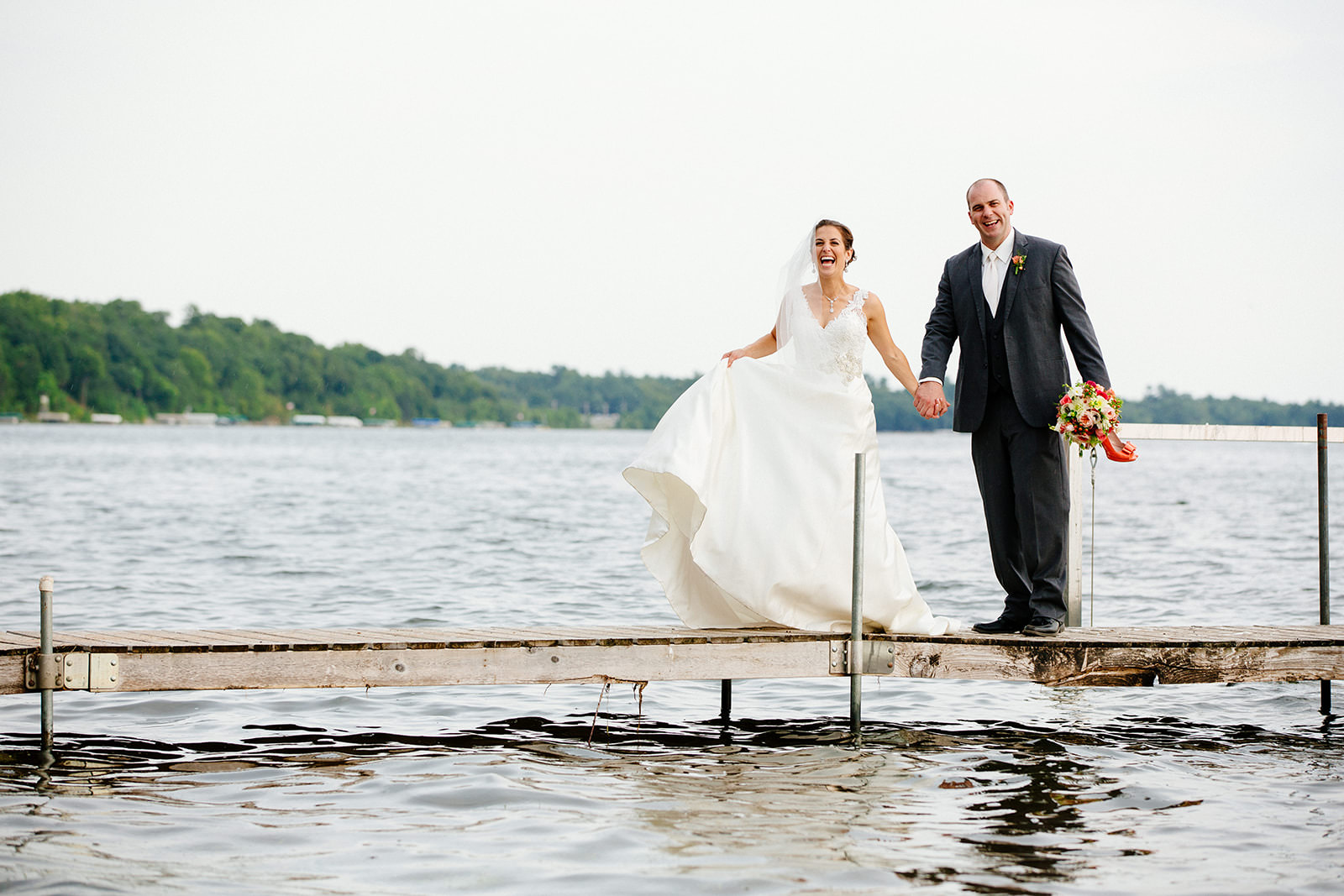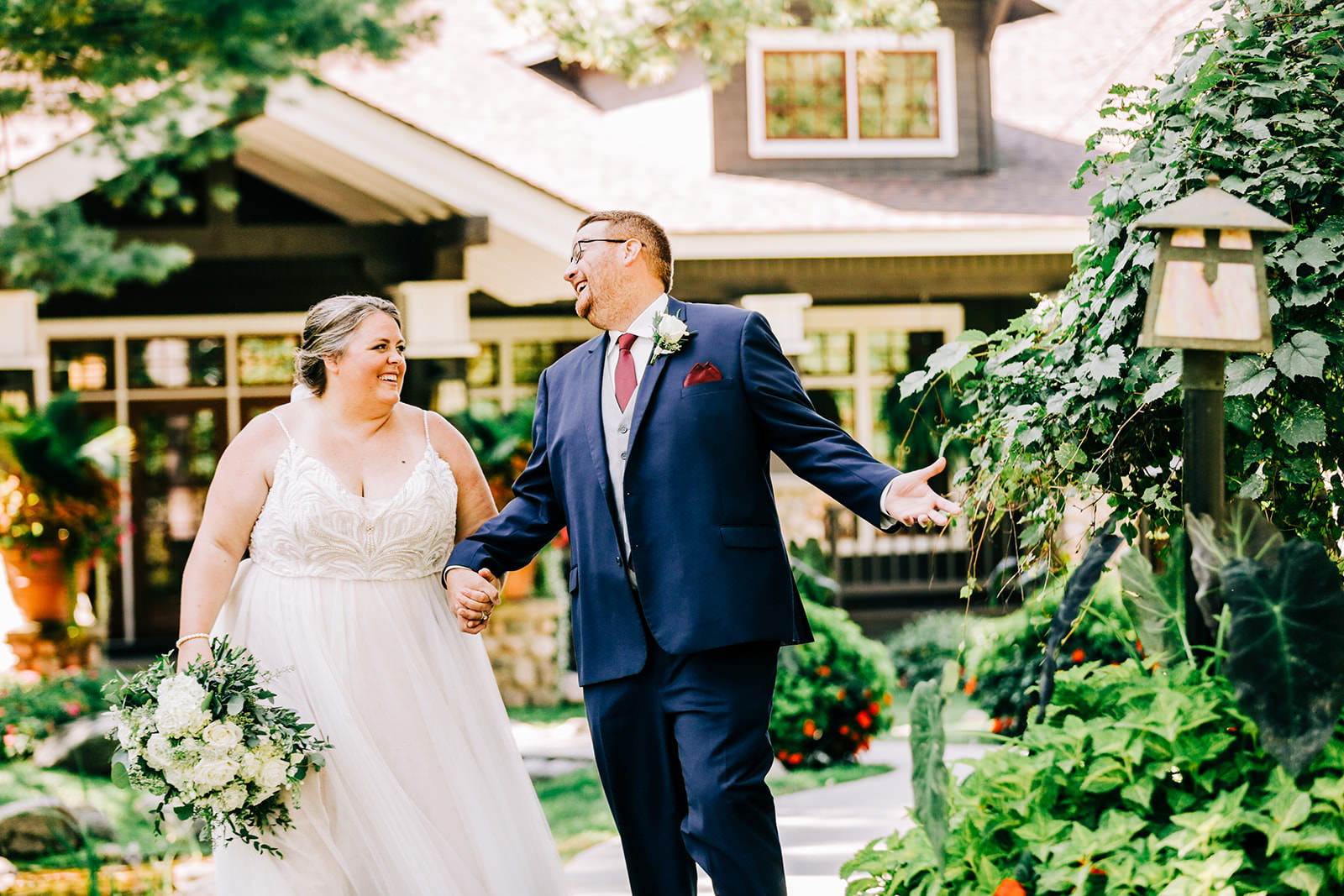
Family formals are the part of the wedding day everyone says they hate. They don't have to take an hour. Built additively — start small, add people, never subtract — sixteen groupings take thirty minutes and you still make cocktail hour.
I've shot hundreds of them. The ones that run long all look the same: no list, no wrangler, a photographer asking "who's next?" into an empty room while the bride's aunt wanders off to find her glass of wine. The fix isn't a faster photographer. It's five small calls, made before the ceremony starts.
Build additively. Parents anchor the block; extended family and grandparents slot in at the end so nobody stands longer than they need to. After cue 06, the whole sequence repeats — same six-step build, this time on the groom's side. Sixteen groupings total, thirty minutes, one set that never resets.
Make it Friday night — not Saturday morning
You don't build the list alone. A few weeks before the wedding, I'll sit down with you and walk through the whole thing — who's in each grouping, who's being difficult to schedule, which grandparent can stand for five minutes and which can't, whether there's a blended family situation that needs its own frame, whether anyone's being honored-in-memory. Your family is not the last family. I've done this a couple hundred times and every one of them has a wrinkle somewhere. We work it out together so the list on the day reflects your actual family, not a template.
The output is one written list — groupings, full names, who's in each one, in order. Morning-of is too late; nobody is checking a phone in a tux, and the tux is already the third thing going wrong that day. We share it three ways: with me, with the wrangler (see call 04), and with the wedding planner. A list that only lives on the bride's phone doesn't exist when the bride is in the ceremony.
Smallest group first — add people, never subtract
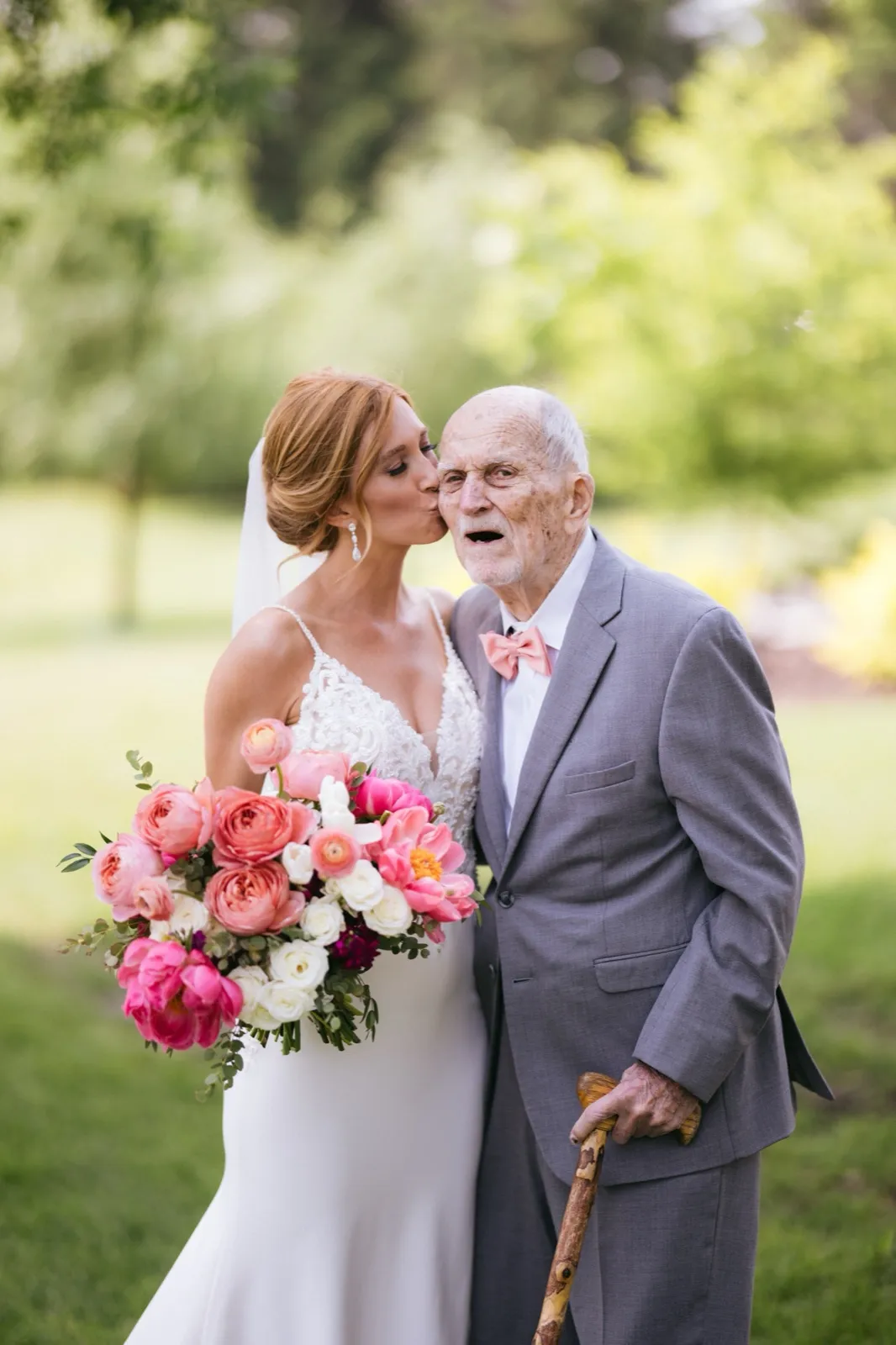
Start with the bride alone with her mom. That's the first frame. Then trade Mom for Dad. Then both parents. Then add the groom. Then add siblings. Then add in-laws and children. Then add grandparents. You've moved through the bride's entire family without anyone leaving the set — every person in shot one is still standing for shot eight. Then flip to the groom's side and run the same build — groom with mom, groom with dad, groom with parents, add the bride, add siblings, add in-laws, add grandparents.
Two reasons this works. One, the smallest groupings are the emotional ones — bride with her dad, groom with his mom — and they deserve to happen first, while everybody still has a ceremony-adrenaline face on. Two, the additive pattern means the set never resets. People join; nobody has to rearrange. Fewer instructions, more momentum — and grandparents, who tire first, are only called in at the end of each side, stand for two frames, and are released.
Five seconds per frame, no exceptions
With a list and a wrangler, sixteen groupings fit inside thirty minutes — around 1:45 per call, and most of that is people moving, not shutter time. Without a list and a wrangler, the same sixteen can stretch to 75 minutes. The variable is never the camera; it's whether the next grouping is already walking into frame as the last one walks out.
Family formals don't take long because there are a lot of them. They take long because nobody's ready for the next one.
Five seconds per frame means I shoot once, confirm eyes are open, move on. I'm not making six versions. The list is doing the thinking; the camera is just confirming.
Not you. Not me. A sibling or aunt.
The single most important person during family formals is not the photographer. It's the person calling names into the crowd. "Uncle Dave, you're up. Bride's grandmother, next." That person cannot be me — I'm behind the camera. It cannot be you — you're in most of the shots. It has to be someone who knows both families by sight and is willing to raise their voice a little.
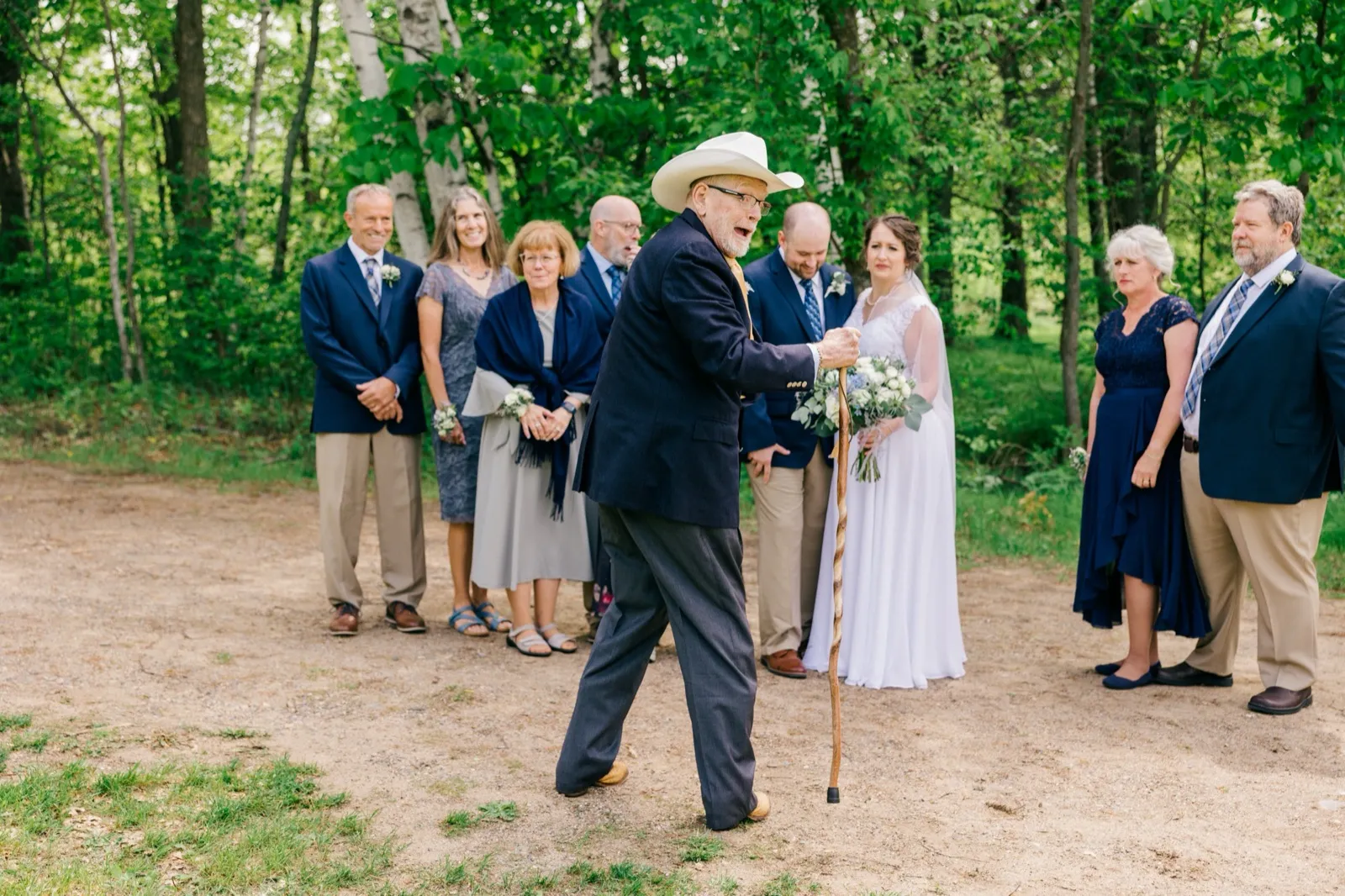
Designate them a month out. Send them the list two days before. Brief them on where the formals are happening and what the order is. If they don't know what they're doing, they can't do the job — and the job saves you a quarter of your cocktail hour.
Right after the ceremony, before guests scatter
Do formals immediately after the recessional, in the same space as the ceremony or the one right next to it. Everyone is already standing, already dressed, already in one place, already assuming something is about to happen. Pull the family back in for thirty minutes and you still make most of cocktail hour.
Wait even twenty minutes and the family has scattered into the cocktail hour — one uncle's at the bar, both grandparents sat down, and the bride's cousin took the kids to the lawn. Pulling them back is a forty-five-minute project. Catching them on the way out of the ceremony is a thirty-minute one. The timing is the call.
Five calls, thirty minutes
Family formals have a bad reputation because most people run them without a plan. With five simple calls made a week in advance, sixteen groupings take thirty minutes and nobody complains afterward.
- 01
Make the list on Friday
Groupings, names, order. Share it with three people.
- 02
Build additively — add, don't subtract
Start small with bride + parents. Add people without ever striking the set. Flip to groom's side and repeat.
- 03
Five seconds per frame
No multiples. The list does the thinking.
- 04
Designate a wrangler
A sibling or close aunt. Brief them two days out.
- 05
Run it right after the ceremony
Before anyone scatters. You'll still make cocktail hour.
Building your list is part of my job, not your homework. When we're a few weeks out from the day, we'll sit down and walk through the full roster — every grouping, every wrinkle specific to your family — until it's locked. Reach out to start that conversation. The timeline calculator will build the surrounding hour for you.
Frequently Asked Questions
With an additive shot list and one designated wrangler — a relative who knows both families by sight — thirty minutes is realistic for sixteen groupings, eight on each side. Without a list, six groupings can take forty minutes because nobody knows who's next and the family has scattered to cocktail hour. The variable is organization, not group count.
Build additively. Start with the bride alone with her mom, then bride with dad, then bride with both parents. From there, add people — add the groom, add siblings, add in-laws and children, add grandparents — without ever breaking the set. Then do the same build on the groom's side. Parents stay the entire block; grandparents are called in near the end so they don't stand longer than they need to.
Immediately after the ceremony, before guests disperse. Everyone is already standing, already dressed, already in one place. Pull the family aside for thirty minutes and you still make most of cocktail hour — move it later and you're pulling people out of a party.
One written list with full names, built in the additive order above. The trick is to account for your family's real wrinkles ahead of time — a grandparent who can't stand long, a blended-family grouping, a frame in memory of someone who's gone — so none of it gets improvised on the day. I build the list with you a few weeks out and share it three ways: me, the wrangler, and your planner. It's my homework, not yours.
It gets worked out on the written list weeks ahead, never improvised in front of everyone. The additive build still applies; any sensitive combinations simply get their own planned frames so no one is put on the spot. The goal is a calm, pre-agreed order — the process handles it, without anyone having to make a decision while the room waits.