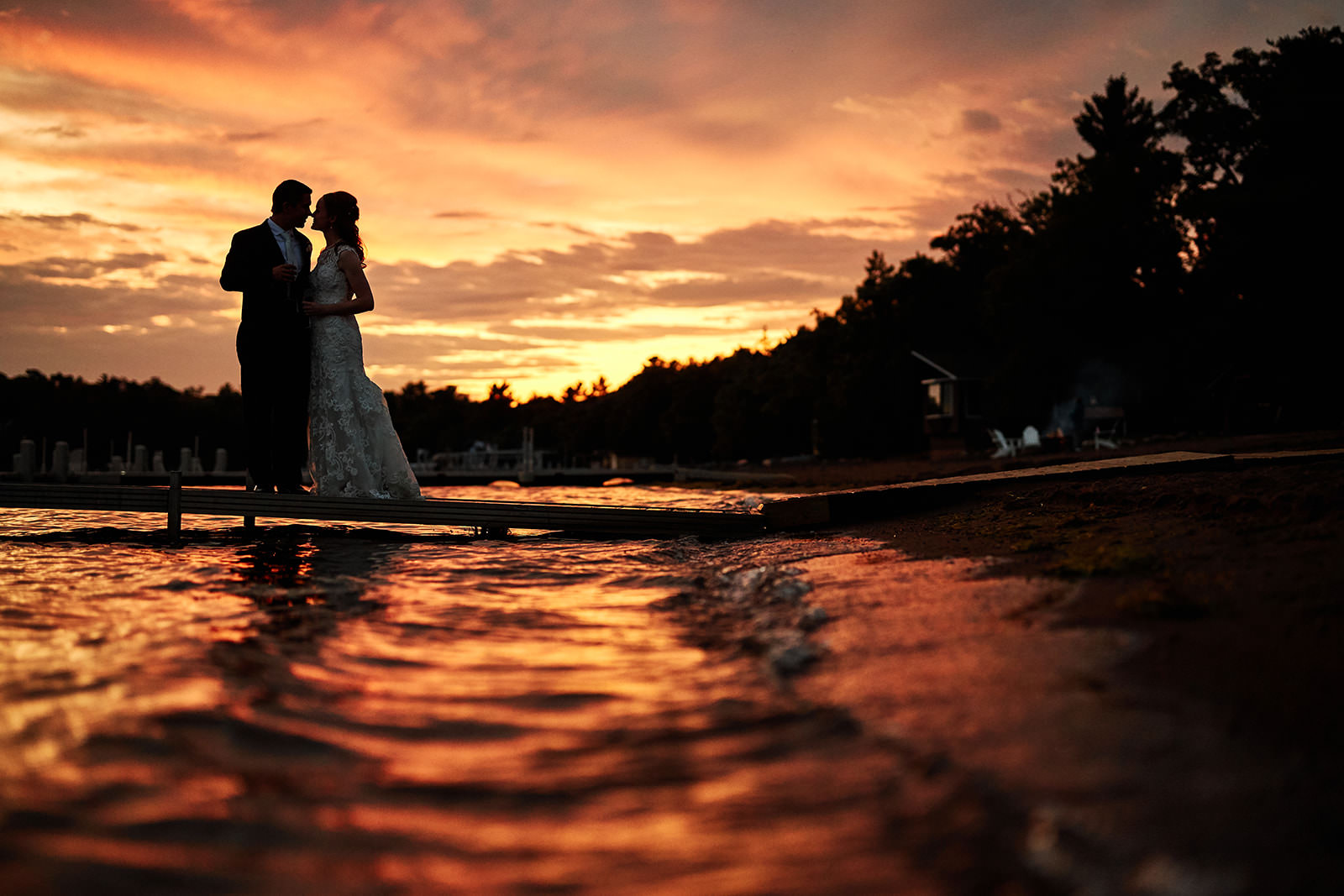
Some couples care a lot about the sunset photographs. Some don't. If you're in the first group, the hour before sunset is the one to think about early — because if it isn't planned for, the day will use it for something else.
On Gull Lake, sunset lands around 8:50 in late June, 8:15 in early August, 7:30 by mid-September. Whatever date you're picking, the math is the same — there's one short window for that specific light, and a few small decisions made weeks ahead are usually what determines whether it stays on the timeline.
Block the 45 minutes ending at sunset. Build the rest of the timeline backward from there.
Timelines that lose the sunset window almost always lose it the same way. A 4 p.m. ceremony on paper becomes a 4:25 ceremony in real life. Receiving lines drag. The dance floor opens late. The 45 minutes that were going to be the quiet portrait window get handed to whatever ran long.
If those photographs matter to you, here are the small calls that tend to keep them on the timeline.
Build the timeline backward, starting at sunset
Most timelines get written forward — ceremony at 4, cocktails at 5, dinner at 6 — and whatever's at the end of the chain gets whatever time is left over. For couples who want sunset portraits, reversing the order helps a lot.
Find sunset for your specific date. For a wedding on Gull Lake — at Grand View, Madden's, or Cragun's on the west shore — that's roughly 8:50 in late June, 8:15 in early August, 7:30 by mid-September. Block the 45 minutes before sunset for portraits, then build everything else backward from there. If portraits start at 8:05 and dinner takes 90 minutes and toasts take 25, dinner lands at 6:10 and toasts wrap at 7:55. The conflicts surface before the rehearsal — not during cocktail hour.
If you'd rather not do the math by hand, the timeline builder does it for you — enter your ceremony time, your photography hours, and your month, and it returns an hour-by-hour schedule anchored to Minnesota golden hour.
Write the golden-hour window in by name
If "golden-hour portraits, 8:00–8:45" only lives as a verbal "we'll grab them if there's time," it tends to slip. Toasts that ran long usually win that argument.
Couples who want the window to hold up tend to put it on the master timeline the same way they put the ceremony — start time, end time, both your names on it. It's a small ask of the coordinator and it makes the block visible to everyone running the day. The vendors who get a written timeline protect what's on it.
Coordinators protect what's on paper. They don't protect what's in someone's head.
Keep the window small — just the two of you
The instinct is to use the gold window for everything: family portraits, bridal party, the two of you. Couples who end up with the frames they hang on the wall usually do the opposite — they schedule family and bridal-party portraits for the flatter light earlier in the day, and save the last 45 minutes for just the two of them.
Fifteen people trailing behind breaks the spell, and it eats the clock — every group portrait costs five or six minutes you needed for one quiet frame on the dock.
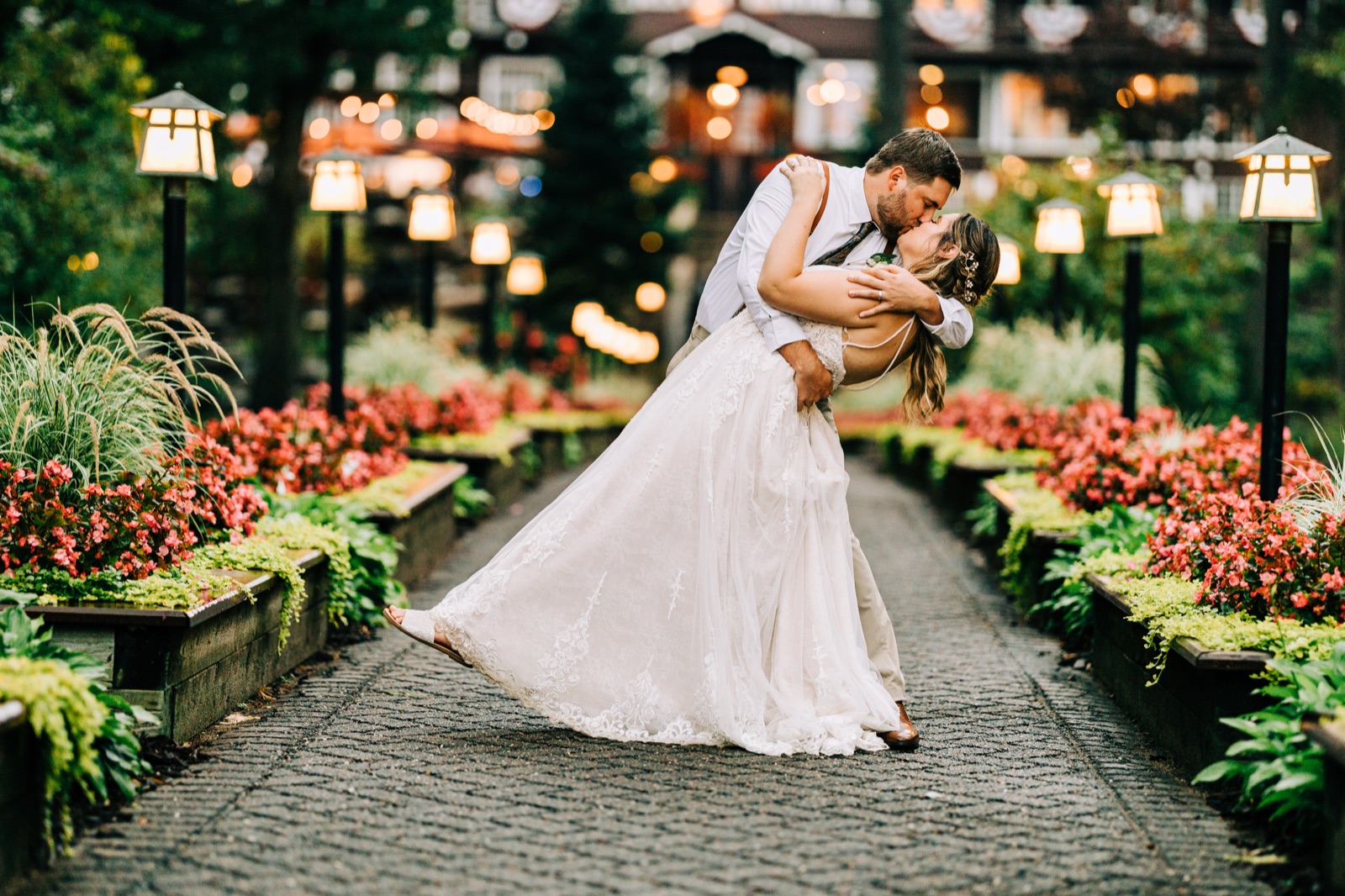
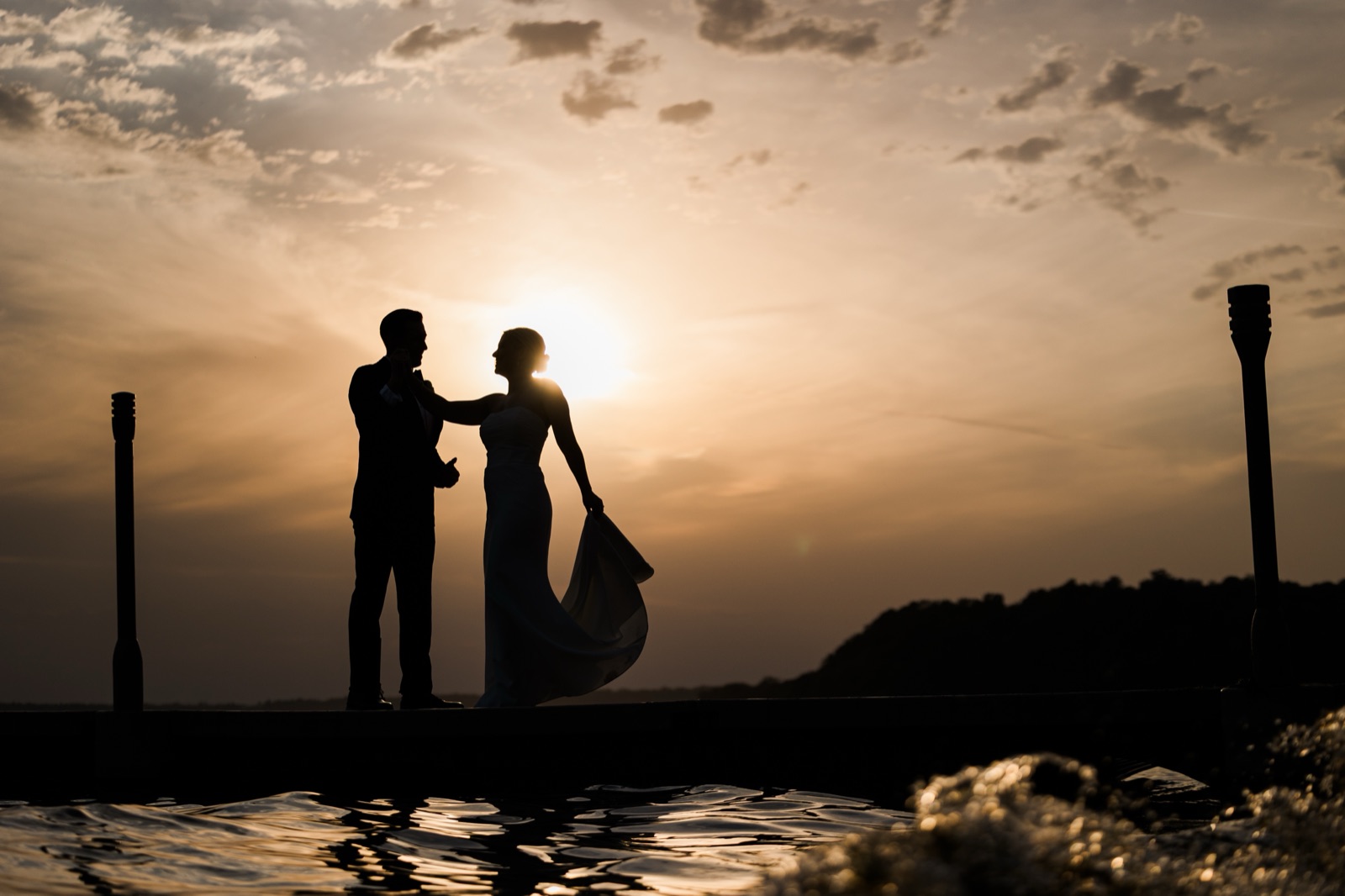
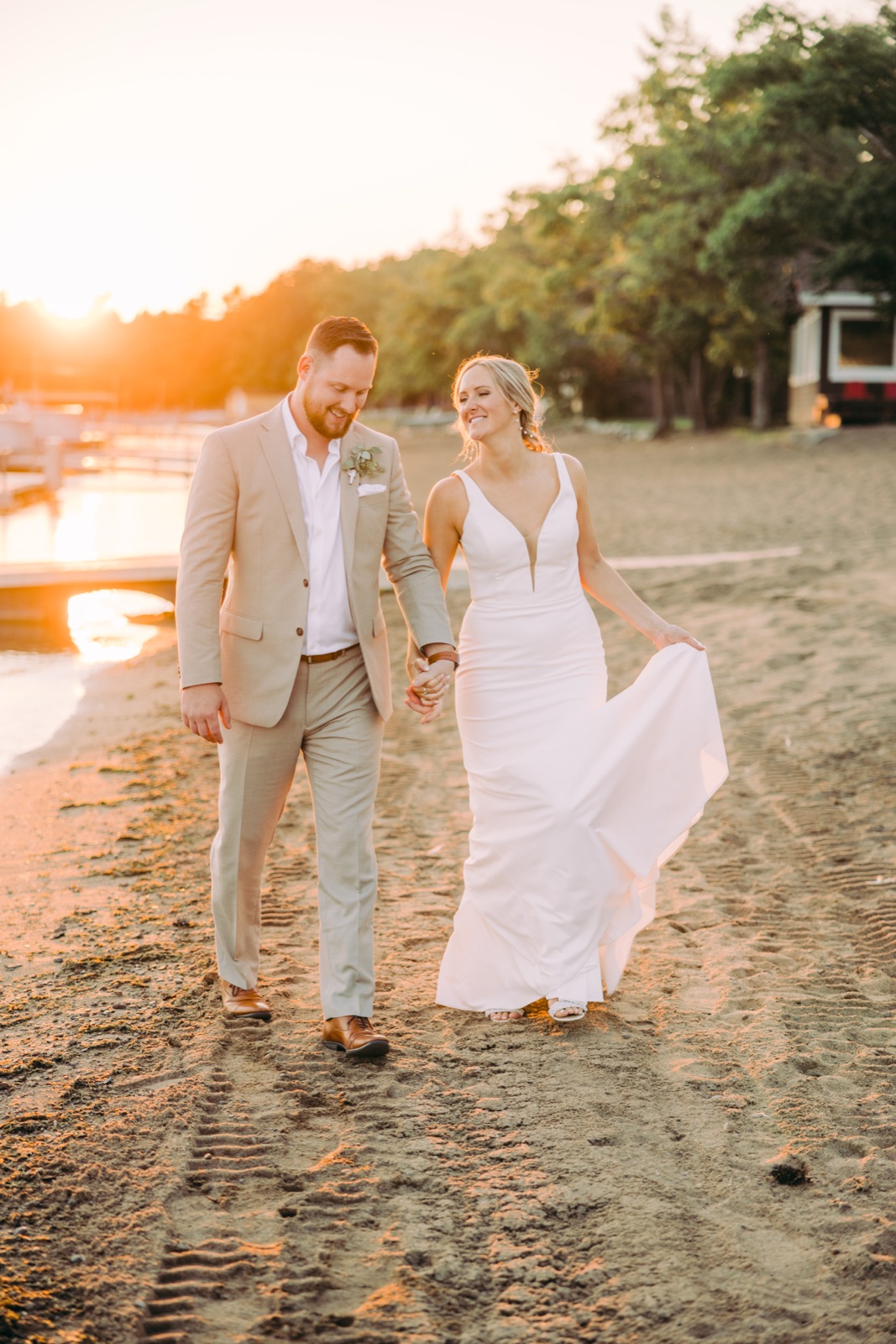
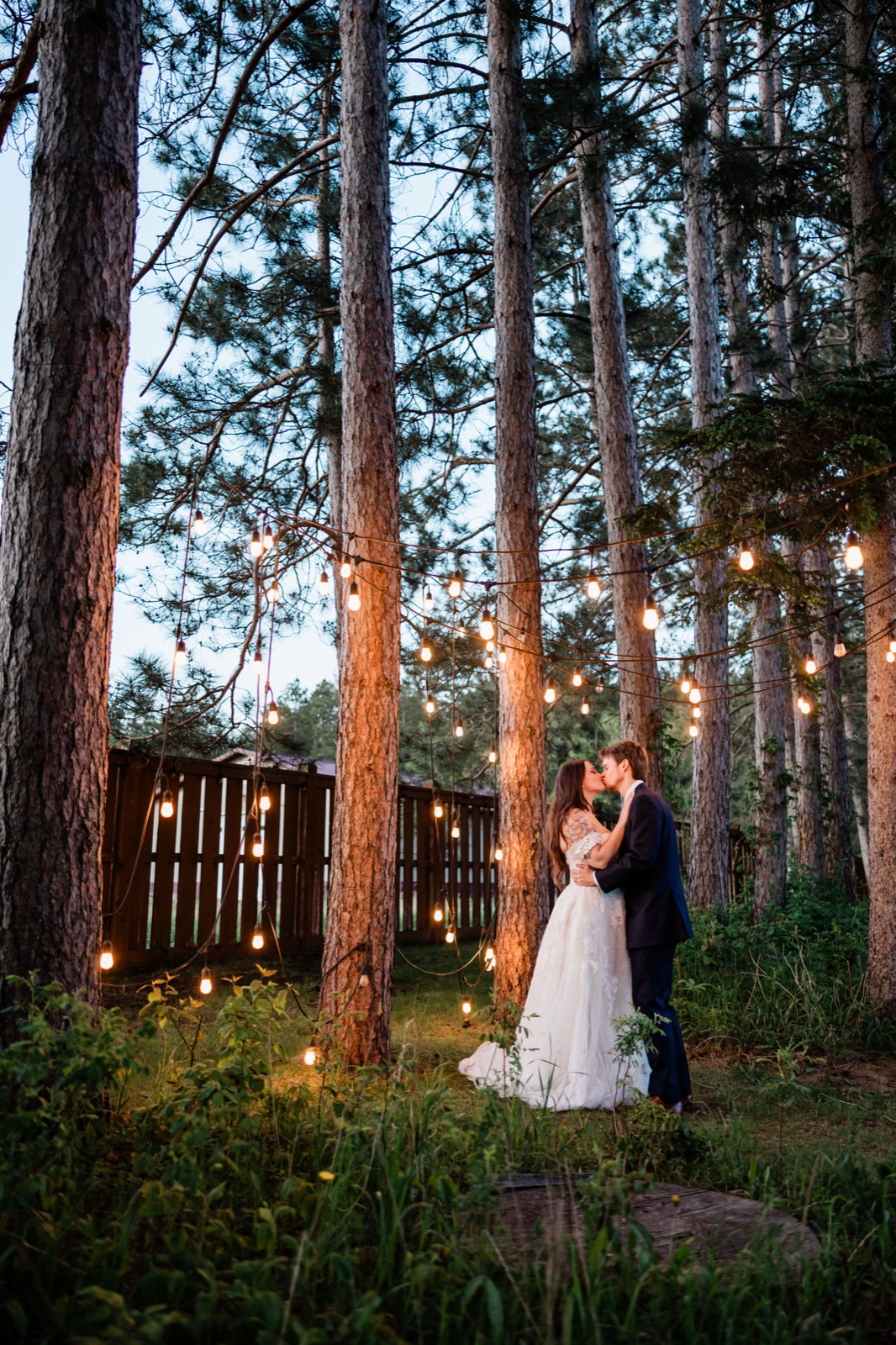
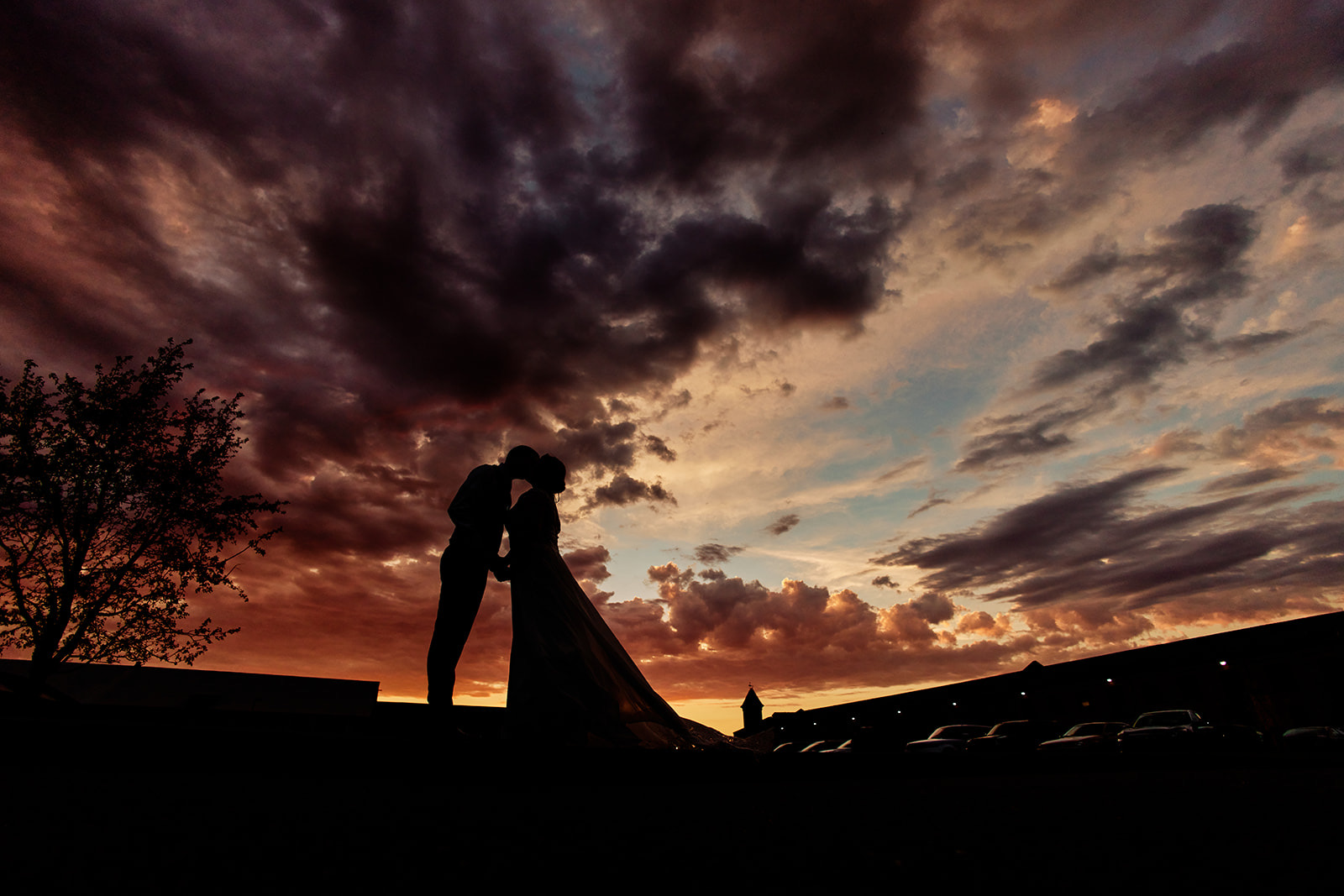
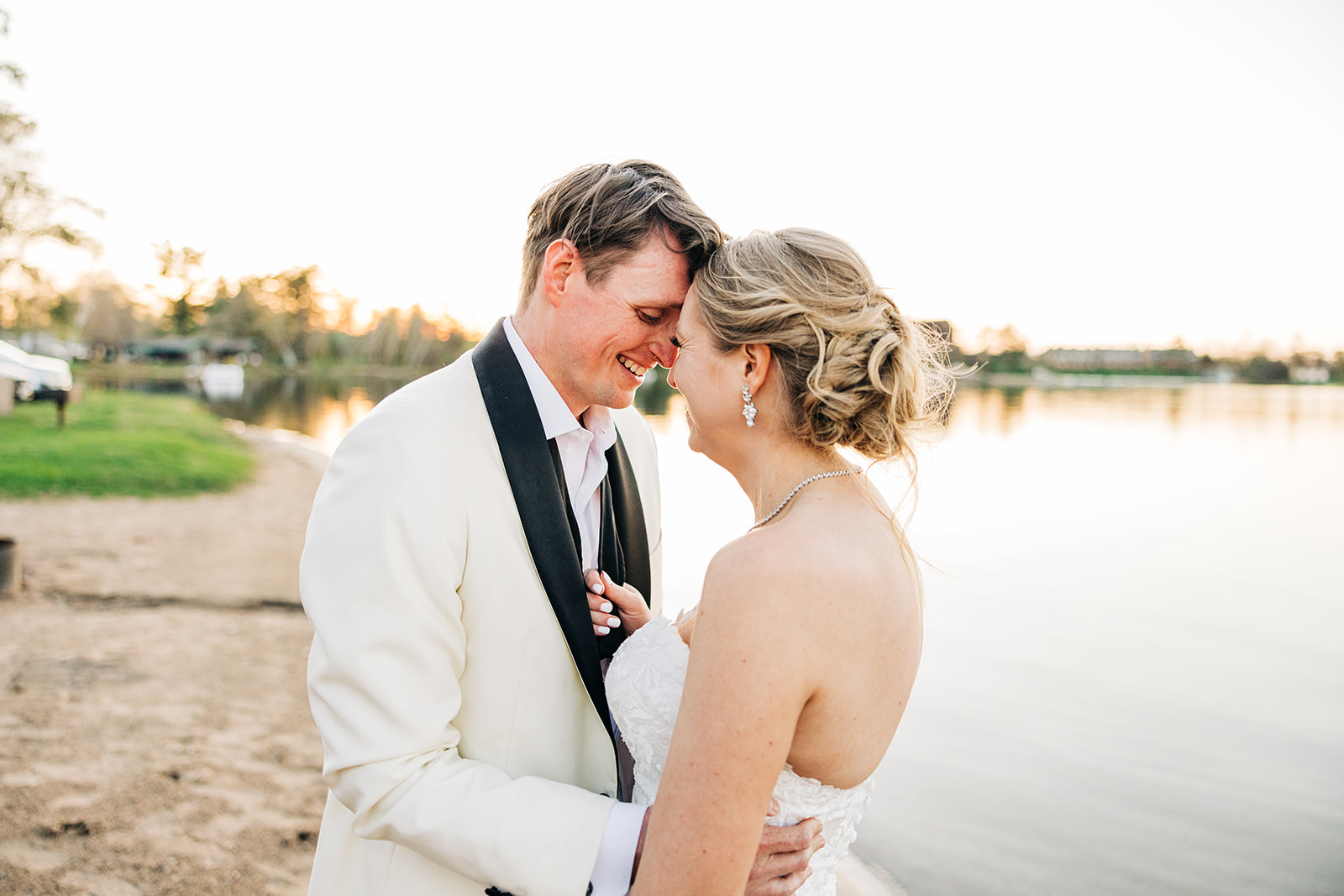
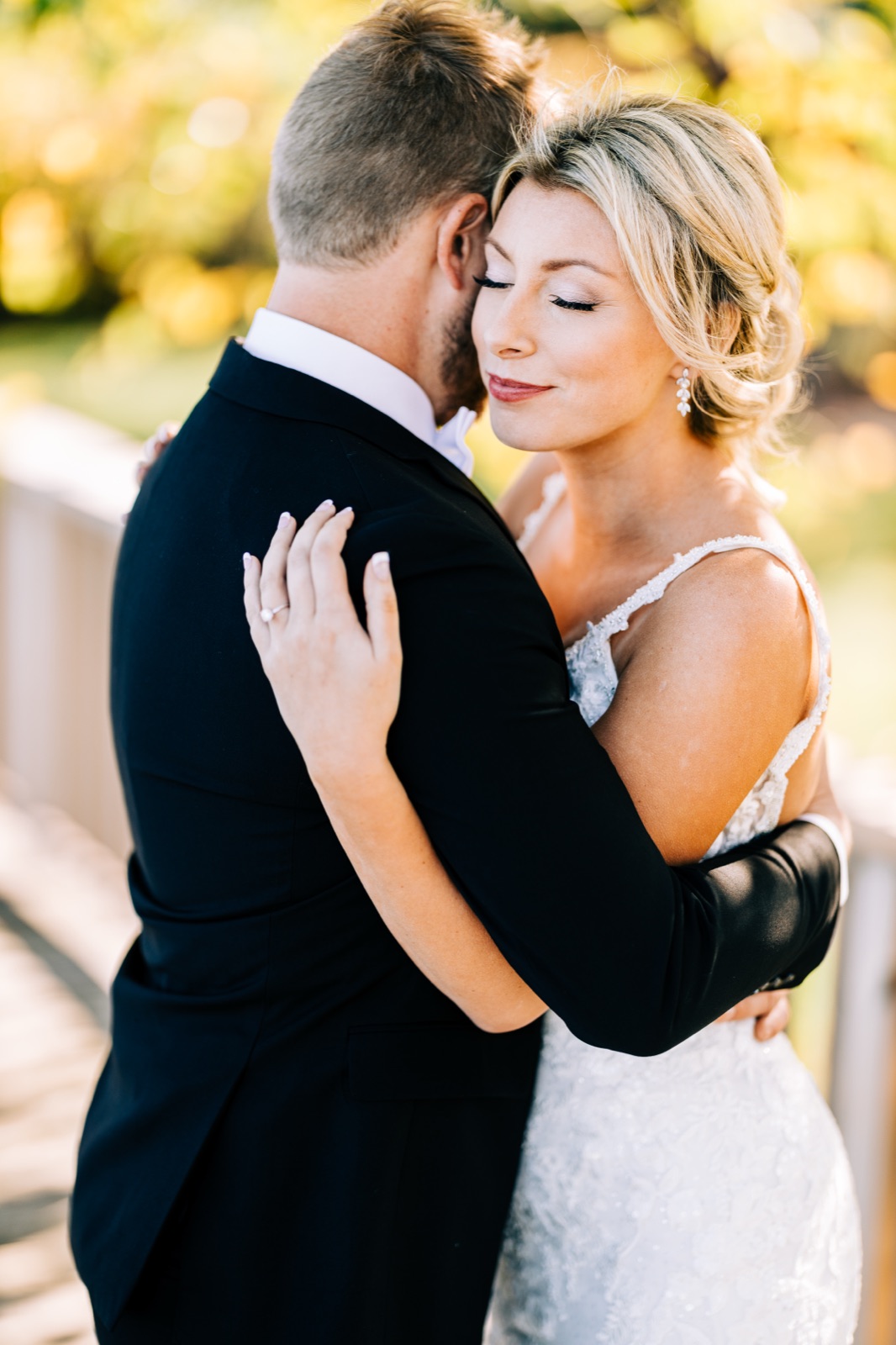
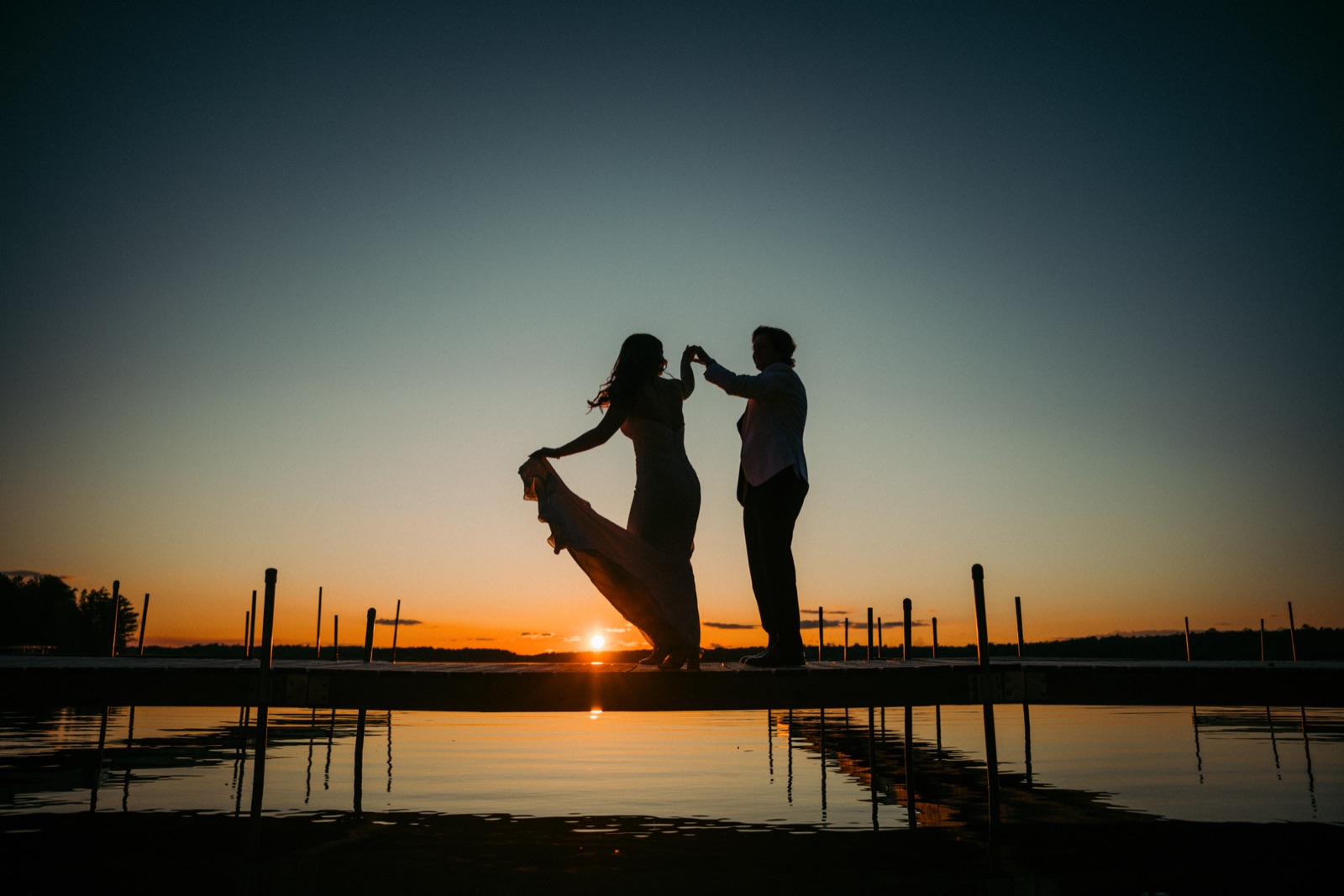
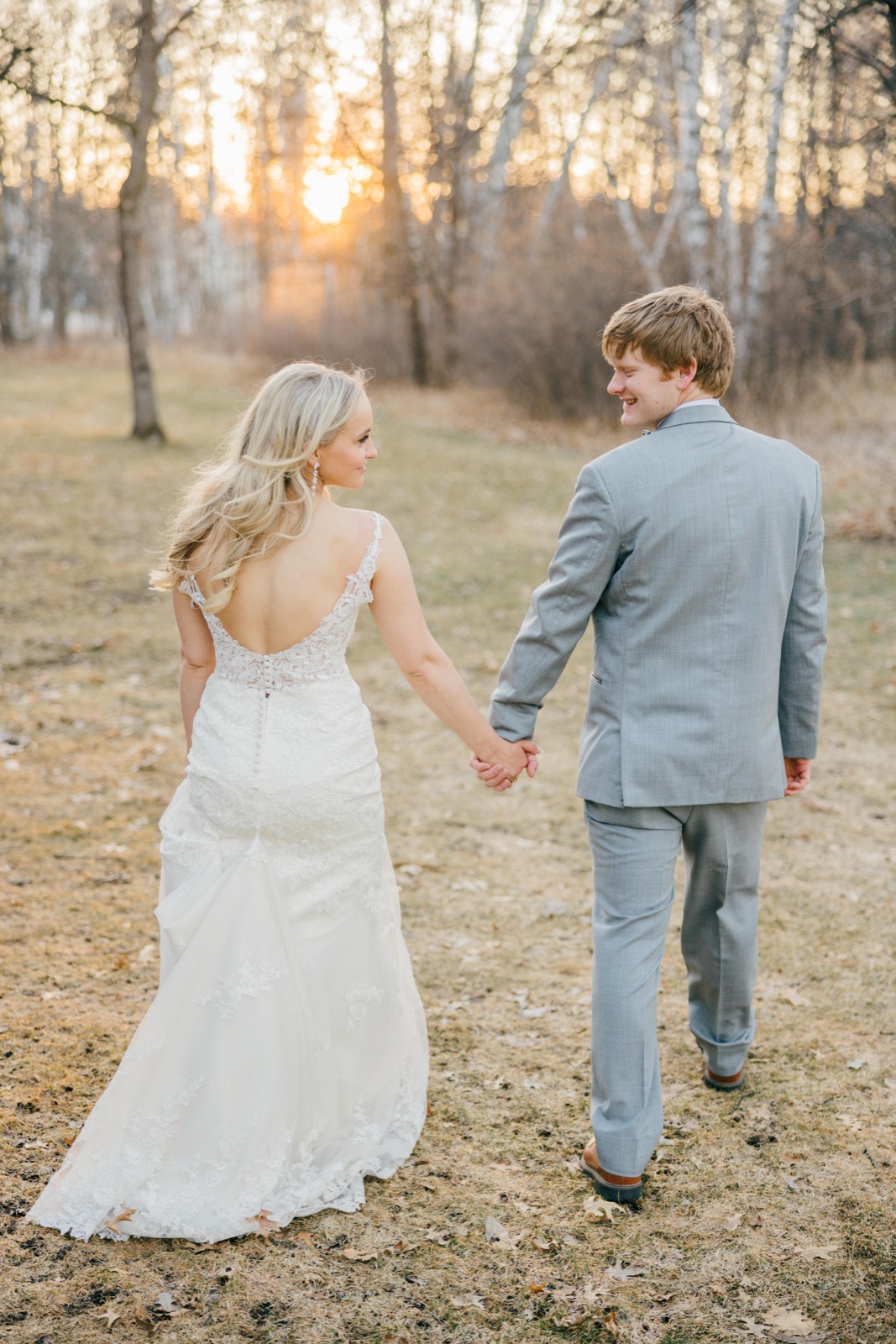
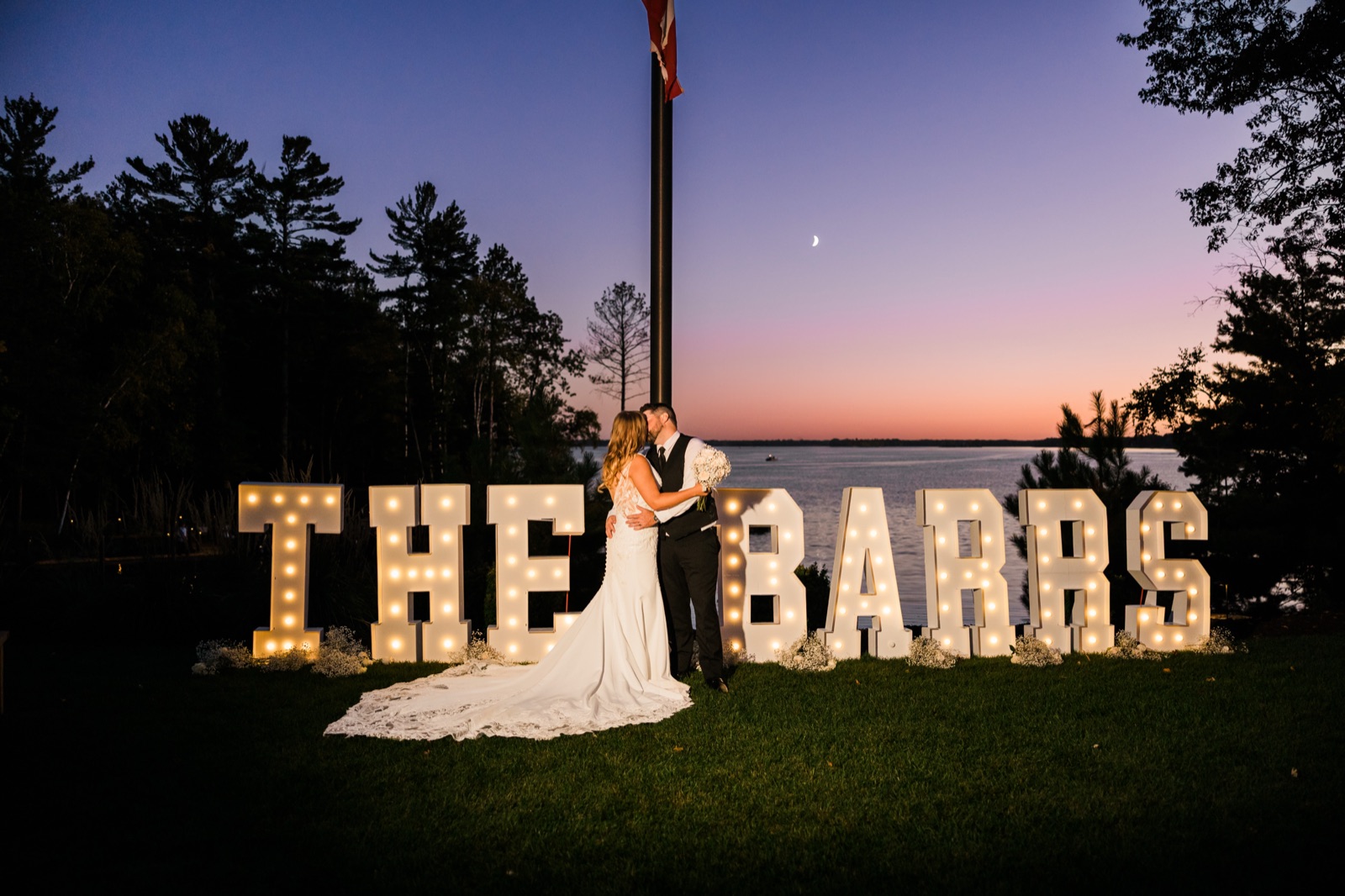
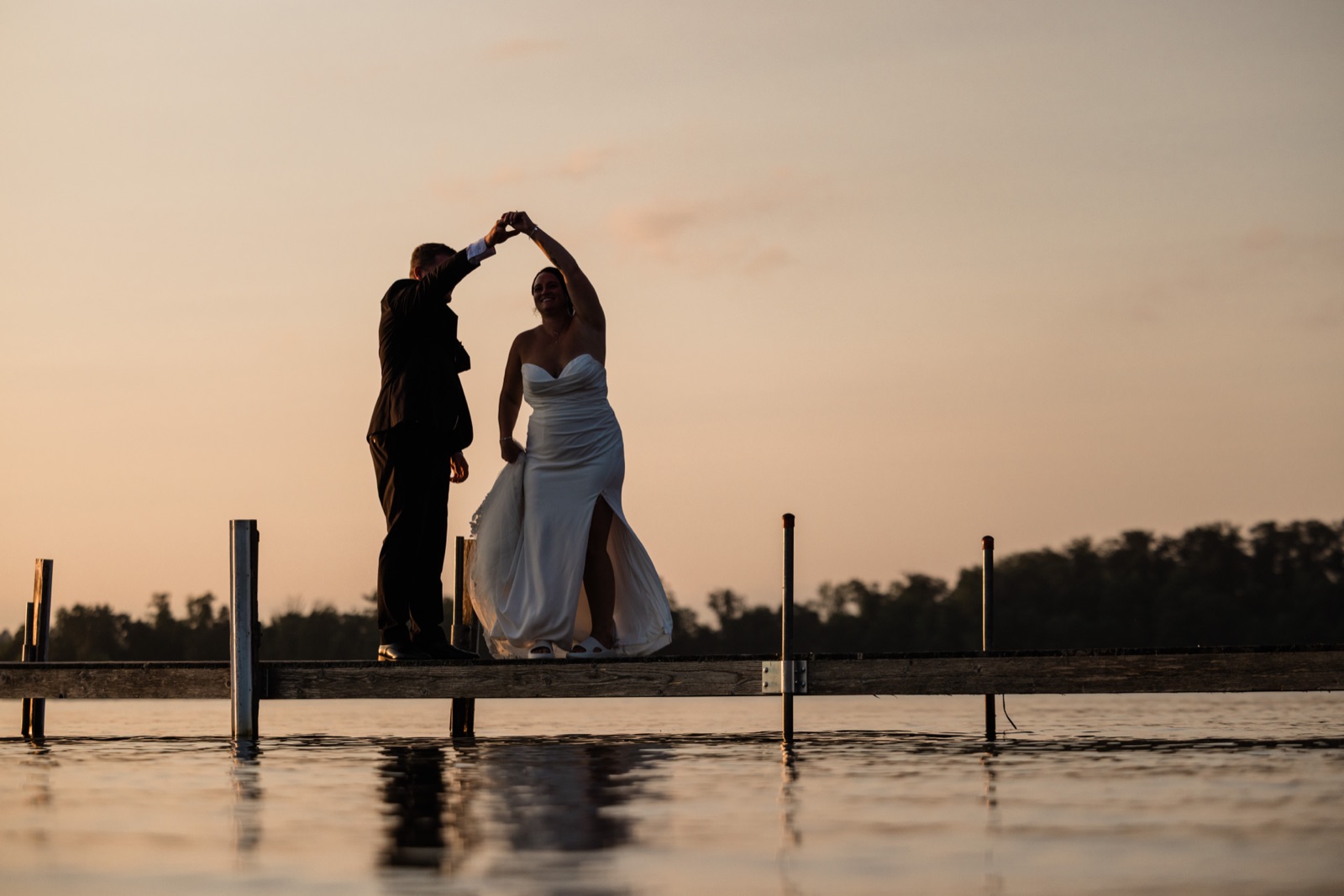
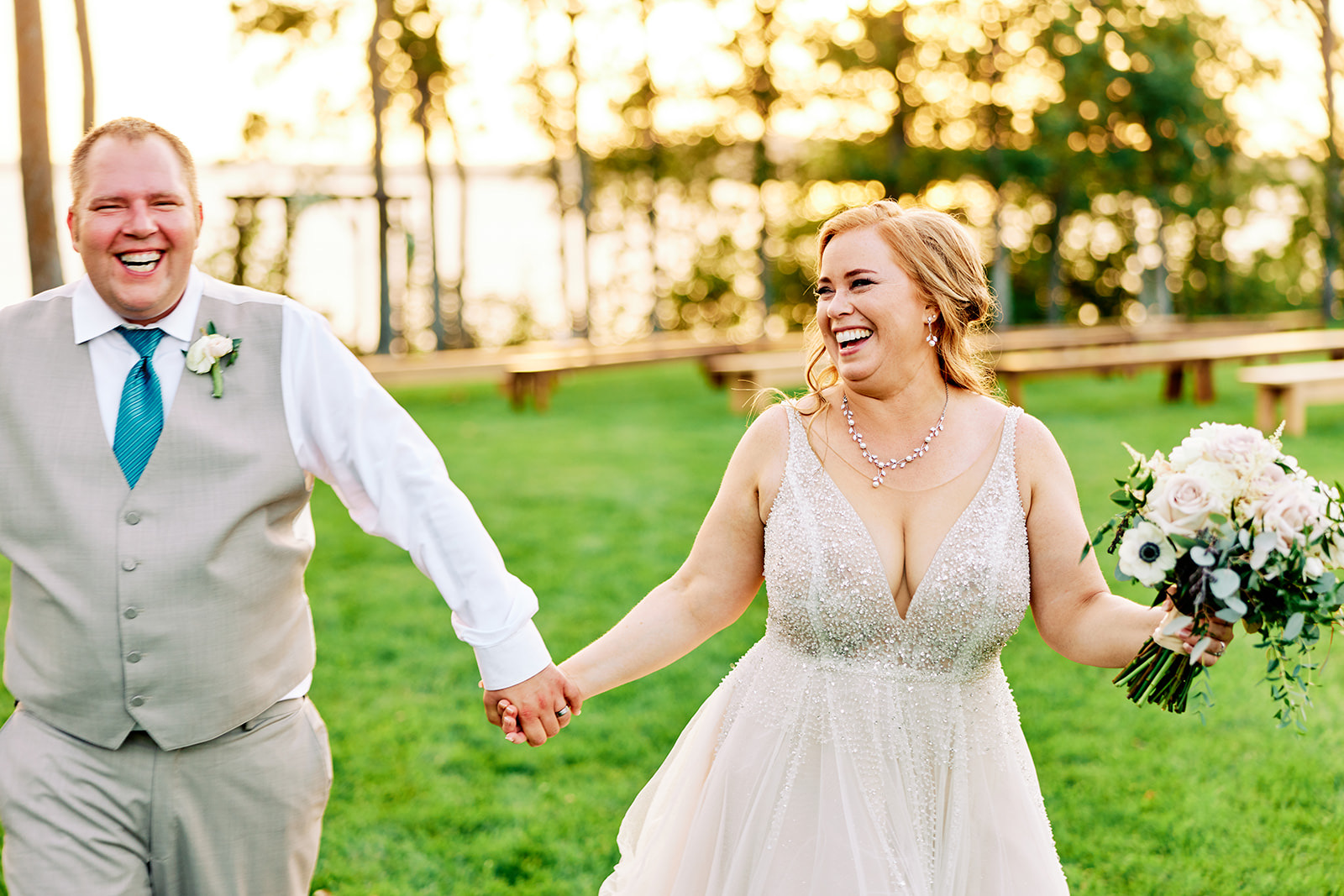
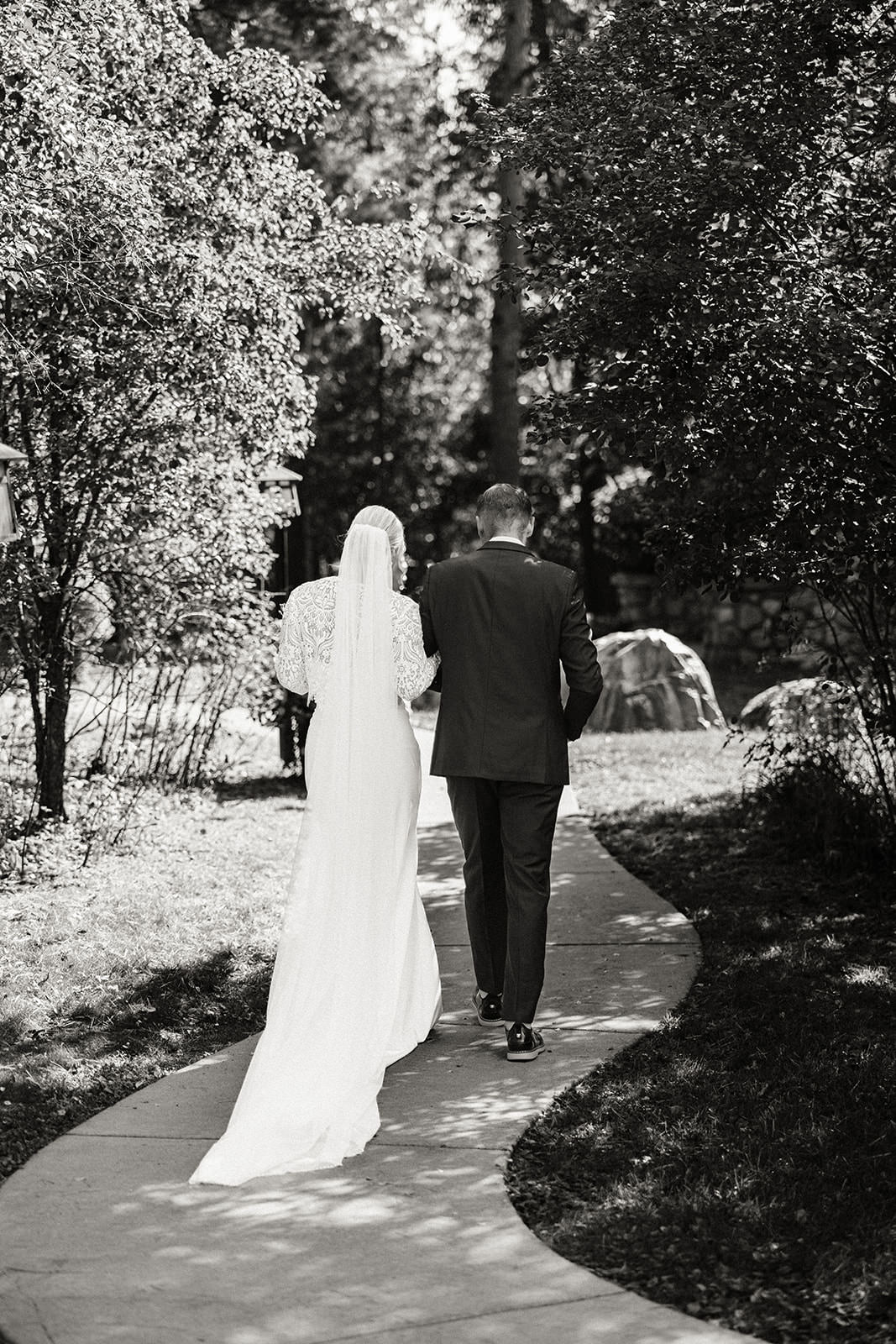
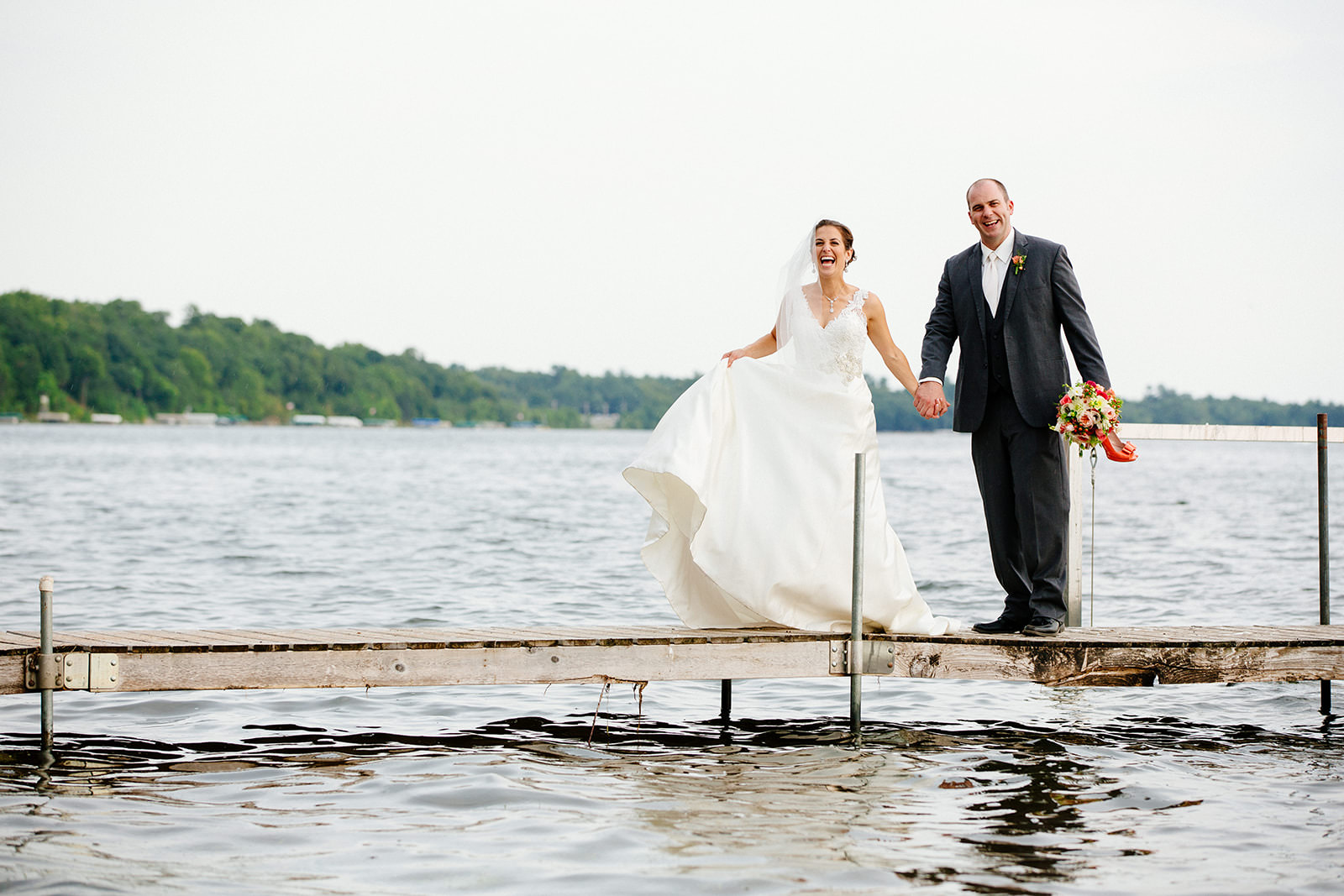
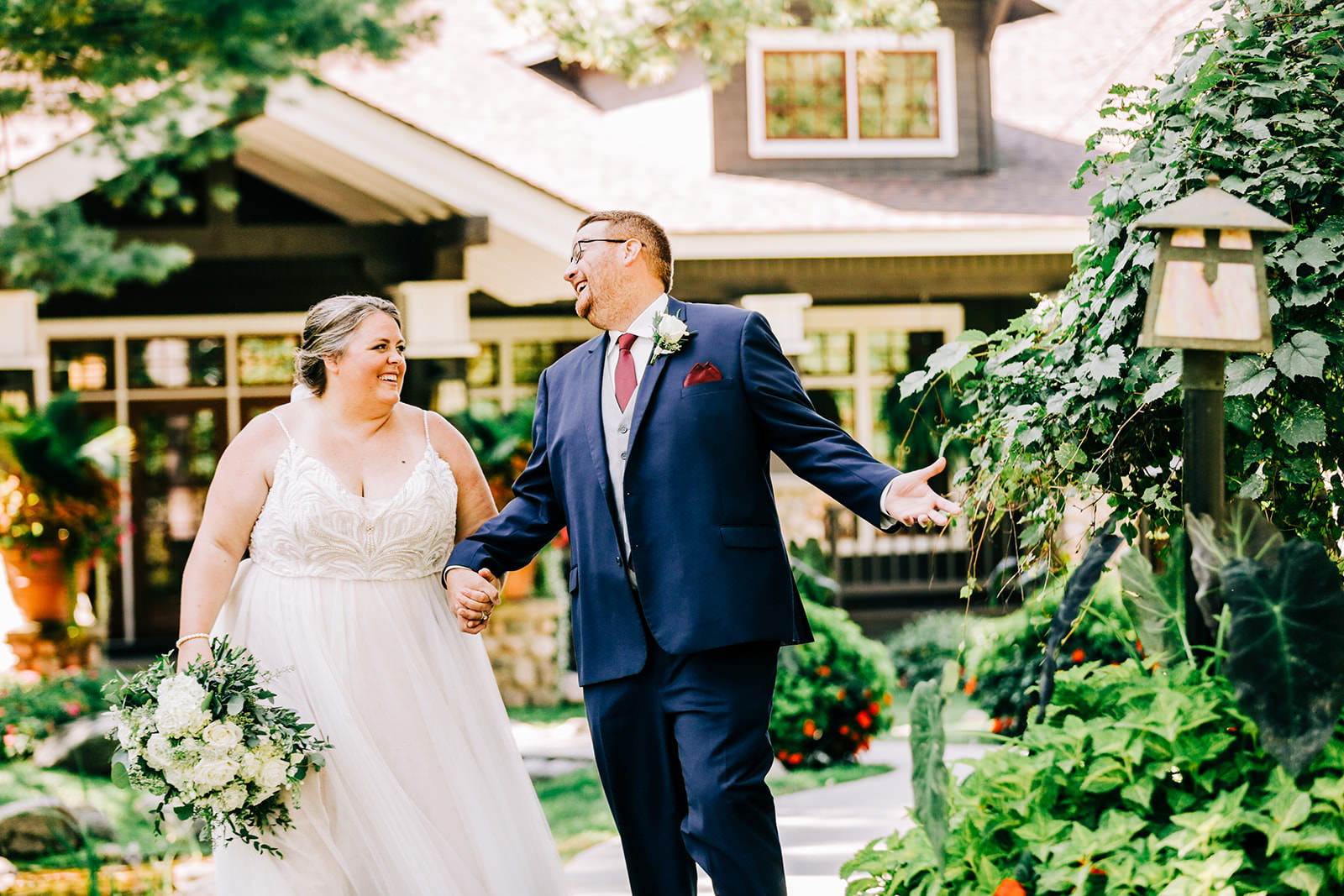
Twelve weddings across nine Brainerd Lakes venues — every one of these came from a window someone wrote on the timeline.
Venues featured Grand View Lodge · Madden's on Gull Lake · Cragun's Resort · Whitefish Lodge · Manhattan Beach Lodge · Pine Peaks Event Center · Breezy Point Resort · Northern Pacific Center · private cabin on Gull Lake
If the timeline slips anyway, step out during dinner
Sometimes the day goes regardless. Ceremony ran late, the receiving line dragged, the gold window starts in ten minutes and you're halfway through cocktails. It's still salvageable if it matters enough to you to step out for a few minutes.
The window most couples use is between the salad and the entrée. The room is eating, the bartender is busy, the DJ is queuing dinner music — almost nobody notices a ten-minute absence. You walk out, get the gold window, and you're back before the entrées land. I've done this at about a third of the weddings I shoot, and the couples who chose to step out almost always say afterward it ended up being their favorite ten minutes of the night.
Four small calls, all before the rehearsal
Planning a lake wedding is a series of small calls. Sunset light isn't the only one — and for couples who don't care about it, none of this is worth the planning. But for couples who do, four decisions made weeks before the rehearsal usually determine whether the last hour of the day is on the timeline at all.
- 01
Build it backward
Anchor the timeline at sunset. Work back through portraits, dinner, toasts, ceremony.
- 02
Write the window in
On the master timeline. Start time, end time, your names on it.
- 03
Keep it small
Just the two of you. Family and bridal party scheduled earlier in the day.
- 04
Have a recovery
If the day slips, step out for ten minutes between the salad and the entrée.
If you're planning a Brainerd Lakes wedding and you'd like a photographer who'll walk through these calls with you from the first conversation, get in touch. For a recent example of what the sunset window actually looks like, there's a Grand View Lodge gallery here.
Frequently Asked Questions
There's no single clock time — you anchor it to sunset for your date. On Gull Lake that's about 8:50 p.m. in late June, 8:15 in early August, 7:30 by late September, and 7:00 by early October. Block the 45 minutes before sunset for portraits and count backward to set the ceremony. A 4:00 p.m. ceremony is perfect in June and too late in October.
Roughly the 45 minutes before sunset — that's the window to block for couple's portraits. At a lakeside venue with open water to the west, the light keeps working right up to and just past sunset as it reflects off the water.
Only if the look matters to you — but if it does, this is the 45-minute, just-the-two-of-you window that produces the frames couples actually print. And it's recoverable: if the ceremony runs late, step out for ten minutes during dinner, between courses, and you get the whole window back. The couples who do almost always call it their favorite ten minutes of the day.
Sunset on Gull Lake lands around 8:50 p.m. in late June, 8:15 in early August, 7:30 by the third week of September, and 7:00 p.m. by early October. The golden-hour portrait window is the roughly 45 minutes before sunset on any given date — which is why the timeline has to flex by season instead of reusing a summer schedule.