September is the best-kept secret of the Brainerd Lakes wedding season. The color is doing the work, the light is kinder, the rooms read warmer. But September comes with math — and a timeline copied from a June wedding won't survive it.
Every couple asking about a fall date is really asking the same question: what am I trading for the color? The short answer is daylight. About an hour and ten minutes of it by mid-October. The rest of the trade-offs flow from that one number.
What September gives
- 01 Saturation, for free Oranges, burgundies, sage-to-yellow. A styled shoot can't buy it.
- 02 A longer golden hour Low sun angle stretches warm light from 25 minutes in June to about 40 in October.
- 03 Candlelit-room energy Blankets on chairs, firepit smoke, warm bulbs. A September reception reads cozier by default.
- 04 Lower venue demand Saturdays in September are still findable at Grand View, Madden's, and the private properties.
What September costs
- 01 1 h 10 m less daylight Late June: ~8:50 p.m. Mid-October: ~6:10 p.m. Ceremony time has to move.
- 02 A 40° temp swing I've shot 85° and snow flurries in the same month. Guests need a layer option.
- 03 Harder Plan B Indoor light in fall is warmer but dimmer. Build the backup space with this in mind.
- 04 A shorter cocktail hour Ninety minutes eats dinner into the dark. 45–60 is usually plenty.
Balance the ledger on the timeline, and September will pay you back every time.
Let the fall color do the work
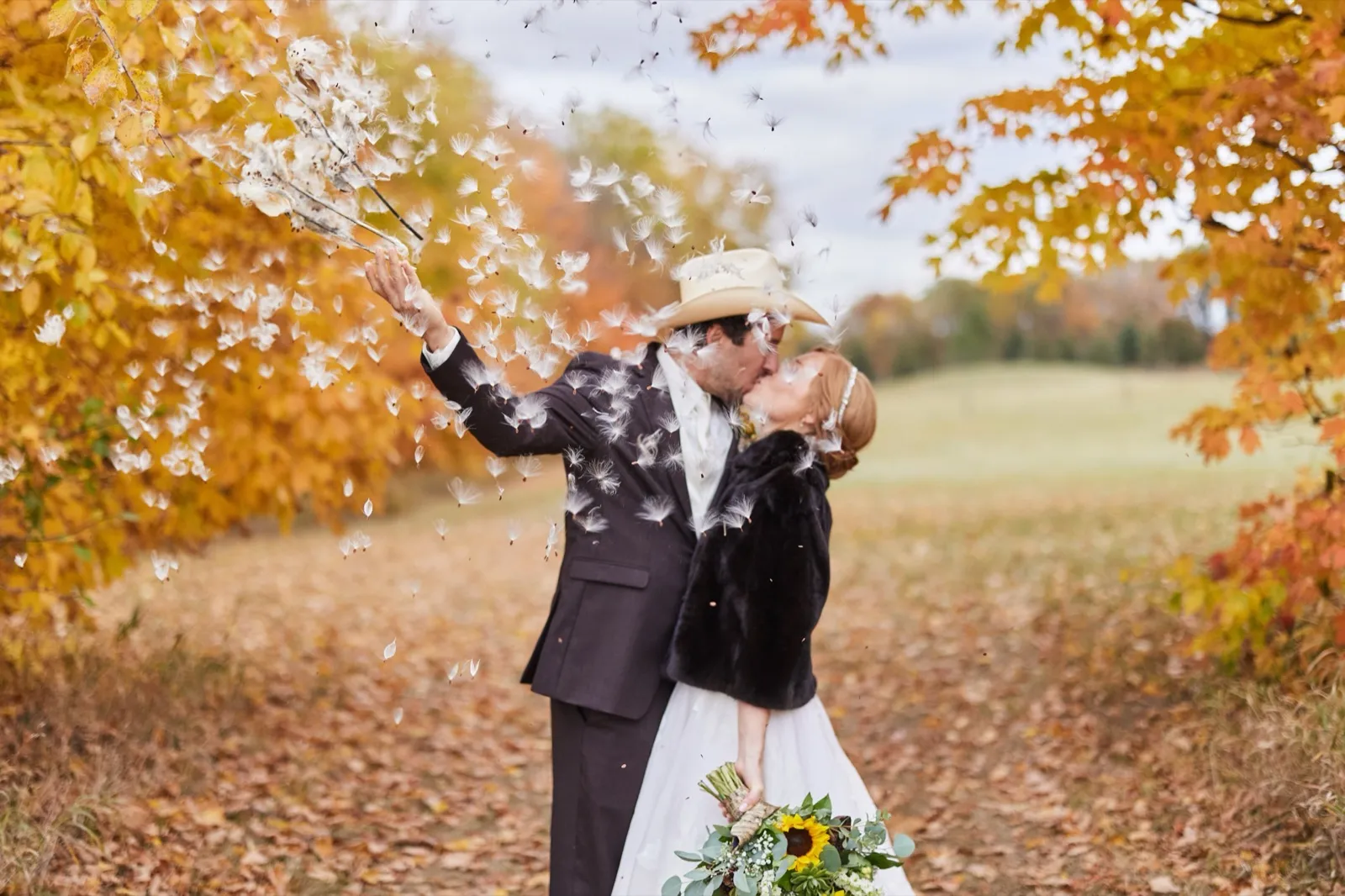
The single biggest reason to book September isn't a venue or a price — it's that the trees are doing the styling for you. Oranges, burgundies, sage-to-yellow, the occasional blown-out red maple in the background of every portrait. A styled shoot can't buy that saturation; a September calendar date can.
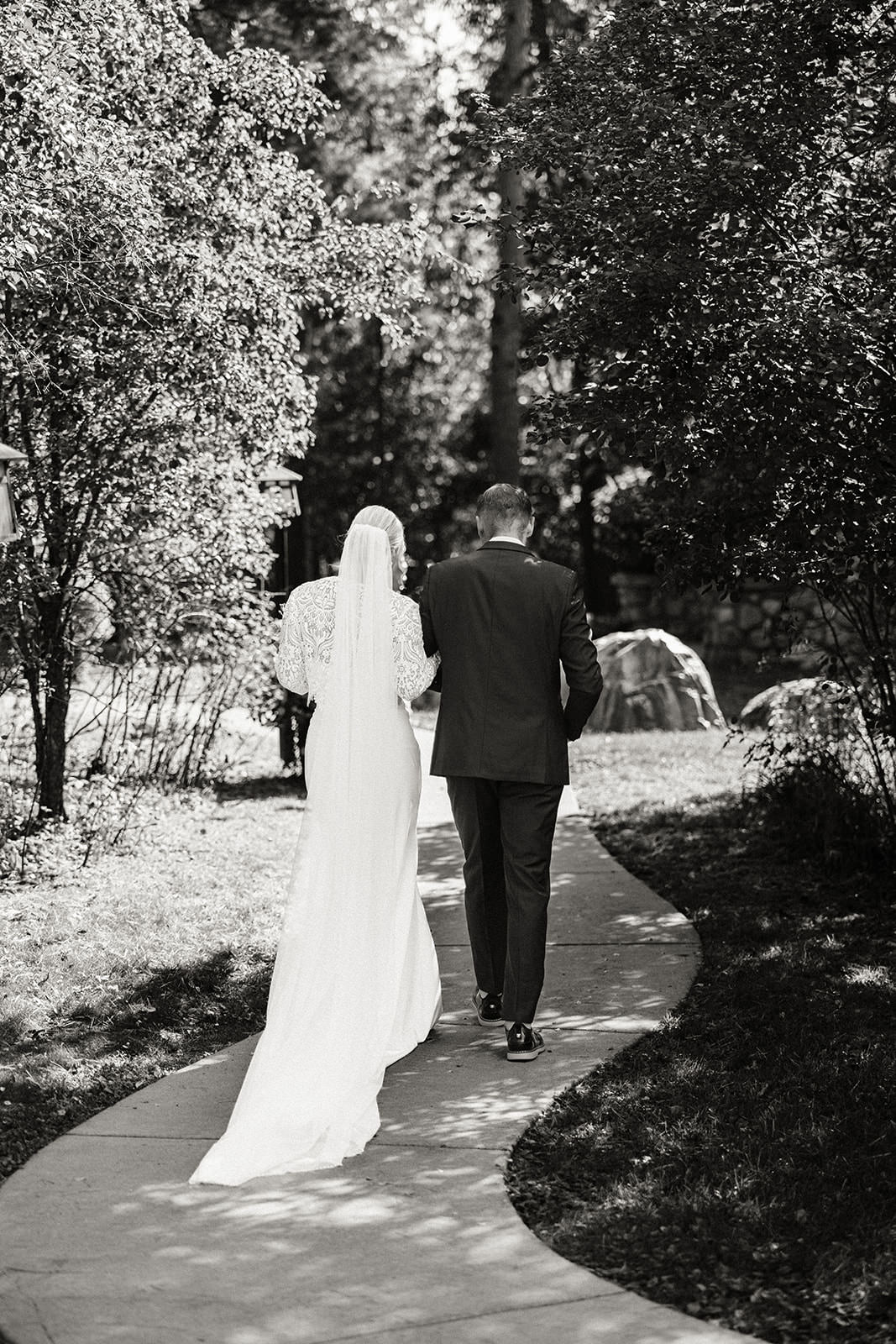
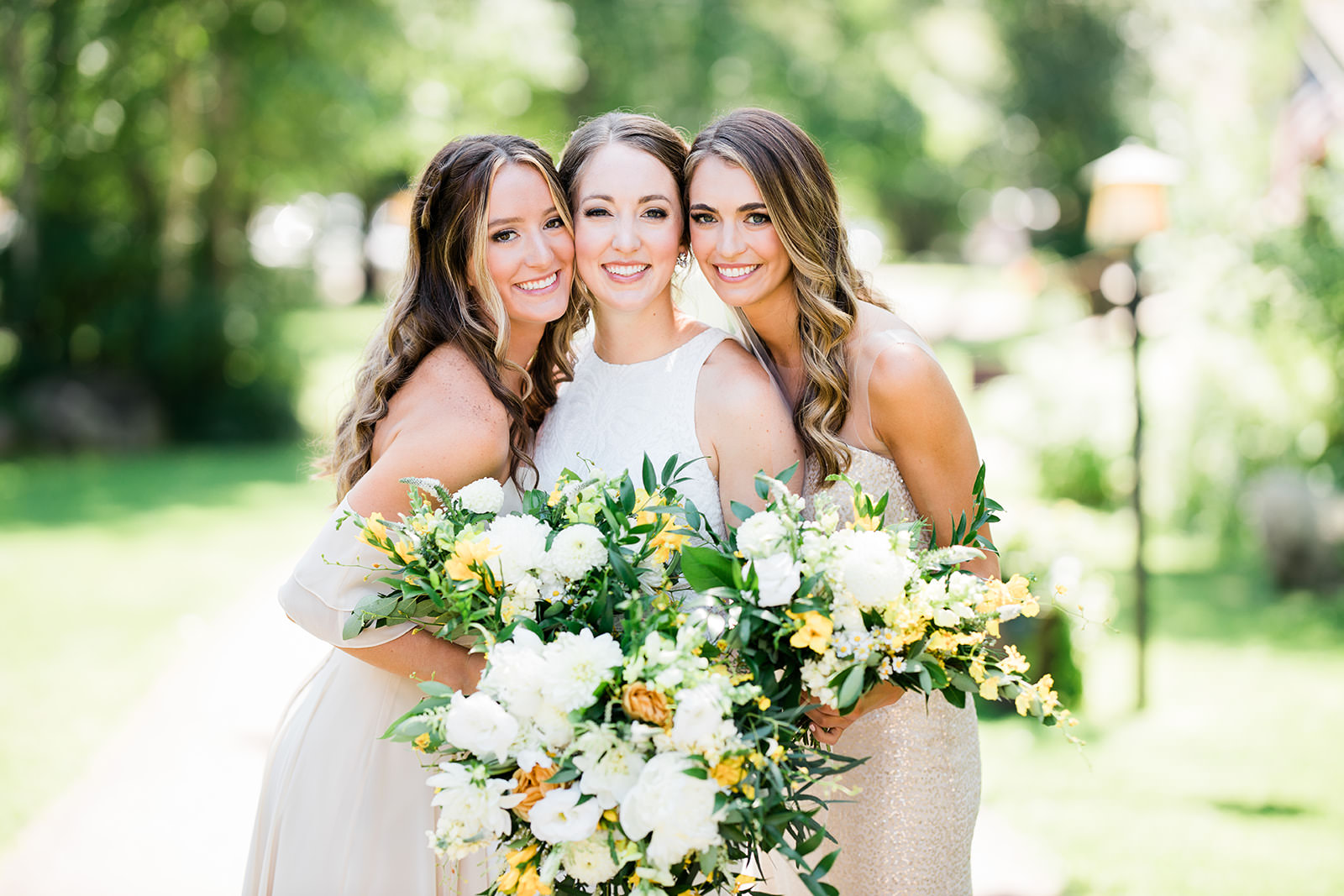
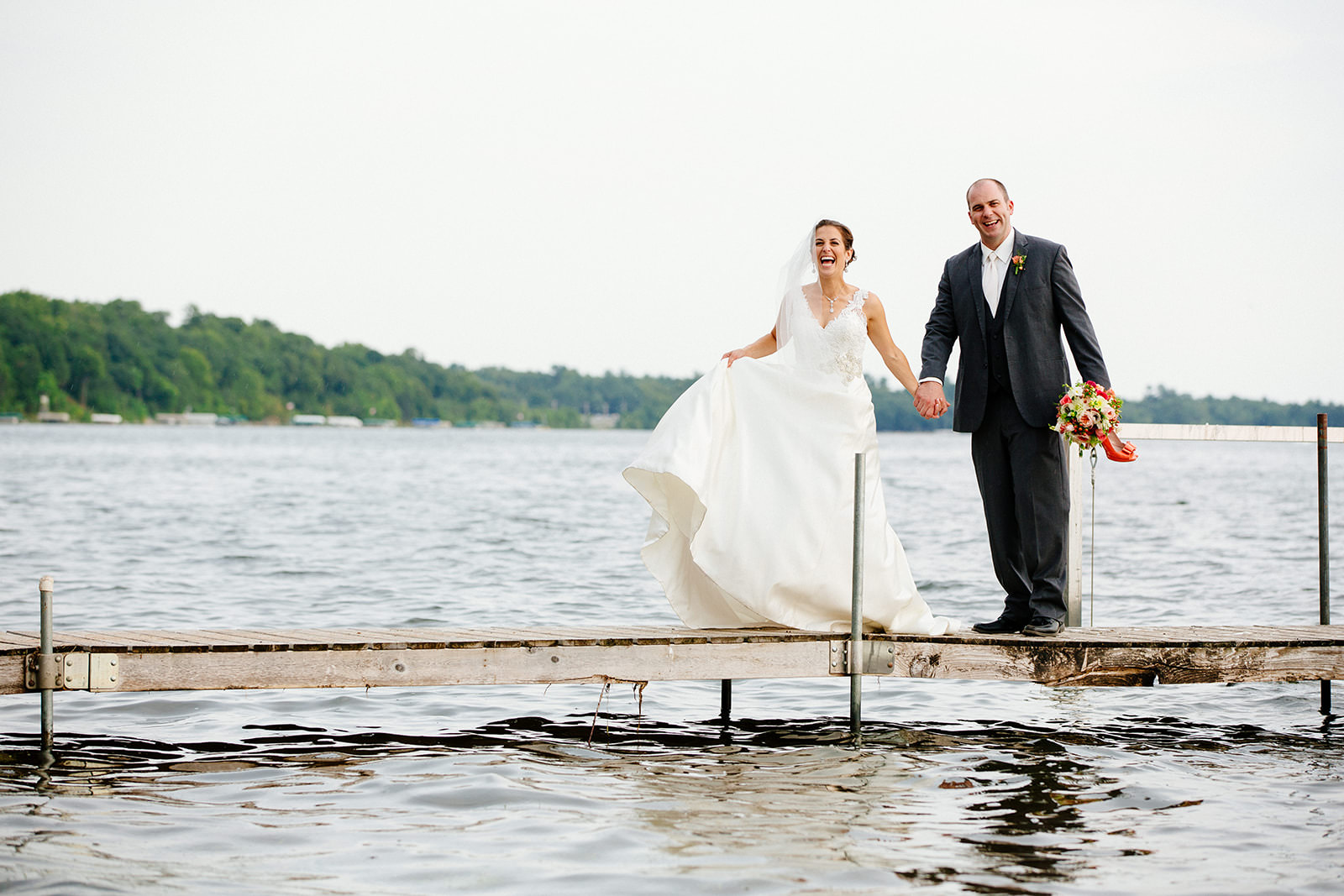
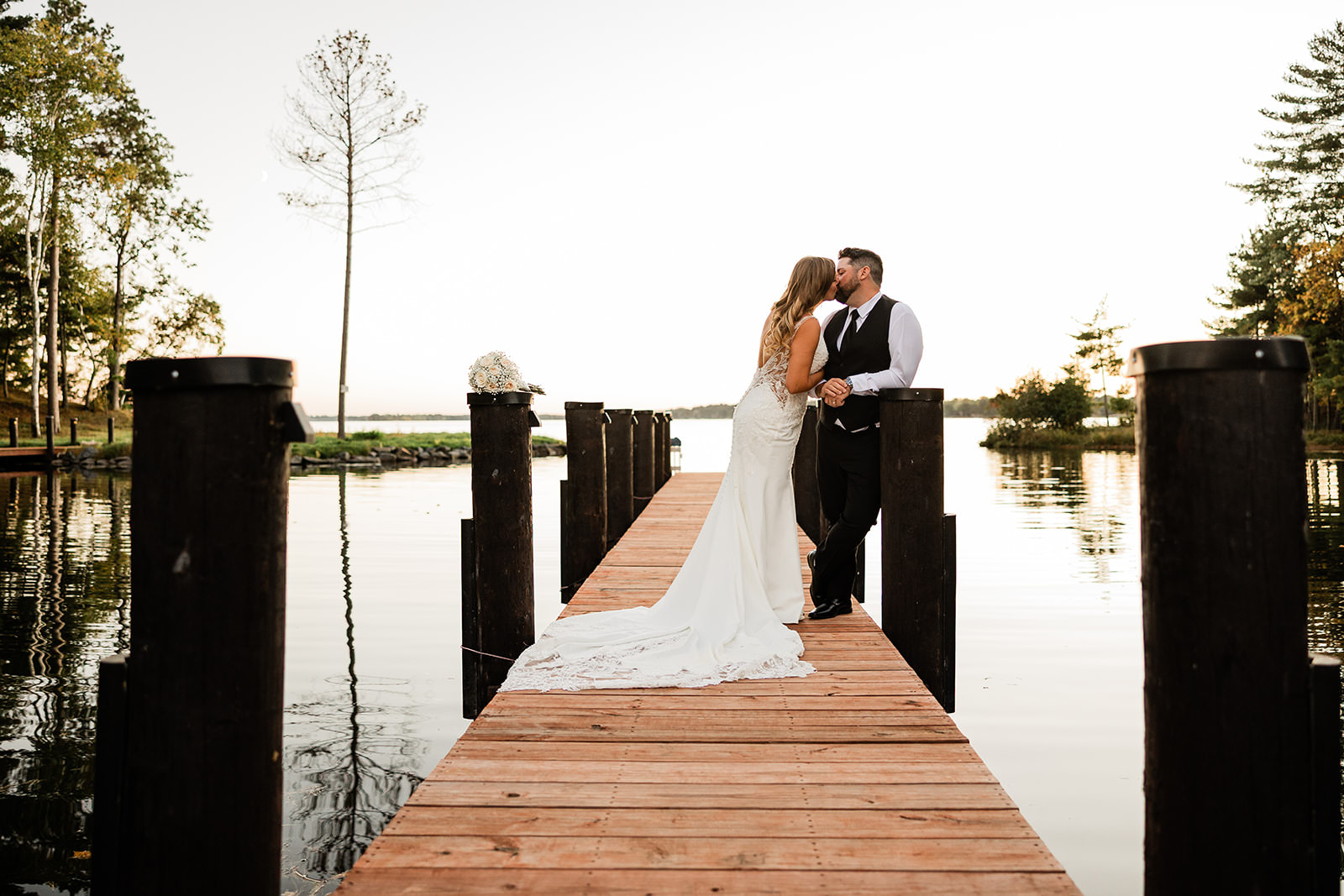
The planning move that lets this land: put yourselves outside while it's happening. Schedule the first look on a path with color, the bridal-party portraits in the driveway with the maples behind them, and the 45-minute golden-hour window on a dock that faces into the color, not away from it.
Less daylight than you think — move the ceremony earlier
Sunset on Gull Lake on the third Saturday in September lands around 7:10 p.m. By mid-October it's 6:10. For context, the same lake on June 21st sets at 8:50. That's an hour and forty minutes of difference — enough to sink a timeline that started as a June draft and never got rewritten.
My rule is ceremony = sunset minus 3½ hours. In early September that puts the ceremony around 4:00 p.m.; by mid-October it's closer to 2:30 p.m. The cocktail hour then lands while it's still light out, the golden-hour portrait window stays on the calendar, and dinner doesn't start in the dark. The earlier you're willing to start the ceremony, the more forgiving the day becomes.
Cozy reads differently — ask for warm bulbs
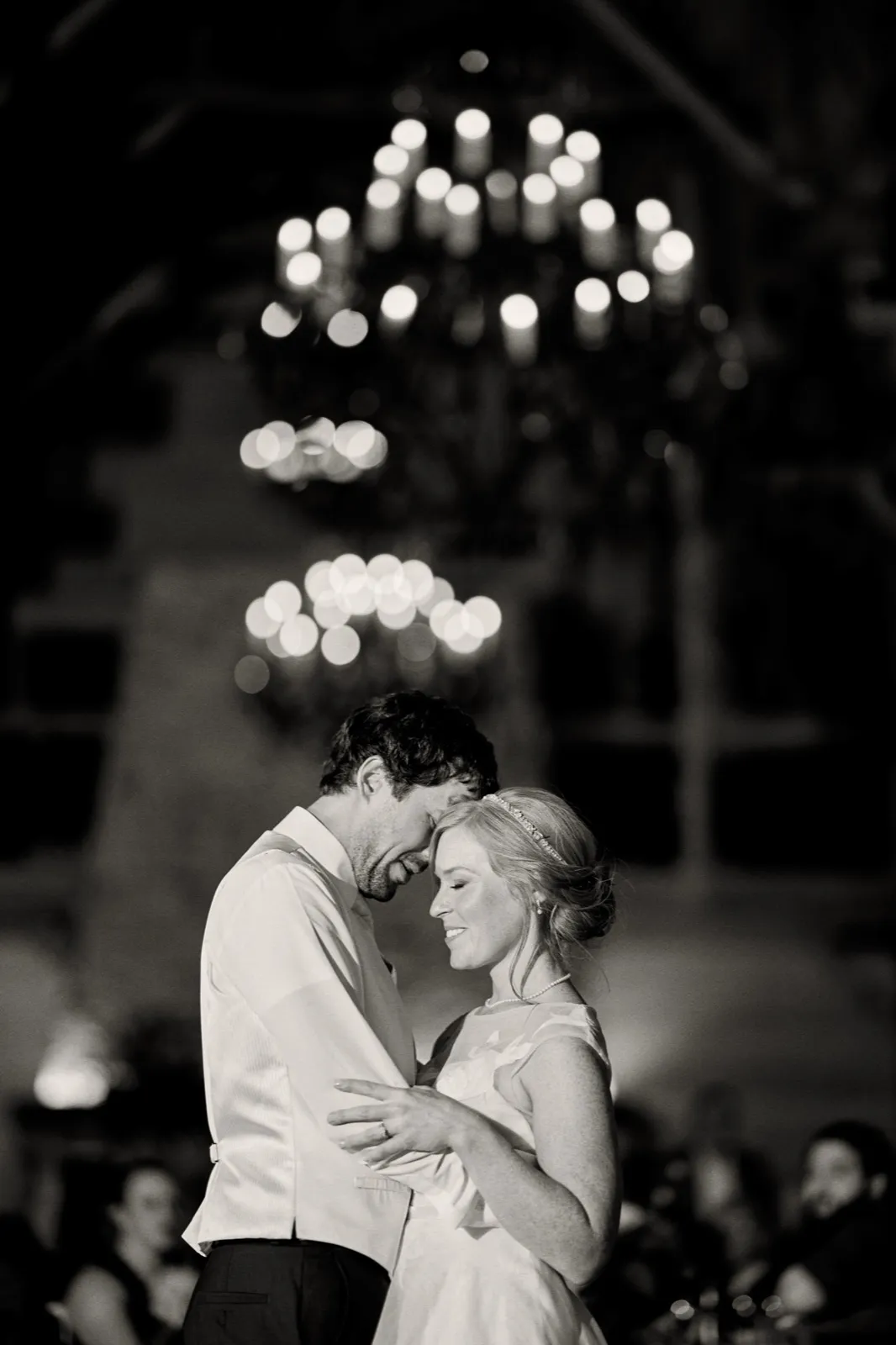
September barns and lake houses photograph with a kind of candlelit-room warmth that July rooms don't have. Blankets on chairs, firepit smoke, warmer drinks, warmer lightbulbs. That warmth is the vibe couples are chasing when they pick the season — but it has to come through on the lighting call.
The single ask I make of every fall-wedding couple before their rental order goes in: warm bulbs, not cool white LED. String lights at 2700K–3000K photograph like a film set. Anything labeled "daylight" flattens the whole room. It's a one-line call and it's the difference between a reception that reads cozy and one that reads clinical.
The weather will do whatever it's going to do. The lighting call is the part you can actually control — and it's the one that shows up in every photograph.
Build the rain plan, and use it without apologizing
September in the Lakes swings 40 degrees. Sun, rain, and wind have all showed up on me in the same month. The couples who end up happy built a covered Plan B for the ceremony and a covered Plan B for portraits — and then either used them or didn't, without spending the morning apologizing to their mother about it.
The practical version: identify the covered ceremony site on the site-visit, not the day of. Walk the portrait Plan B at the same time — a porch, a lobby with tall windows, a covered dock. If you like both spaces in ordinary weather, you'll be fine in whatever the sky does.
The four September calls, made early
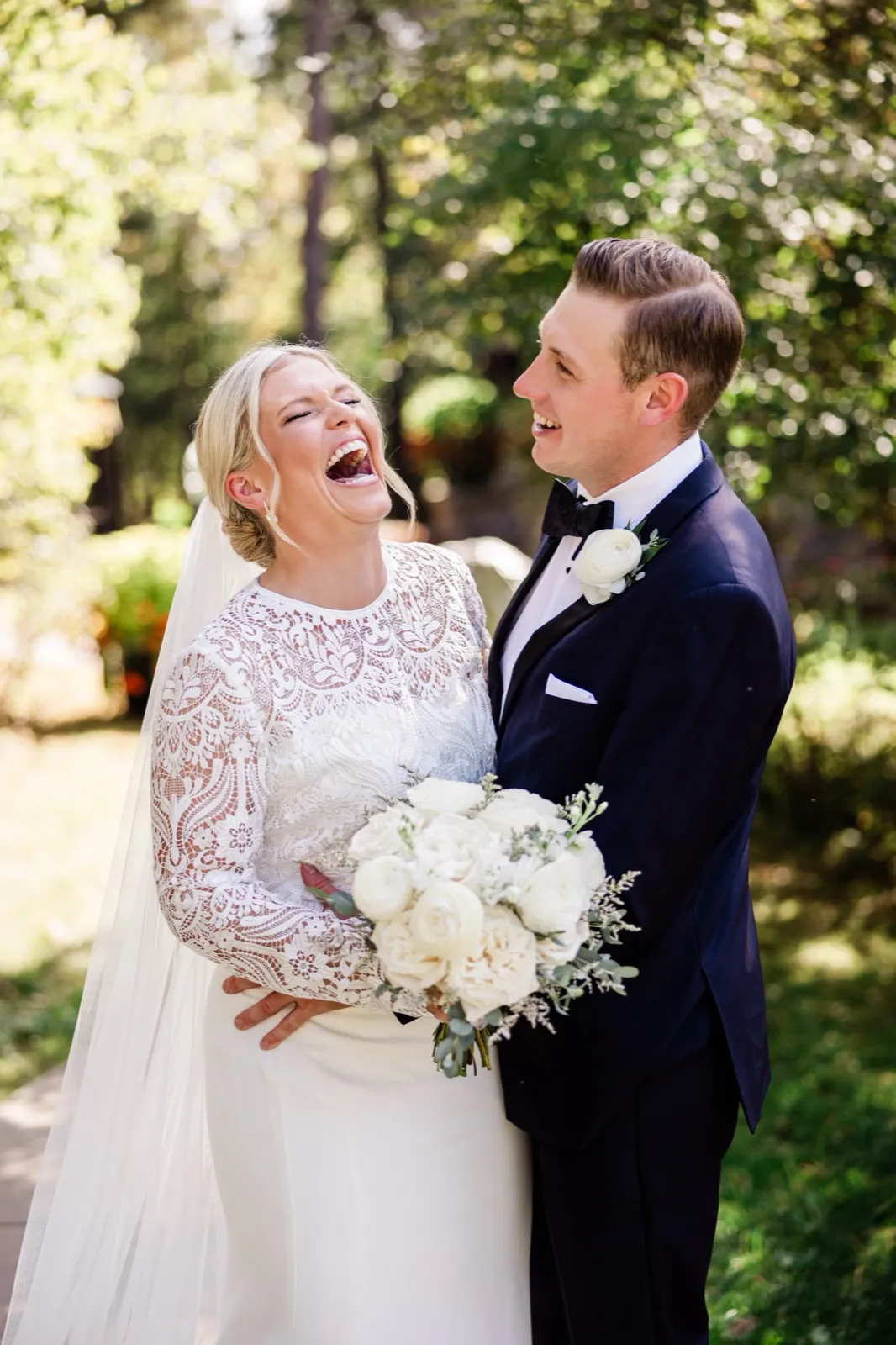
A September wedding in the Brainerd Lakes isn't harder than a July one — it's just different math. The color, the light, the warmth, and the weather all reward planning that respects the season instead of fighting it.
- 01
Put yourselves outside
Let the trees do the styling. Plan portraits into the color, not away from it.
- 02
Move the ceremony earlier
Sunset minus 3½ hours. The timeline follows from there.
- 03
Warm bulbs, not white LED
2700K–3000K. The line item that carries the whole reception's feel.
- 04
Build the Plan B you'd be happy to use
Covered ceremony site, covered portrait site, no apologies if it's needed.
If you're planning a September wedding in the Brainerd Lakes and want a photographer who'll help you build the timeline around the light, get in touch. For a recent fall gallery, there's a Whitefish Lake wedding here.
Frequently Asked Questions
My rule is ceremony equals sunset minus 3½ hours. For an early-September wedding in the Brainerd Lakes that puts the ceremony around 4:00 p.m.; by mid-October it's closer to 2:30 p.m. That builds in ceremony, cocktails, portraits, and dinner with the golden-hour portrait window intact — and keeps cocktail hour in daylight instead of pushing dinner into the dark.
Enough to change the whole timeline. Sunset is around 7:40 p.m. in early September, 7:10 by mid-September, and 6:10 by mid-October, versus about 8:50 on June 21 — roughly an hour and forty minutes less daylight than a late-June wedding. That's why a fall timeline can't just be a copy of a summer one.
Peak color in the Brainerd Lakes typically lands somewhere from late September into mid-October, but it shifts year to year — check the Minnesota DNR fall color finder as your date approaches. When the color is up, let the trees do the styling: point your first look, bridal-party portraits, and golden hour toward it.
Yes — if you plan around the math. The gains are real: free fall saturation, a longer golden hour, cozier indoor rooms, and lower venue demand than peak summer. The costs are the shorter day (over an hour less light than June), a temperature swing that can hit 40 degrees in a single September weekend — I've shot 85°F and snow flurries in the same month — and a dimmer indoor Plan B. Plan a covered Plan B for ceremony and portraits and use it without apologizing; those photos are often the favorites.