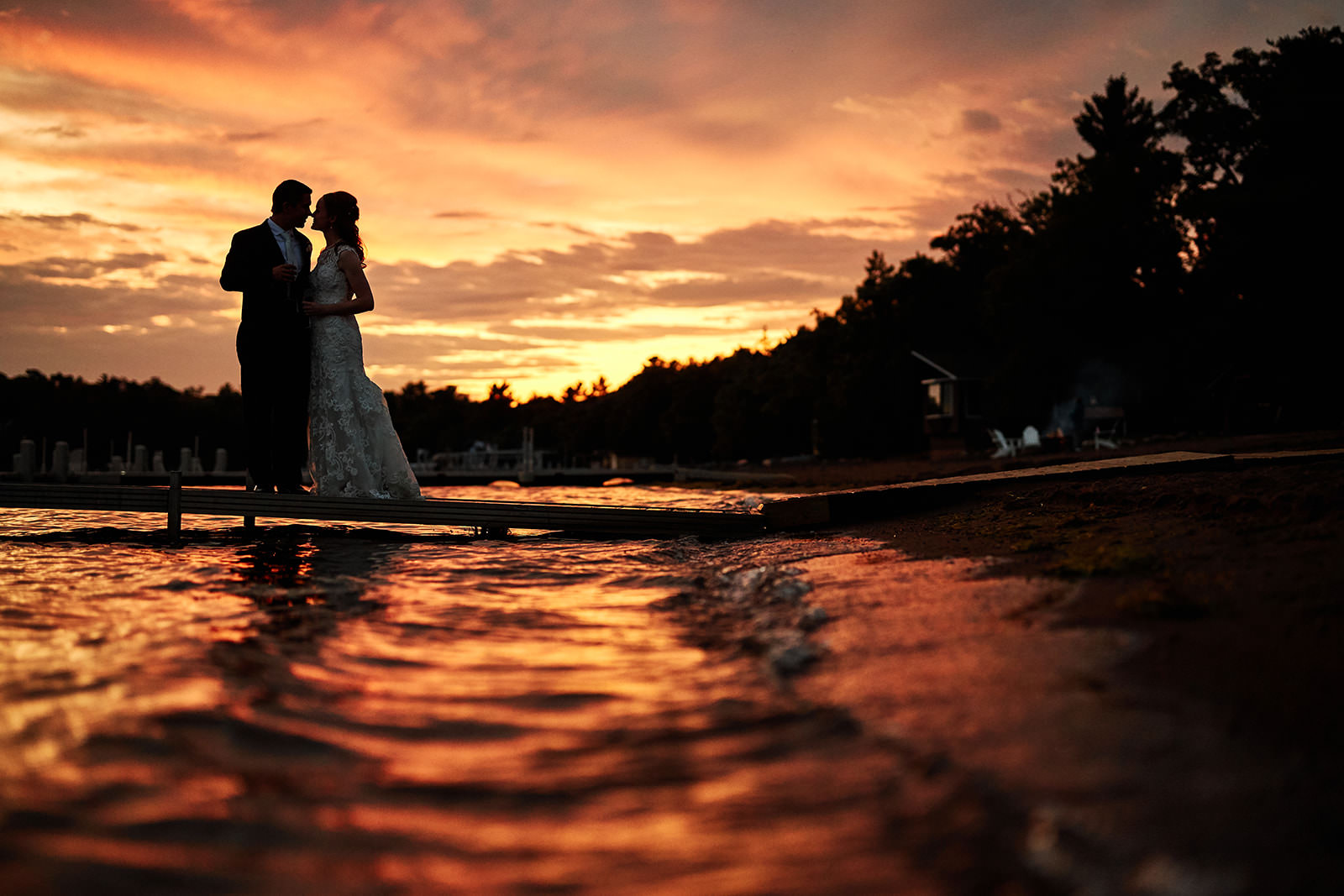
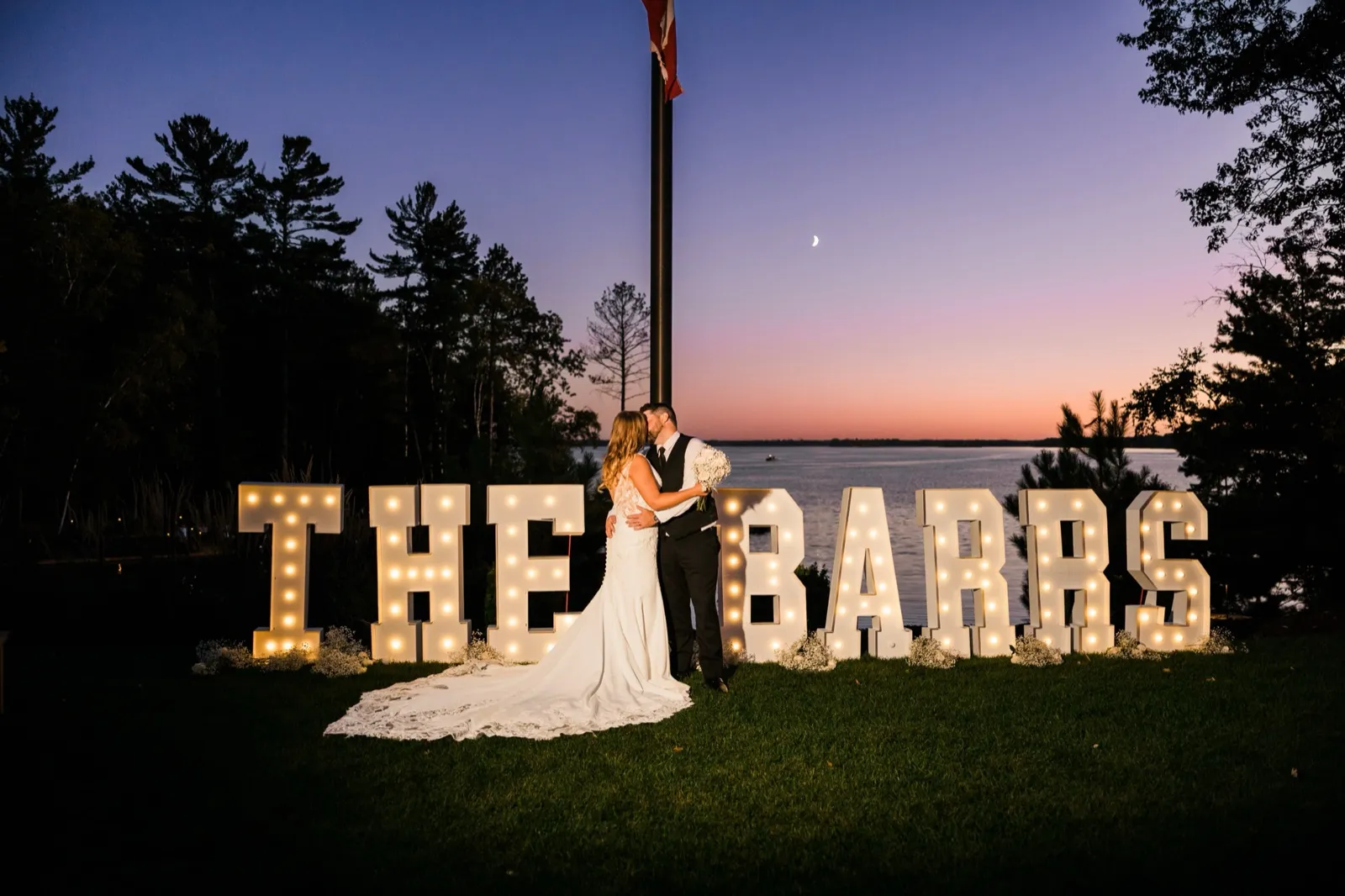
Sunset on Gull Lake on June 21st lands at 8:50 p.m. Sunset on October 15th lands at 6:10. Two hours and forty minutes of difference — and a completely different wedding day built on top of it.
A timeline copied from a June wedding and pasted into an October date won't survive. Different ceremony time, different cocktail pace, different dinner, different portrait window. The calendar date isn't a cosmetic choice; it's the thing every other hour of the day answers to.
June 21
October 15
Same latitude. Same couple. Two different wedding days.
The two-hour-forty-minute gap isn't a rounding error
Most couples underestimate how much the calendar moves the day. Two hours and forty minutes of difference between peak summer and mid-fall is more daylight than a full set of portraits. It's more daylight than the entire cocktail hour. It's the reason a timeline can't simply be dragged from one season to the other without losing something on the floor.
The first place this shows up is the ceremony itself. June's 5 p.m. ceremony is a relaxed late-afternoon service with three hours of sun still in the tank. October's 5 p.m. ceremony ends in the dark. That's not a scheduling preference — it's an optical fact. The timeline has to move to meet the light, not the other way around.
Ceremony time = sunset minus three and a half hours
This is the single most useful number I give couples. Whatever the local sunset is on your date, subtract three and a half hours. That's the ceremony start that produces a full, unhurried day: ceremony, cocktail hour, family formals, couple portraits, a golden-hour sneak-out, dinner, and toasts — all with the light on the calendar instead of against it.
On June 21 on Gull Lake that puts ceremony at 5:20 p.m. On October 15 it lands at 2:40 p.m. A 2:40 ceremony sounds early until you see what the day looks like on either side of it. Guests arrive by 2:15. Cocktails at 3:15. Family formals wrap by 4:15. Portraits and golden hour land by 5:15. Dinner at 5:45 with light still on the room. The timeline calculator will do this math for any date if you'd rather not run it by hand.
Fall gives back what the clock takes
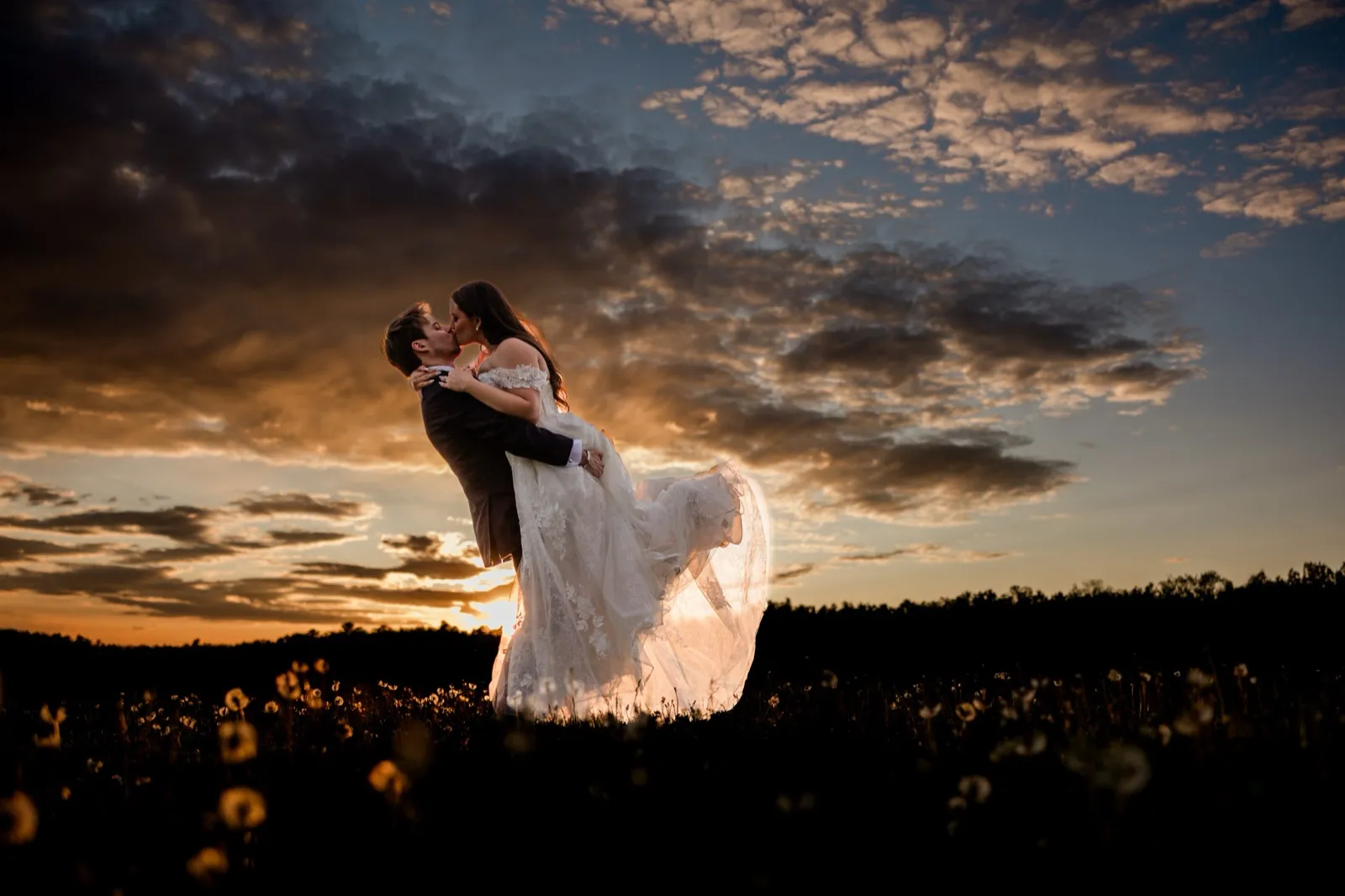
The trade people don't expect: October's golden hour is longer, not shorter. The sun sets at a shallower angle in fall, so the warm light stretches — about 25 minutes of real gold on June 21, closer to 40 on October 15. Shorter day overall, richer light at the end of it.
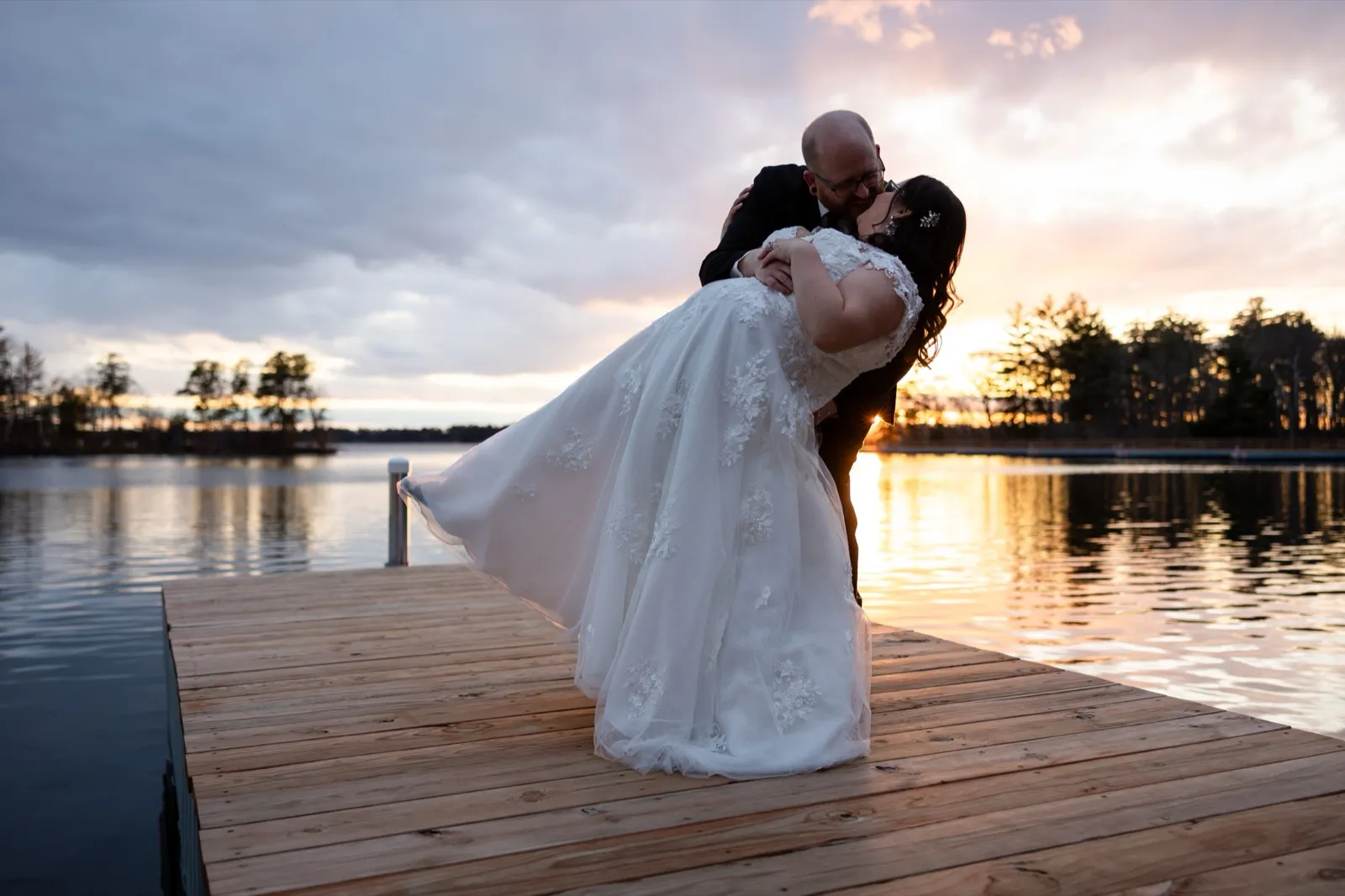
That's why fall weddings at Grand View, Madden's, and the private lake properties photograph so well — the window is smaller but the quality is higher. The planning move is to reserve the entire window for portraits instead of scheduling a toast or a cake cutting into the middle of it.
Contract cocktails in October — or dinner lands in the dark
A 90-minute cocktail hour in June is generous and fine. Dinner lands around 7:30 with two hours of sun left. The same 90-minute cocktail hour in October pushes dinner to almost 5:30 with only forty minutes of light remaining — and the golden-hour portrait window gets eaten by hors d'oeuvres.
My rule for fall: 45 to 60 minutes is plenty. Long enough to refresh drinks and say hello to relatives; short enough that the light is still on the room when plates hit the table. It's the least glamorous call in the day, and it's the one that rescues the whole back half of the timeline.
Four calls, one calendar question
A wedding day runs on the clock, and the clock runs on the date. Once you've picked the season, the rest of the timeline is mostly math — and the math rewards planning backward from sunset instead of forward from a ceremony time.
- 01
Anchor to sunset, not to the ceremony
Sunset sets the timeline. Ceremony time follows from it.
- 02
Use the minus-3½-hour rule
Works for any date in the Lakes. Run the numbers once.
- 03
Expect richer golden hour in fall
Shorter window, better light. Reserve the whole slot.
- 04
Shrink the cocktail hour in October
45–60 minutes. Save dinner from the dark.
If you'd like the sunset-math run for your specific date, the timeline calculator is here, or get in touch and I'll walk through yours.
Frequently Asked Questions
My rule is ceremony time equals sunset minus 3½ hours. On October 15 in the Brainerd Lakes, sunset is about 6:10 p.m., so a ceremony around 2:40 p.m. gives you a full day with golden-hour portraits before dark. (For contrast, June 21 sunsets at 8:50, which puts the ceremony closer to 5:20.) Same rule, very different-looking day.
It only sounds early. Anchored to sunset minus 3½ hours, a 2:00–2:40 p.m. ceremony is exactly right for an October wedding — it leaves room for a tightened cocktail hour, dinner by about 5:30, and a golden-hour portrait window that still lands before last light around 6:40. Copy a June-style 5:20 start into October and the ceremony itself ends near sunset, with the reception in the dark.
Golden hour is the last 25 to 40 minutes before sunset — and counterintuitively, it's longer and richer in fall. The low sun angle stretches the warm light from about 25 minutes on June 21 to closer to 40 on October 15. Reserve the whole window for portraits, and anchor your ceremony to sunset minus 3½ hours so you actually reach it with time to spare.
Shorter than you'd run it in summer. A 90-minute cocktail hour is fine in June — it lands dinner around 7:30. The same 90 minutes in October pushes dinner into the dark and eats your golden-hour portrait window, so 45 to 60 minutes is usually enough and keeps the light on the room when plates land.
In June, sunset in the Brainerd Lakes is around 8:50 p.m., so the same sunset-minus-3½-hours rule puts a summer ceremony near 5:20 p.m. — with about three hours of daylight still ahead for cocktails, portraits, and dinner before the light goes. It's the mirror image of the early-afternoon fall start.