If you've been on a shoot with a photographer who directs every breath, you already know the problem. The direction is visible in the photos.
I still direct. I still help couples who aren't comfortable in front of a camera — a hand on a shoulder, a single line of coaching, a reason to stand where the light is working. Then I step back and let the day do what it was going to do anyway. Three things I'm watching for while I'm doing it.
I'm watching the hand, not the face.
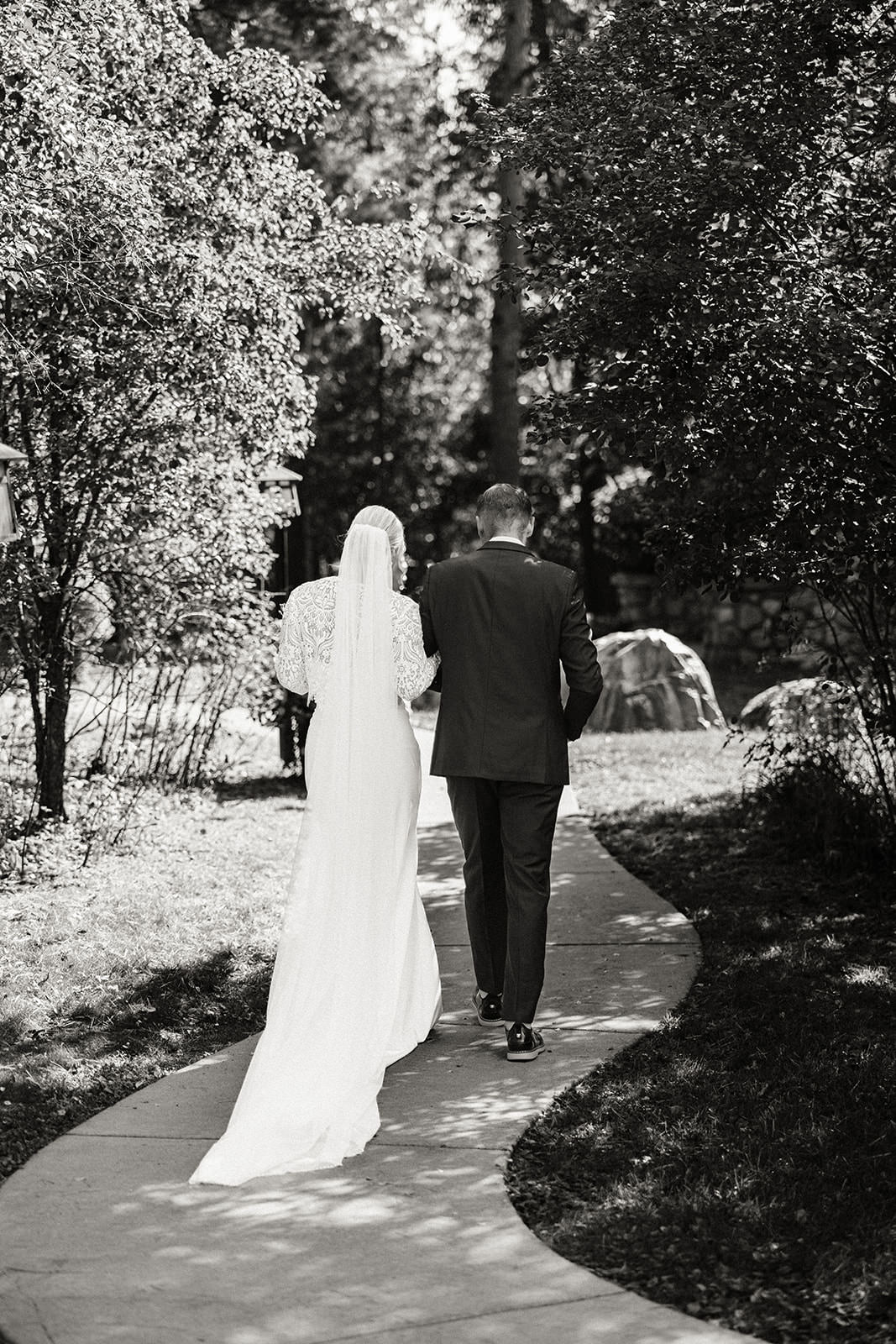
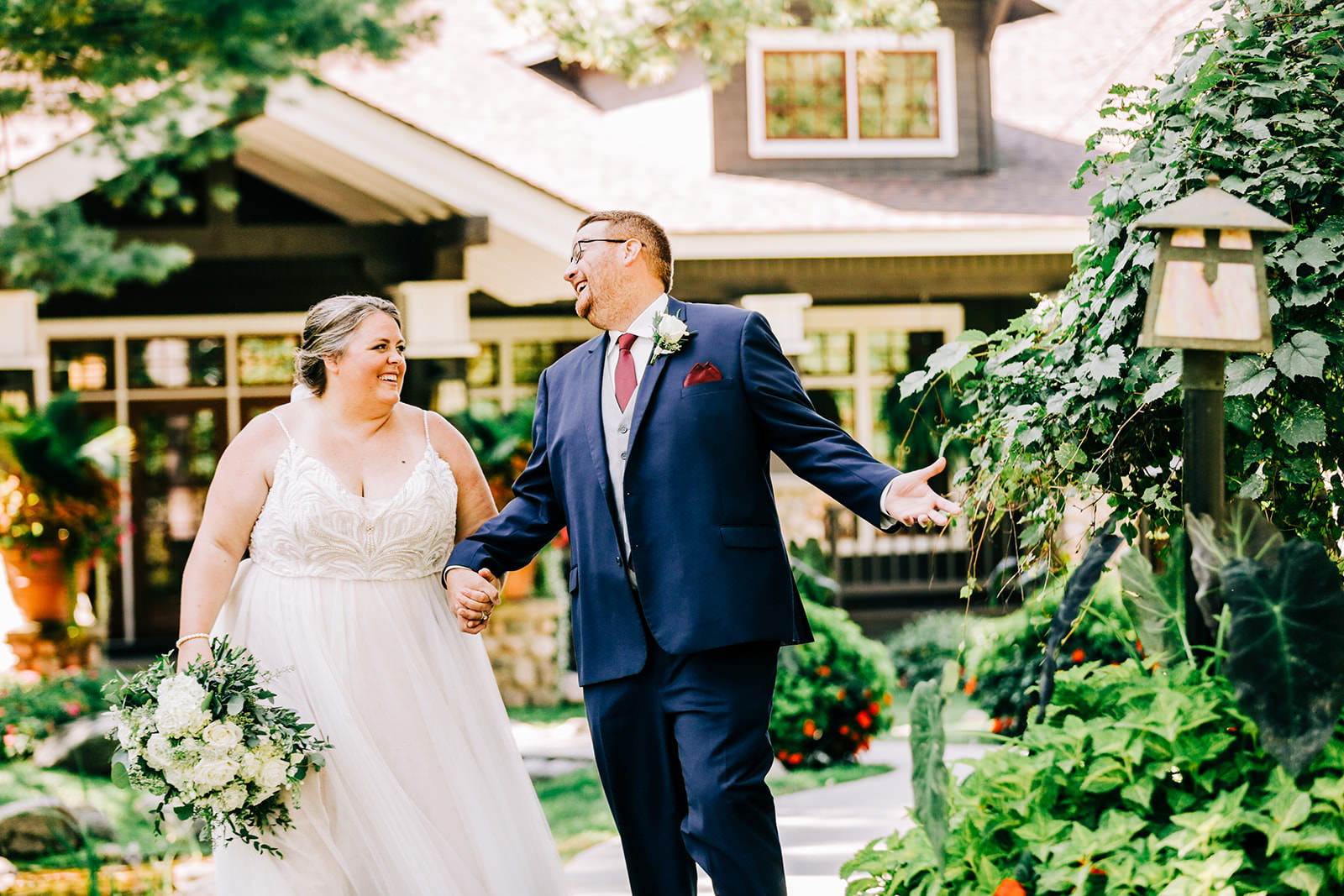
Faces perform for cameras. Hands don't. Hands on arms, hands on a back during the first dance, a thumb rubbing a ring during a toast. That's where the photograph actually lives — and the couple is never thinking about it.
The shot is two seconds after the posed one.
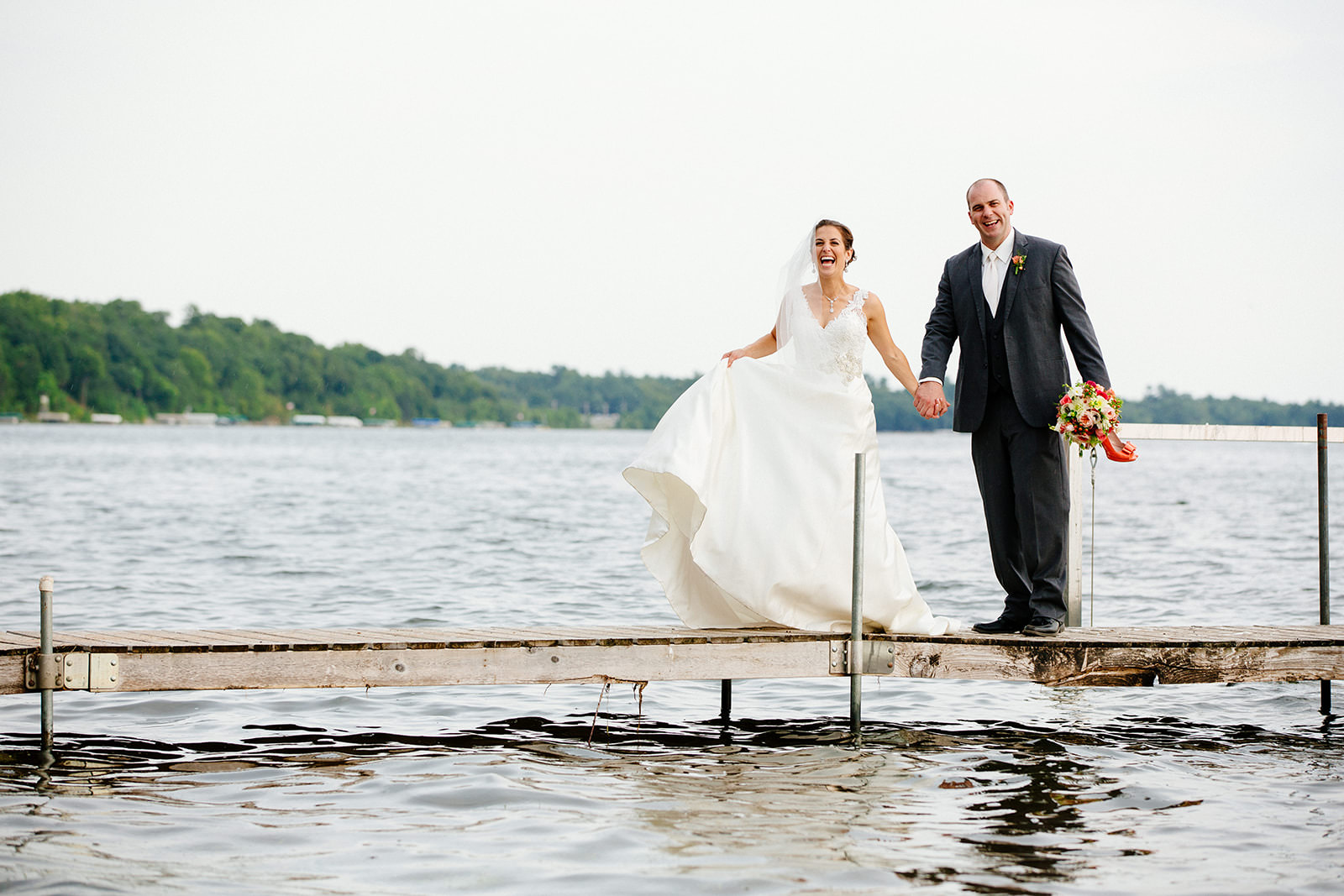
"Got it." Everybody exhales. One of you laughs. The bouquet drops an inch. That's the frame that ends up on your wall. I keep shooting through "got it" because that's where the real photo shows up — and it only shows up if I'm still looking.
I don't call attention to myself.
No "look over here." No "one more." The less you know I'm working, the better the photos get. It's not a style preference — it's the whole method. If you're wedding-planning and you leave your engagement shoot thinking the photographer was loud, you already know.
Watch the hands — the face is performing
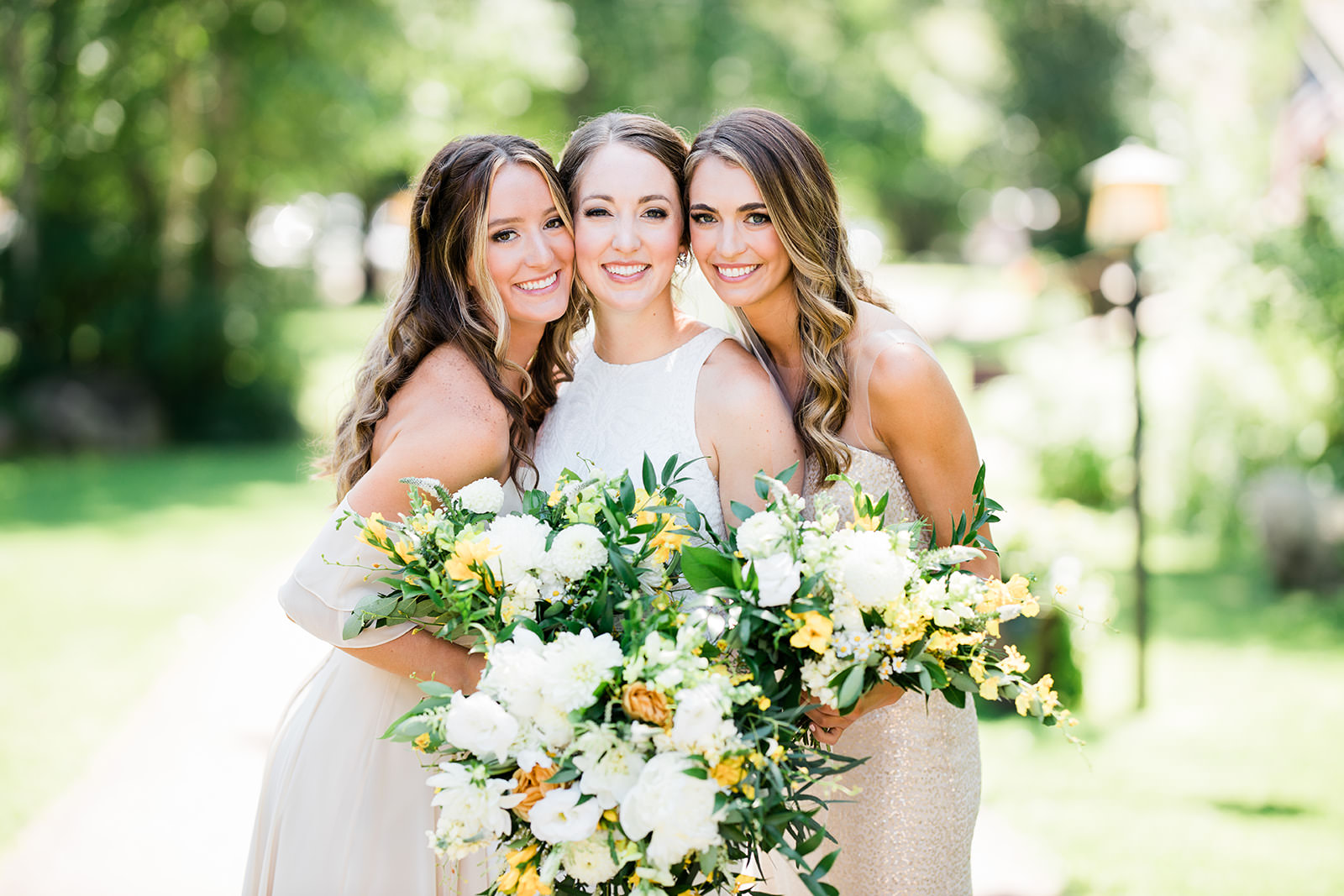
The face is the first thing most photographers chase, and the first thing a person tidies up when a camera is pointed at them. Chin up. Smile a little. Hold still. It's not dishonest — it's reflex. But it makes the photograph read like a photograph, not like the moment.
Hands don't do that. Hands don't perform. A grandmother's hand on a granddaughter's wrist during the processional. A thumb rubbing a new ring during the toasts. A hand at the small of a back during the first dance. Nobody is styling any of it. When I'm shooting, a meaningful percentage of my attention is below the shoulders — because that's where the frame I actually want is sitting, waiting for me to be there for it.
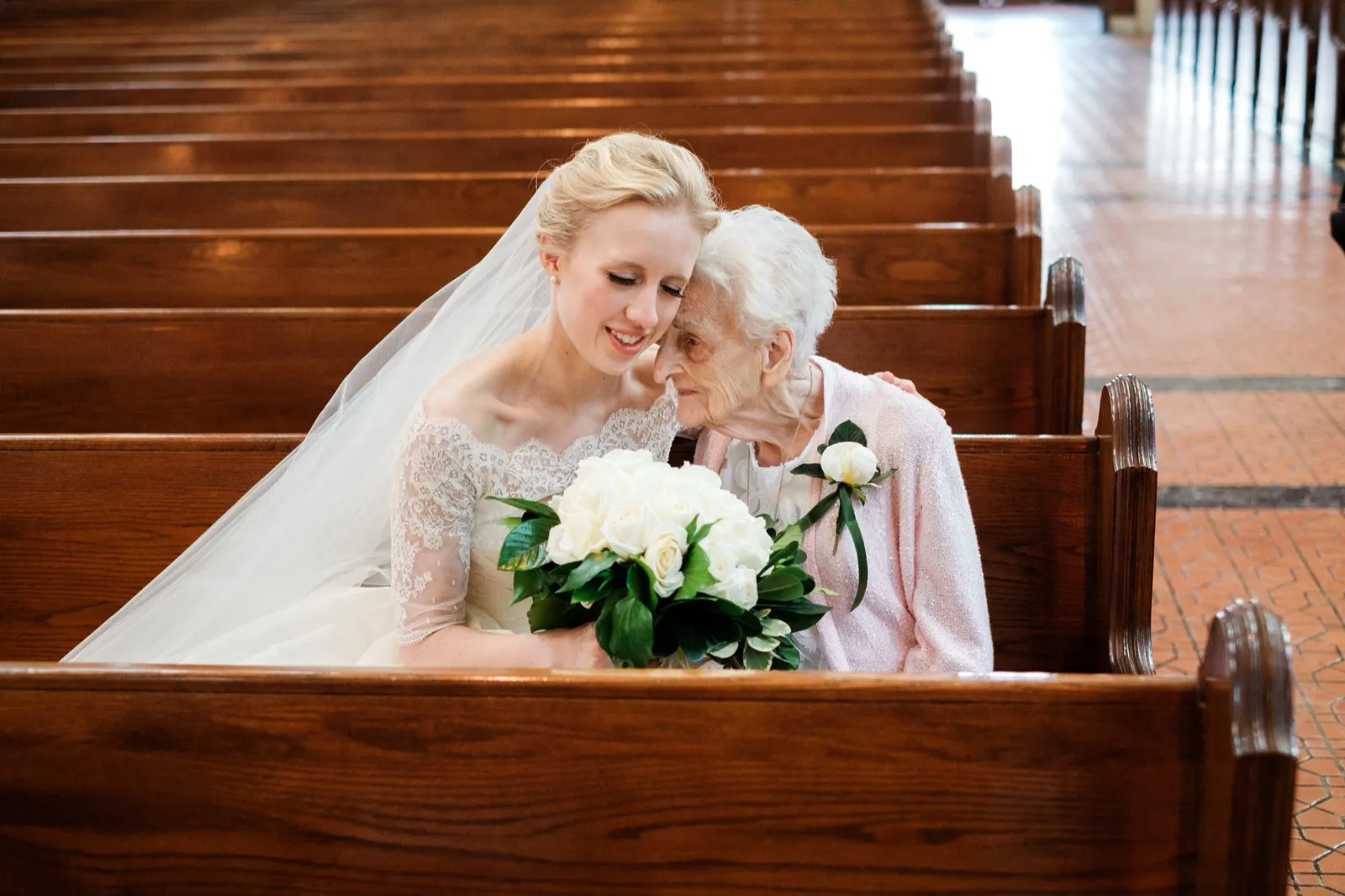
The real photo arrives after "got it"
Every directed moment has a release — the breath out after a pose, the drop of the shoulders after "got it," the small laugh between the bride and her maid of honor because they already know the next shot is going to be silly. That release is where the frame lives. Most photographers stop shooting at "got it." I keep shooting.
The photo you'll hang on the wall is almost never the one you remember posing for. It's the one you didn't realize was being taken.
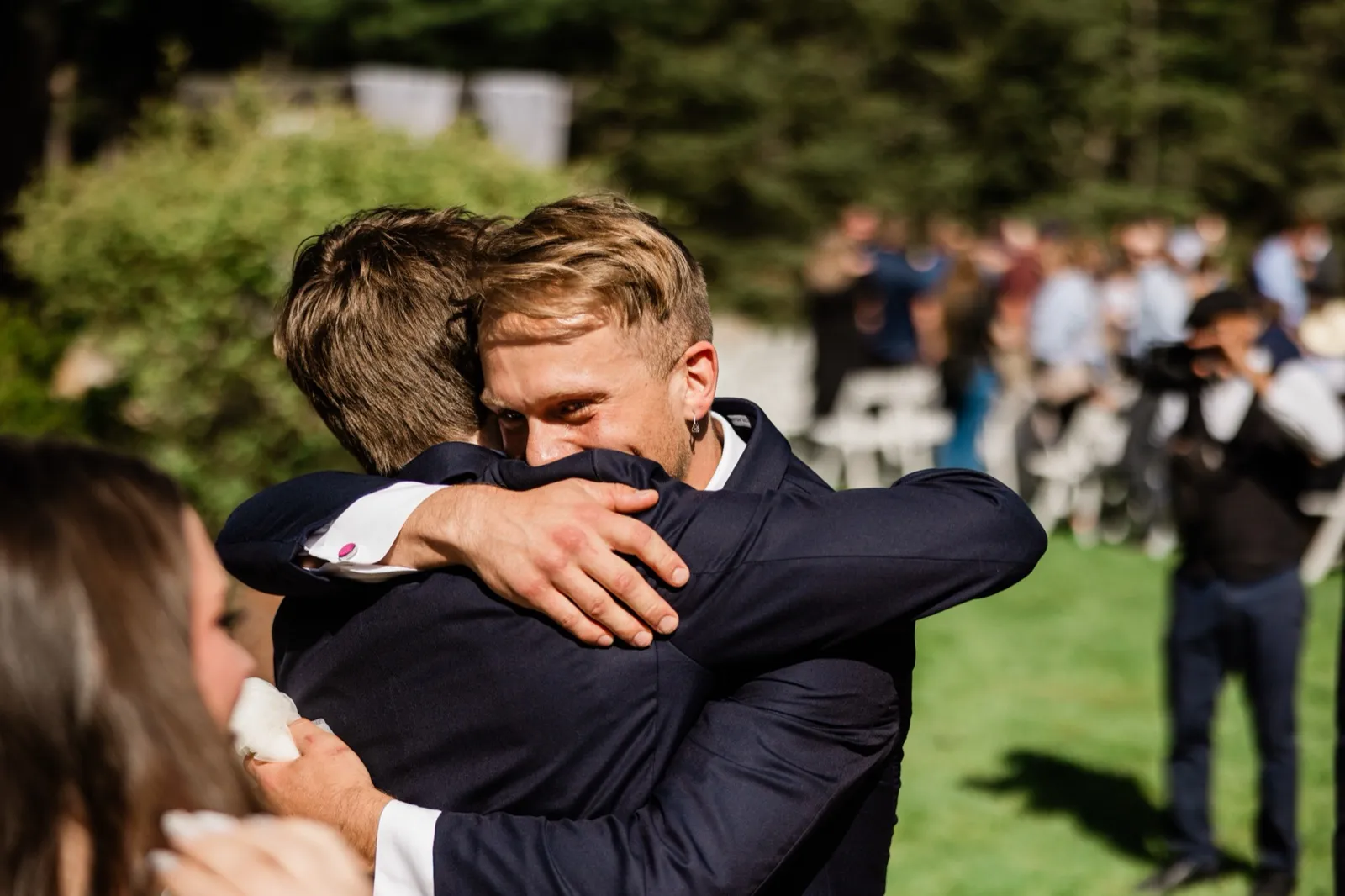
This is also why I rarely ask a couple to repeat a posed frame. If the first one didn't land, the second one won't either — you'll both be more aware of the camera, not less. The move is to keep shooting into the release and trust that the frame will show up inside the next ten seconds. It almost always does.
The less you know I'm working, the better the photos get
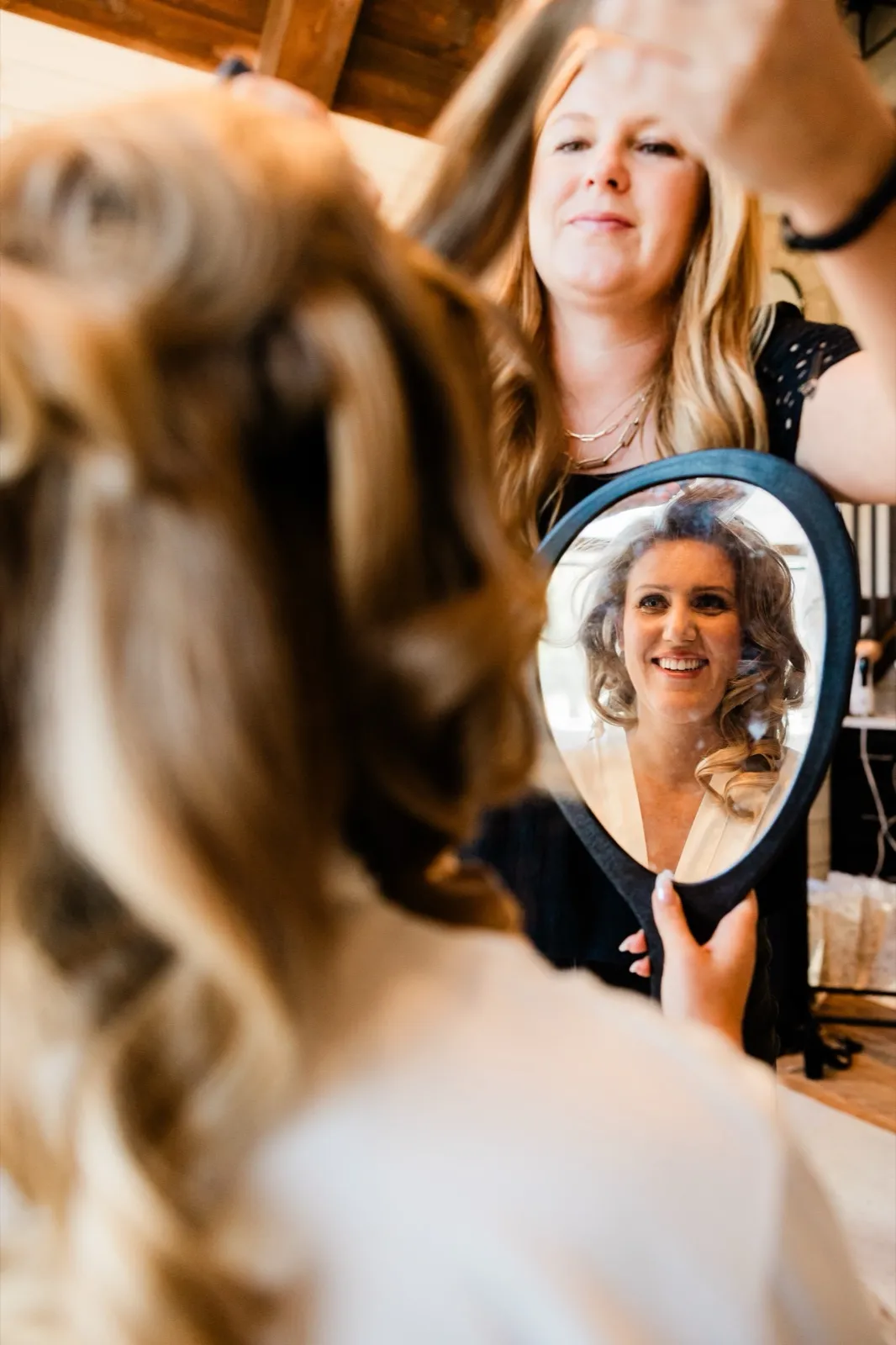
This is the part couples don't fully register until they see the gallery. A loud photographer — "look here," "one more," "okay now laugh" — is training the day to perform for a camera. A quiet photographer is waiting for the day to happen and staying out of the way of it. The second approach is not a style preference for me; it's the whole method.
The practical version: I'll put you somewhere the light is working, give you a short reason to be there (usually something about each other, not the camera), and disappear for the next thirty seconds. The frames I come back with are the ones that would have happened whether I was there or not. Which is exactly the point.
Three places I'm looking
Documentary isn't absence of direction. It's direction used sparingly, so the camera can get out of the way once the room knows what to do. Three things I'm watching for, every wedding, every time.
- 01
The hands
Faces perform. Hands don't. That's where the frame actually lives.
- 02
The two seconds after "got it"
The release frame. I keep shooting through the exhale.
- 03
The silence between directions
Quiet is a technique. The day performs better when nobody's calling it by name.
If you want to see what this looks like across a whole day, a recent gallery is here. If you'd like to talk about your date, reach out.
Frequently Asked Questions
For me, documentary-style wedding photography means watching for what the day is already doing rather than inserting direction at every step. I still help couples who don't know what to do in front of a camera — a light hand on the shoulder, one line of coaching, then silence while the moment finds itself. About 60% of my work is documentary; 40% is editorial and directed.
Candid means the moment as it actually happens, not staged for the camera — because faces perform for cameras and hands don't. I watch the hands: the grip on the bouquet, the thumb on a ring, a hand sliding down a back during the first dance. That's where the truth of a moment lives. It isn't a hands-off, never-direct approach — it's staying ready for the real thing in between.
Posed photography directs you into good light and gets you comfortable; candid is the release frame two seconds after the posed one ends, when you've dropped your shoulders and forgotten the camera is there. Neither is better in the abstract — but the frame couples end up printing for the wall is usually the candid one they didn't know was being taken.
Documentary is observed and unposed — the day as it unfolds. Editorial is directed and styled — placing you in the light and shaping the frame. I'm not one or the other: about 60% of my work is documentary and 40% editorial, so a gallery has both the unguarded moments and a handful of intentional, timeless portraits.
Three habits: watch the hands rather than the faces; keep shooting for two seconds after the obvious moment, because that's when people release; and stay quiet — give couples good light and a reason to focus on each other, then step back so the moment is theirs, not a performance for the camera.